
Alishan Forestry Village and Hinoki Village
Taiwan · 嘉義市 · 東區 · Nature & Scenery
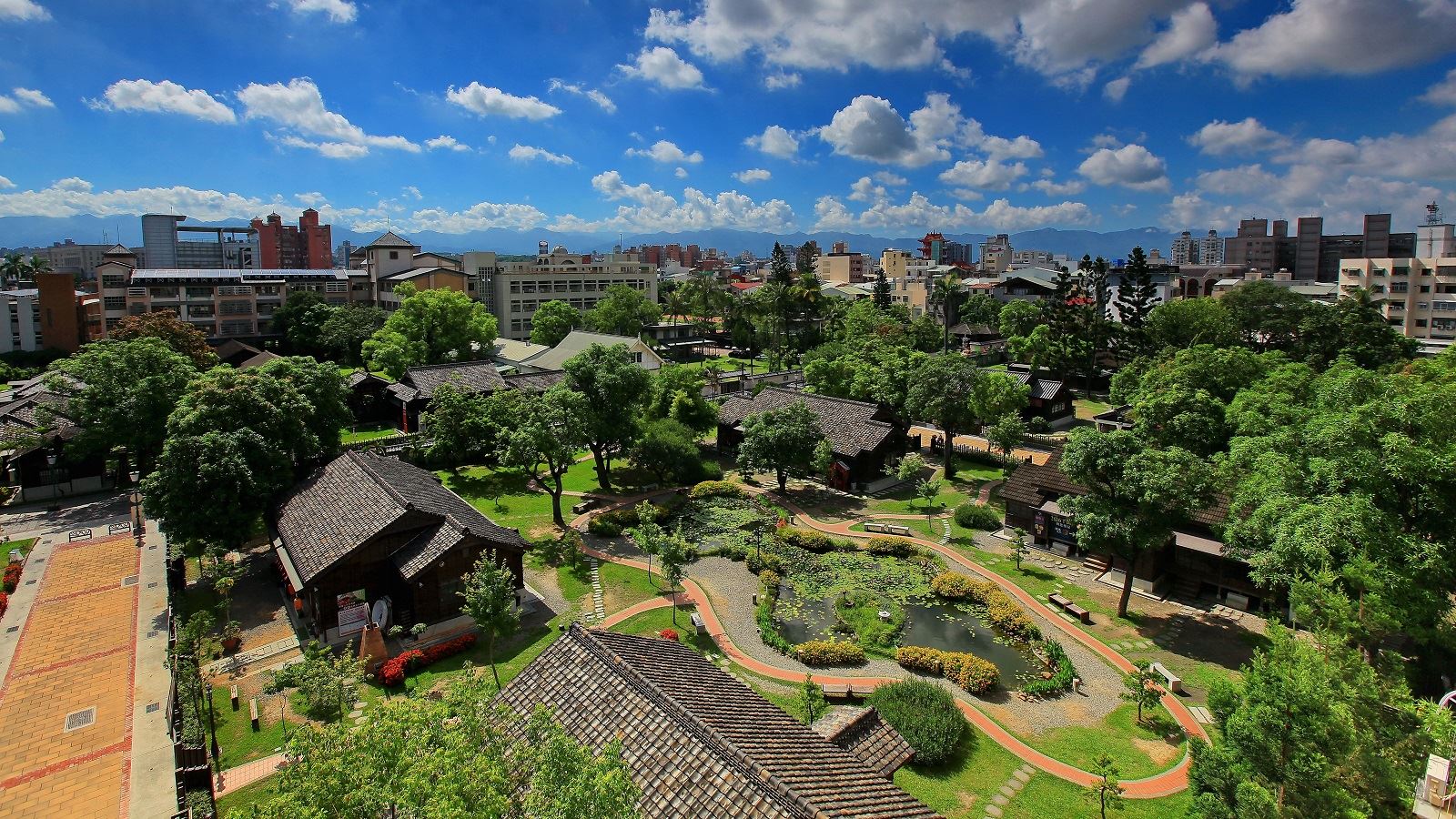
Image source: Taiwan_Opendata; license credits as shown.
Overview
Alishan forestry development began in 1899. During the Japanese colonial period, the Alishan Forest Railway was built to transport cypress timber from the Alishan forest area, with its starting point at Chiayi’s Beimen. Timber trade and distribution brought unprecedented prosperity to Chiayi, which was then regarded as one of Taiwan’s four major cities. In May 1906, the Japanese private company Fujita Group established the Chiayi Construction Office, marking the beginning of the Alishan Forest Railway project; however, the work ended in February 1908 because the project was extremely difficult and costs had soared. In 1910, the Taiwan Governor-General’s Office took over, and construction continued until the main line of the Alishan Forest Railway, stretching 71.9 kilometers, was completed in 1914. The forestry administration complex gradually expanded and included the forestry office building, forestry club, sawmill, and Southeast Asia’s first thermal power building. Logs cut from the mountains were transported by the Alishan Forest Railway to Chiayi’s “Sugi Pond,” then the largest timber storage pond in Southeast Asia at the time. Because of this forestry boom, Chiayi was known as the “timber city,” and today’s Linsen Road was once the “timber street,” while the surrounding forestry administration district was called “Hinoki Town.” The forestry administration also had a well-developed production and daily-life system, and the forestry village had already taken shape. In 1964, Alishan’s forestry and timber industry came to an end, and Chiayi’s sawmilling industry gradually declined. These nearly century-old forestry assets bear witness to the rise and fall of Chiayi’s forestry development. Over time, they have acquired a rich historical character and become valuable forestry cultural heritage, but they were also in danger of deterioration and needed revitalization and renewal to restore their former glory. The forestry club, the National Official Dormitories of the Forestry Bureau along Gonghe Road and Beimen Street in Chiayi City, and the former Chiayi Sawmill (Bamboo Craft Processing Factory) all testify to the history of Alishan forestry exploitation and were registered as historic buildings in Chiayi City in 1998 and 2005, respectively.
Getting There
[By car] Route 1: Take National Freeway No. 1 and exit at Chiayi Interchange. Head toward Chiayi, continue straight on Beigang Road (County Road 159), turn left onto Bo’ai Road (Provincial Highway 1), cross Bo’ai Road Bridge, turn right onto Zhongxiao Road, and continue straight to Linsen East Road to arrive. [By car] Route 2: Take National Freeway No. 3 and exit at Zhuqi Interchange. Drive toward Chiayi along Linsen East Road, then continue straight to Zhongxiao Road to arrive. [Public transportation] By train or bus: 1. Take a train or bus to Chiayi Station, then walk about 20 minutes along Senlin West Road to arrive. 2. To reach Hinoki Village (Beimen), you can also take the Happiness Bus (Lehuo Route 1-1); website: https://www.thb.gov.tw/News_Content_Table.aspx?n=10738&s=212475 [Public transportation] By high-speed rail: Get off at Chiayi HSR Station and transfer to BRT to Chiayi Bus Terminal: (1) Take bus 6880 from Chiayi Bus Terminal and get off at the Cultural Center (Chiayi Forestry Bureau) stop. (2) Cross the pedestrian bridge to Chiayi Station (Chiayi Railway Station), then: a) Take bus routes 101, 7312, 7312A, 7313, 7313A, 7319, 7319A/C/D, 7321, 7321A/B, 7323, 7323A/B/C/D, or Route 66 (formerly City Route 6) and get off at Beimen (Hikoki Village) stop, then walk to the destination. b) Take bus routes 102, 102A, 7304, 7304A/B, 7305, 7309, 7315, 7315A, 7316, or 7316A and get off at the Cultural Center (Chiayi Forestry Bureau) stop, then walk to the destination. Bus information reference: https://bus.cyhg.gov.tw
Highlights
• A historic cultural park that combines Alishan Forestry Village and Hinoki Village, preserving a century-long story of Chiayi’s rise through forestry. It is one of Taiwan’s earliest forestry villages and an important urban renewal achievement. • It retains a large number of Japanese colonial-era official residences and forestry-related facilities, forming the most complete and largest preserved Japanese wooden government-dormitory complex in Taiwan, and is regarded as the memory core of Chiayi’s “timber city.” • Through the Forest Railway, sawmill, dormitory cluster, forestry club, and other historic buildings, it recreates the boom and decline of Alishan forestry logging and timber distribution, making it a valuable forestry cultural asset and educational site. • Hinoki Village is themed around “forest living,” combining cultural creativity, exhibitions, arts events, and old buildings. Walking through it feels like entering an old Japanese town district, with a strong nostalgic atmosphere and many photo spots. • Most areas of the park are free to enter and conveniently located within walking distance of Chiayi Railway Station, making it suitable for a half-day or full-day urban history walk.
What to See
• Alishan Forestry Village historic building cluster The park includes the former forestry office building, forestry club, sawmill, power facilities, and state-owned dormitories, fully presenting the office, leisure, and living spaces of the forestry administration. It is an important place to understand Chiayi’s forestry development. • Hinoki Village Japanese-style official residence cluster A group of Japanese wooden official residences built with Alishan cypress, including 27 to 29 historic buildings. The well-preserved garden landscaping and wooden houses have been registered as city-designated monuments and historic buildings. Walking here gives visitors a Japanese atmosphere reminiscent of “Taiwan’s little Kyoto.” • Forestry Club A city-designated historic site built around 1914, it was the leisure and entertainment venue for the Taiwan Governor-General’s forestry administration. The building adopts a pseudo-European English Tudor half-timbered style, a very rare architectural form in Taiwan, and is now used as an arts and cultural exhibition and event space. • Chiayi Sawmill and forestry facilities These facilities bear witness to the processing of Alishan forestry resources after they were transported to Chiayi, including sawmill-related buildings and spaces. They reflect Chiayi’s former status as a major timber distribution hub in Southeast Asia, and some areas are open to the public at designated times. • Beimen Street and Gonghe Road forestry bureau dormitory cluster Located around Beimen Station, this state-owned dormitory settlement is the only remaining complete wooden forestry residential cluster of its kind in Taiwan. It reflects the daily life of forest workers and is a preserved area of city-designated monuments and historic buildings. • Song of the Forest An outdoor installation and landscape space promoted by the forestry authority, it serves as an important landmark and artistic highlight of Alishan Forestry Village, symbolizing the connection between the forest and the city. It is open around the clock for walking and photography. • Themed exhibitions and Mori Living Hall Several historic buildings in the park have been planned as “Mori Living Halls,” with themes ranging from practical forest living and creative forest living to childlike forest living and artistic forest living. Through exhibitions and creative displays, they present forestry culture, craftsmanship, and lifestyle aesthetics, and some exhibition spaces are updated periodically.
Address
No. 370, Gonghe Road, East District, Chiayi City 600 Tel: (05)2779843
Travel Tips
• Recommended visit time Most visitors should allow about 2 to 3 hours to explore Hinoki Village and the surrounding historic buildings in detail. If you also want to include exhibitions, a coffee break, and photos, it is better to reserve at least half a day. • Best season and time to visit Chiayi has a warm climate and is suitable for visiting year-round. Autumn, winter, and spring are cooler and more comfortable for strolling through the Japanese-style building cluster. Weekdays or early morning and evening hours on weekends tend to be less crowded and are better for photography and leisurely walks. • Opening hours and admission Hinoki Village is free to enter and promotes year-round opening, though some buildings or exhibition spaces may have their own hours. Areas such as the Chiayi Sawmill have specific opening periods, so it is recommended to check the latest announcements before departure. • Transportation advice After taking a train or bus to Chiayi Station, you can walk about 20 minutes toward Linsen Road to arrive. If driving, you can enter the city from Chiayi Interchange or Zhuqi Interchange and follow signs toward the Linsen Road area. Parking is available nearby, but spaces fill up quickly on holidays. • Suggested sightseeing route Start from Chiayi Railway Station, visit Beimen Station and the Forestry Village area first, then connect to the Hinoki Village Japanese-style dormitory cluster, and finish with Song of the Forest or a coffee and cultural-creative shop. This creates a walking route that combines history and leisure. • Clothing and items to bring The park is mainly explored on foot, so light clothing and comfortable walking shoes are recommended. In summer, the sun is strong, so sunscreen and drinking water are advisable. During the rainy season, bring rain gear for moving between the outdoor buildings. • Photography and visiting etiquette Most old buildings are historic assets, so please do not climb on them, step on the grass, or damage the wooden structures. Indoor exhibition spaces may restrict food and flash photography, so please check the on-site signs before entering. • Combining with other attractions Alishan Forestry Village and Hinoki Village are located in Chiayi City’s East District and can be combined with Chiayi Park, old-house cafés in the lanes around Hinoki Village, and Wenhua Road Night Market to create a one- or two-day easy city itinerary.
Nearby Dining
The park and surrounding streets have many cafés, snack shops, and souvenir stores. With their mix of Japanese-style old houses and creative design, they are ideal for strolling while enjoying desserts and drinks in a relaxed atmosphere. Within walking distance, you can also visit other well-known local eateries and restaurants in Chiayi City. A common itinerary is to enjoy a forestry-themed walk first and then head to the city center to taste Chiayi specialties.
FAQ
Q: How long should I plan for a visit to Alishan Forestry Village and Hinoki Village? A: It is generally recommended to allow at least 2 to 3 hours. You can walk from the Japanese-style dormitory cluster to the Forestry Club and then to Song of the Forest. If you also want to include exhibitions, coffee, and photos, a half-day itinerary will be more relaxed. Q: Do I need to buy a ticket to enter the park? A: Hinoki Village itself is free to enter. Some historic buildings or exhibition spaces may have special arrangements for events, so it is best to check the latest announcements before going. Q: How do I get to Alishan Forestry Village and Hinoki Village from Chiayi Railway Station? A: After getting off at Chiayi Railway Station, you can walk about 20 minutes along the Linsen Road area to arrive. Depending on the situation, you can also take a taxi or bus; the distance is not far. Q: Is this place suitable for children or older adults? A: The park is mainly made up of gentle walking paths and low-rise Japanese-style buildings, so it is suitable for families and older visitors to stroll and learn about forestry history through exhibitions and old buildings. However, the site is mostly outdoors, and summer sun exposure and walking time can be considerable, so it is advisable to prepare sun protection, water, and consider physical stamina.