
Aogu Wetlands Forest Park
Taiwan · Chiayi County · 東石鄉 · Nature & Scenery
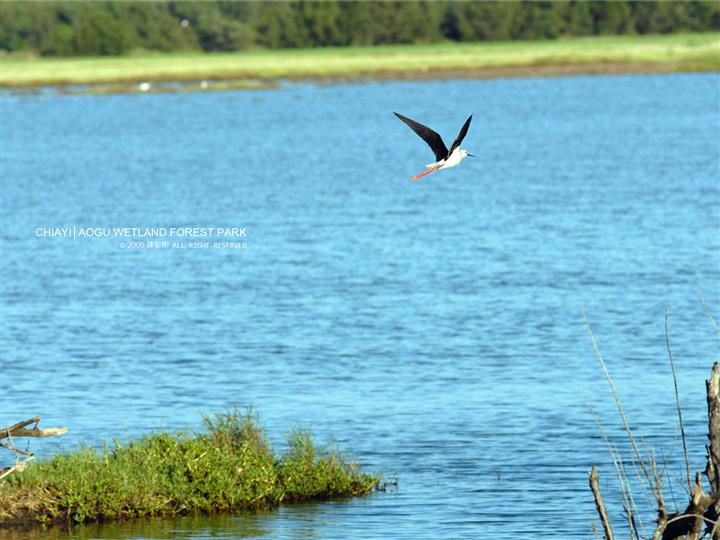
Image source: Taiwan_Opendata; license credits as shown.
Overview
Aogu Wetlands Forest Park was originally a major base for Taiwan Sugar Corporation’s land reclamation from the sea, used for agriculture, fisheries, livestock farming, and sugarcane cultivation. However, severe land subsidence and seawater intrusion into the groundwater gradually caused the farm to decline and fall into disuse. Because the land is low-lying and surrounded by coastal levees, after heavy rain the fishponds and former farmland formed natural retention ponds. Over time, these wetland habitats attracted more and more migratory and resident birds, becoming today’s Aogu Wetlands Forest Park. With large-scale afforestation, the trees will grow into forest over the next 10 to 20 years, and Aogu Wetlands will become an internationally recognized ecological environment with diverse forest landscapes and rich wetland ecological resources. Aogu Wetlands Forest Park is positioned around wetland conservation and environmental education, making it a base for ecotourism, teaching, and research.
Getting There
[By car] Highway route 1: From the Chiayi System Interchange on National Highway 1 at 272K, connect to the Dongshi–Chiayi East–West Expressway (Provincial Highway 82) and head west toward Dongshi. Take the surface road and cross Dongshi Bridge, then turn right onto Provincial Highway 17. At about 113.5–114K on Highway 17, turn left and continue west through the underpass beneath Provincial Highway 61 to reach the park service center, Aogu Wetlands Ecological Exhibition Hall. [By car] Highway route 2: From the Chiayi System Interchange on National Highway 1 at 272K, connect to the Dongshi–Chiayi East–West Expressway (Provincial Highway 82) and head west toward Dongshi. After taking the surface road, turn right onto County Road 157, continue straight onto Township Road Ji 7, and pass Gangkou Bridge, Shengmu Bridge, Gangkou Temple, and the Provincial Highway 61 underpass to reach the park service center, Aogu Wetlands Ecological Exhibition Hall. [By car] Highway route 3: From the Chiayi System Interchange on National Highway 1 at 272K, connect to the Dongshi–Chiayi East–West Expressway (Provincial Highway 82) and head west toward Dongshi. Exit at Puzi Interchange (10K on Provincial Highway 82), turn right onto Wenhua South Road (Provincial Highway 19), then turn left onto Section 2 of Siwei Road. After that, turn left onto Haitong Road (County Road 168), continue straight and turn right onto Township Road Ji 7, then pass Gangkou Bridge, Shengmu Bridge, Gangkou Temple, and the Provincial Highway 61 underpass to reach the park service center, Aogu Wetlands Ecological Exhibition Hall. [By car] Highway route 4: From National Highway 3, connect at the Shuishang System Interchange at 300K to the Dongshi–Chiayi East–West Expressway (Provincial Highway 82) and head west toward Dongshi. After passing the Chiayi System Interchange on National Highway 1 at 272K, refer to the routes above to reach the park service center, Aogu Wetlands Ecological Exhibition Hall. [By car] West Coast Expressway (Provincial Highway 61) southbound: Exit at Shuijing Interchange at 253K toward Chiayi (Provincial Highway 17), cross Yun-Jia Bridge, and at the intersection for the park welcome underpass (about 114K on Provincial Highway 17), turn right and continue west to reach Aogu Wetlands Ecological Exhibition Hall. [By car] West Coast Expressway (Provincial Highway 61) northbound: Exit at Dongshi Interchange at 262K toward Yunlin (Provincial Highway 17). At about 113.5–114K on Provincial Highway 17, turn left and continue west through the underpass beneath Provincial Highway 61 to reach the park service center, Aogu Wetlands Ecological Exhibition Hall. [Public transportation] By High Speed Rail: Get off at Chiayi HSR Station. From Exit 2 on the first floor lobby, go to Bus Platform 1 and take Chiayi Bus route 'Chiayi–Puzi'. Get off at Puzi Station, then transfer to the 'Puzi–Haipudi' route and get off at 'Farm' Station to reach the park service center, Aogu Wetlands Ecological Exhibition Hall. Chiayi Bus reference website: http://wwm.cibus.com.tw/ [Public transportation] By train: Get off at Chiayi Railway Station. In front of the station (No. 503, Zhongshan Road), take Chiayi Bus route 'Chiayi–Puzi'. Get off at Puzi Station, then transfer to the 'Puzi–Haipudi' route and get off at 'Farm' Station to reach the park service center, Aogu Wetlands Ecological Exhibition Hall. [Public transportation] Happy Taxi (Happy Dongshi Route 2): 1. Reservations must be made at least 2 days in advance. Reservation phone for Taiyi Car Team: 06-3000000. 2. For a single trip, the origin or destination must be any location in Dongshi Township, Budai Township, or Puzi City in Chiayi County. Fare can be offset by NT$320 per trip; if the single-trip fare is less than NT$420, an additional NT$100 must be paid. 3. For related information, visit: https://chiayiibus.cyhg.gov.tw/DynamicBusResult?routeId=65001
Highlights
The largest ecological park in Taiwan that combines reclaimed coastal wetland and lowland forest, with diverse wetland and forest habitats. It is an important base for birdwatching, environmental education, and ecotourism. The park is centered on wetland conservation and environmental education, integrating important wildlife habitats and afforestation areas to create an international-level wetland ecological park and research base. In its early years, it was a major Taiwan Sugar Corporation agricultural, fishing, livestock, and sugarcane-growing site in Dongshi. After land subsidence and seawater intrusion led to abandonment, the area transformed into natural retention ponds and wetland habitats, becoming a paradise for migratory and resident birds. The park includes fishponds, mangroves, marshes, planted forests, windbreak forests, and a variety of aquatic landscapes, offering changing scenery that is ideal for walking trails, cycling, and family nature experiences. In winter, large numbers of winter migratory birds arrive, including many protected species, attracting bird lovers from Taiwan and abroad and making it a popular destination for birdwatching and photography.
What to See
1. Viewing Sea Tower: One of the park’s highest points, with 360-degree views over Aogu Wetlands, fishponds, and the reclaimed coastal landscape. On clear days, the Taiwan Strait can be seen in the distance, making it a key spot for scenery, sunset viewing, and bird observation. 2. Wetland scenery and water habitats: Large ponds and wetlands formed from former farmland and fishponds. After rainfall, the water storage is abundant, creating layered aquatic landscapes that provide important habitats for waterbirds, fiddler crabs, and diverse aquatic life. 3. Planted forests and windbreak belts: The park contains extensive afforestation, including cajeput trees, windbreak forests, and various tree species. Over 10 to 20 years these areas will form diverse forest stands, providing shade and habitat for birds and small animals, and offering pleasant routes for walking and cycling. 4. Mangroves and intertidal ecology: Some areas retain mangroves, muddy tidal flats, and intertidal zones where visitors can observe fiddler crabs, mudskippers, and other typical wetland and coastal species. These areas are important for ecological interpretation and outdoor education. 5. Fishponds and traditional agricultural-fishery scenery: Remnants of the former Taiwan Sugar Corporation farm and fishponds remain within the park, blending with the naturally restored wetlands to create a unique landscape that tells the story of land-use change and ecological recovery. 6. Aogu Wetlands Ecological Exhibition Hall / Visitor Service Center: Provides an introduction to the park, exhibits on wetlands and birds, guided tour information, and indoor environmental education activities. It is the best starting point for understanding the park and planning a visit. 7. Trails and cycling routes: The park has multiple walking trails and bicycle routes linking forest, fishpond, and wetland scenery. They are suitable for leisurely exploration and family cycling, with rest points along the way for bird and plant observation.
Hours & Admission
Parking: Small vehicles: free of charge, 40 parking spaces for small vehicles. Small vehicles: free of charge, 15 parking spaces for small vehicles.
Address
No. 54, Siguu, Aogu Village, Dongshi Township, Chiayi County 614 Tel: (05) 3601801
Travel Tips
Best season to visit: Winter to early spring is the peak birdwatching season, when the number and variety of winter migratory birds are richest. Spring and autumn migration seasons are also good for spotting passing birds. Summer is hot and humid, so outdoor activities are best avoided around midday. Recommended stay: If your plan is mainly walking, simple birdwatching, and visiting the exhibition hall, half a day is enough. If you want deeper birdwatching, photography, and cycling along multiple trails, set aside a full day for a more relaxed visit. Gear and clothing: Light, breathable long-sleeved clothing and comfortable walking shoes or sneakers are recommended for sun protection, mosquito prevention, and better comfort in forest and wetland environments. Bring a sun hat, sunglasses, sunscreen, and rain gear, since afternoon showers may occur along the southwest coast. Birdwatchers are advised to bring binoculars, a telephoto lens, and a field guide. Safety and environmental protection: Some areas are close to water and fishpond edges, so watch your step and keep children safe. Avoid stepping into soft mud or entering protected areas. Do not feed wildlife, do not litter, and respect signage and closed-area rules. Transportation and route planning: The park is large, so it is best to first visit the visitor service center or ecological exhibition hall to get a map and plan your route according to the trails and cycling paths. If driving, confirm parking locations in advance and then walk or cycle to each attraction. Visits and guided interpretation: Visitors who want a deeper understanding of the wetland and forest ecology can contact the park in advance to reserve outdoor guided interpretation or join environmental education activities. These are especially suitable for school field trips and family outings. Weather and insects: Mosquitoes are common in wetland areas, so bring insect repellent. When the wind is strong, it can feel cooler, and in winter birdwatching, it is advisable to bring an extra jacket to protect against sea wind and damp cold weather.
Nearby Dining
Aogu Wetlands Forest Park is close to Chiayi’s coastal townships such as Dongshi and Budai, where local communities and seafood restaurants can be reached within a short drive outside the park. It is recommended to combine the park with a visit to Dongshi Fisherman’s Wharf or Budai Seafood Street on the same day to enjoy oyster, fish, and shrimp meals, or to look for traditional snacks in nearby townships. The park itself focuses on nature and environmental education, so dining and supply options are limited. It is best to bring your own drinking water and light snacks, and to eat before entering or after leaving the park in nearby town centers or fishing ports.
FAQ
Q:Is Aogu Wetlands Forest Park suitable for children? A:Yes, it is very suitable for families. The park has spacious trails, cycling routes, and viewing platforms, allowing children to experience wetland and forest environments and learn about birds and ecology through interpretation and the exhibition hall. It combines outdoor activities with environmental education. However, because the park is near water and fishponds, parents should keep a close eye on children at all times. Q:When is the easiest time to see birds at Aogu Wetlands Forest Park? A:Winter is the best time for birdwatching, when large numbers of winter migratory birds come here to spend the season, with impressive diversity and numbers. Spring and autumn migration seasons are also good for seeing passing birds. Early morning and evening are usually the most active times for birds, making them ideal for birdwatching and photography. Q:The park is very large. How should I plan a route so the visit does not feel rushed? A:It is recommended to first visit the Ecological Exhibition Hall or Visitor Service Center to understand the park’s zones and trail layout, then choose key areas based on your time and energy, such as 'Viewing Sea Tower + selected trails' or 'plantation forest area + wetland water habitats'. If time is limited, one or two main attractions combined with a short trail is the most relaxing option. If you have a full day, you can arrange more trails and cycling routes. Q:Do I need to prepare anything special before going to Aogu Wetlands Forest Park? A:Because most of the park is outdoors, it is recommended to bring sun protection, mosquito repellent, water, and light snacks. If birdwatching is your main goal, bring binoculars, a camera, and rain gear in case of sudden weather changes. Wearing breathable long sleeves, long pants, and closed-toe shoes will help with sun protection, mosquito prevention, and walking comfort.