Gyeongbokgung Palace
South Korea · Jongno District · Landmarks
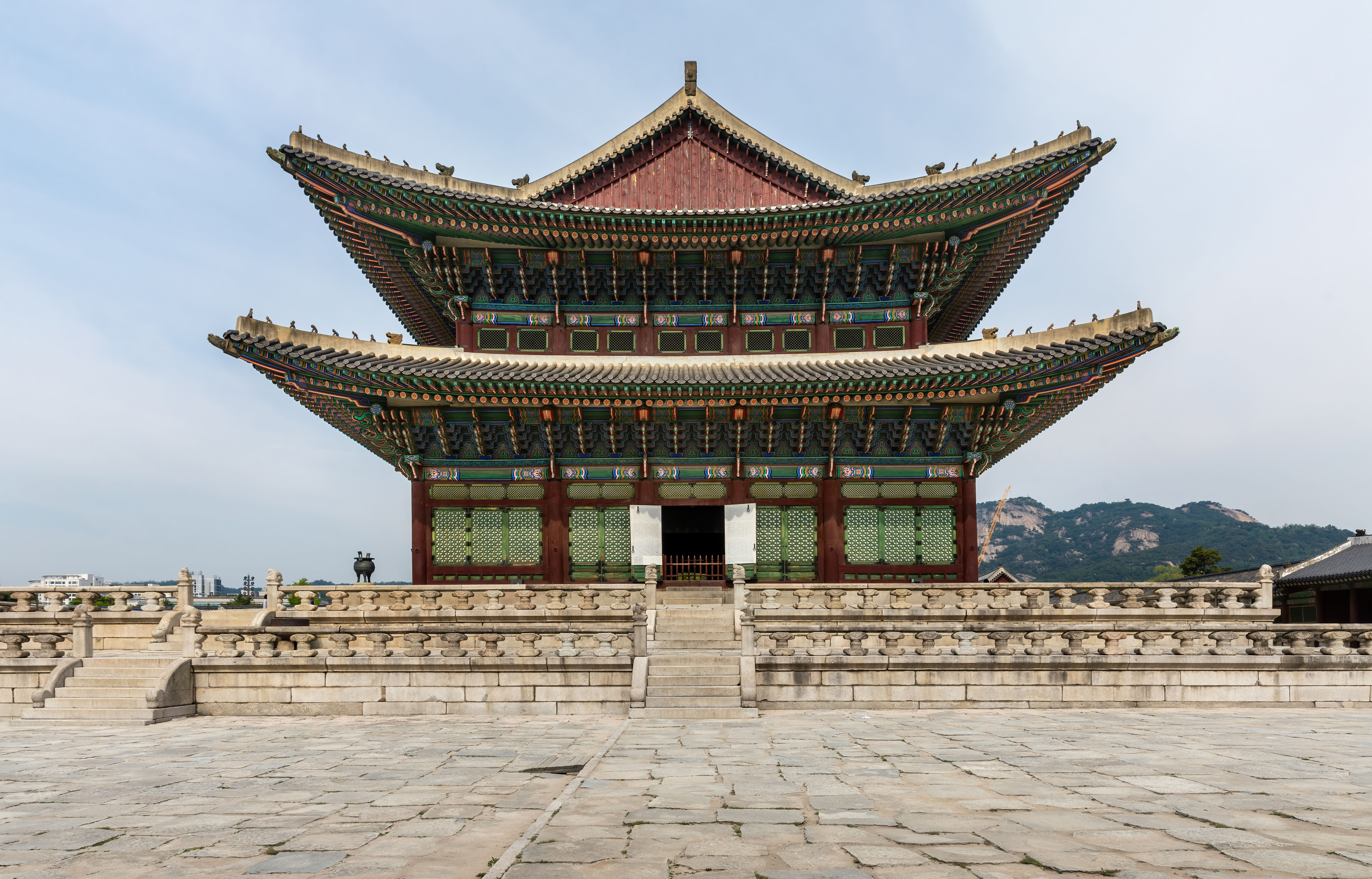
Image source: Wikimedia Commons; license credits as shown.
Overview
Gyeongbokgung Palace is the most important main hall and symbolic building within Gyeongbokgung in Seoul. It is also the core space for the coronation ceremonies, royal meetings, and significant national rituals of the Joseon Dynasty. The hall was originally built between 1394 and 1395, and the existing structure is a wooden hall reconstructed in the 19th century. It has been designated as South Korea's National Treasure No. 223 and is located in the central area of Gyeongbokgung in Jongno-gu, Seoul. Visitors typically start their exploration of Gyeongbokgung from Gyeongbokgung Palace, where they can enjoy an elegant view of the palace complex set against the backdrop of Bukhansan Mountain from the square.
Getting There
The most convenient way to reach Gyeongbokgung Palace is to take Seoul Metro Line 3 to 'Gyeongbokgung Station' and exit at Exit 5. The entrance to Gyeongbokgung is immediately outside the station, and it takes about 5 to 10 minutes to walk to the central square where Gyeongbokgung Palace is located. Alternatively, you can walk about 10 to 15 minutes from 'Gwanghwamun Station' on Line 5, passing through Gwanghwamun Square to enter Gyeongbokgung, and then proceed through Heungnyemun Gate and Gyeongbokgung Gate to reach Gyeongbokgung Palace.
Highlights
Gyeongbokgung Palace is the main hall and visual focal point of Gyeongbokgung, symbolizing the king's governance philosophy of 'diligent governance and love for the people.' It is also the site where 14 monarchs of the Joseon Dynasty, from Taejo to Seonjo, held their coronation ceremonies and received tributes from officials, making it the center of the nation at that time. The building is a large wooden hall with five bays and a double-eaved hipped roof, standing on a two-tiered stone platform, complemented by stone steps and railings, as well as surrounding stone statues, showcasing the essence of Joseon-era sculpture and palace architecture. Gyeongbokgung Palace is currently designated as National Treasure No. 223, and the throne area inside is lavishly decorated. When open, visitors can see the dragon-patterned ceiling symbolizing imperial authority and images of the twelve zodiac animals and four guardian deities, making it an important site for studying and experiencing Korean court culture.
What to See
1. Main Hall of Gyeongbokgung Palace: A grand hall with five bays wide and five bays deep, it is the most representative building in Gyeongbokgung Palace and the core attraction for capturing panoramic views of the palace and experiencing the spatial sense of Joseon Dynasty rituals. 2. Two-tiered Stone Platform and Stone Railings: Gyeongbokgung Palace stands on a two-tiered stone platform, surrounded by stone railings and steps. The railings and bases are intricately carved with patterns of dragons and auspicious beasts, showcasing exquisite stone carving craftsmanship, making it ideal for close observation and photography. 3. Square and Royal Path: In front of Gyeongbokgung Palace is a spacious stone-paved square and royal path, where civil and military officials once lined up for royal ceremonies. Today, it serves as the best vantage point for visitors to enjoy the ceremonial atmosphere of the palace and appreciate the backdrop of Bukhansan Mountain. 4. Surrounding Hall Complex: Along the axis behind Gyeongbokgung Palace, you can connect to the Seonjeongneung Hall, where the king conducted daily affairs, and other residential buildings. It is recommended to use Gyeongbokgung Palace as a starting point to explore the entire palace complex, linking to representative attractions such as Hyangwonjeong Pavilion and Gyeonghoeru Pavilion. 5. Special Internal Tours: During specific periods, the 'Special Internal Tour of Gyeongbokgung Palace' allows visitors to closely appreciate the throne, dragon-patterned ceiling, and symbolic decorations with guided explanations. Limited slots require prior online reservations, making it an experience not to be missed by enthusiasts.
Hours & Admission
Gyeongbokgung Palace is part of the Gyeongbokgung Palace complex, and visitors must purchase a Gyeongbokgung ticket or use a combined ticket covering five major ancient palaces and Jongmyo Shrine. Those wearing hanbok can enter for free. Ticket prices and discounts are subject to announcements from the Cultural Heritage Administration of Korea and Gyeongbokgung Palace. Gyeongbokgung Palace generally opens from 09:00 to 17:00 or 18:30, depending on the season, and is closed every Tuesday. It is recommended to check the official website for the latest opening hours and whether special internal tours are being held before visiting.
Address
161 Sajik-ro, Jongno-gu, Seoul, South Korea, Gyeongbokgung Palace (서울특별시 종로구 사직로 161, 경복궁)
Travel Tips
The best seasons to visit Gyeongbokgung Palace are spring and autumn. In spring, you can enjoy the contrast of the palace walls with blooming flowers, while autumn offers a backdrop of red maple leaves. In summer, it is advisable to bring sun protection due to strong sunlight, and in winter, be mindful of staying warm and the possibility of icy ground. It is recommended to visit during opening hours or just before closing to avoid peak tourist crowds, making it easier to capture photos of Gyeongbokgung Palace and the square with fewer people. Wearing hanbok allows free entry to Gyeongbokgung Palace, saving on ticket costs and providing a more harmonious backdrop with the palace's historical charm, making it a popular choice for photos. The walking paths within the palace complex are quite long, so please wear comfortable shoes and allocate at least 2 hours to explore from Gyeongbokgung Palace to nearby attractions such as Gyeonghoeru Pavilion, Hyangwonjeong Pavilion, and the National Folk Museum of Korea.
Nearby Dining
Dining options within the Gyeongbokgung Palace complex are limited, so it is recommended to head to nearby Tongin Market, Samcheong-dong, or Gwanghwamun for meals before or after your visit. These areas offer a variety of traditional Korean food and cafes, with convenient transportation and abundant choices. Tongin Market is about a 10 to 15-minute walk from Gyeongbokgung Palace, where you can enjoy a lunchbox buffet and various street snacks. Samcheong-dong is filled with trendy cafes and fusion restaurants, making it a great place to relax and take photos after visiting Gyeongbokgung Palace. The office district around Gwanghwamun also has several chain cafes and Korean set meal restaurants, making it a practical choice for travelers with limited time.
FAQ
Q: Where is Gyeongbokgung Palace located and how do I get there? A: Gyeongbokgung Palace is located in the central area of the Gyeongbokgung Palace complex in Jongno-gu, Seoul, South Korea. You can walk about 5 to 10 minutes from Exit 5 of 'Gyeongbokgung Station' on Metro Line 3 to reach the main hall inside the palace. After exiting the station, follow the signs to enter Gyeongbokgung Palace, and proceed through Heungnyemun Gate and Gyeongbokgung Gate to arrive directly at the square in front of Gyeongbokgung Palace, which is easy to navigate for first-time visitors to Seoul. Q: Do I need to buy a separate ticket to visit Gyeongbokgung Palace? A: No additional ticket is required to visit Gyeongbokgung Palace. You can enter the complex and visit the external areas of Gyeongbokgung Palace with a Gyeongbokgung admission ticket or a combined ticket for the ancient palaces. If Gyeongbokgung Palace holds special internal tours or events, prior reservations through the official website or designated channels are usually required, and slots are limited. Additional fees may apply, or reservations may be free, depending on official announcements. Q: Is the interior of Gyeongbokgung Palace open to visitors? A: Gyeongbokgung Palace is primarily open for external visits, and visitors can view the throne and interior decorations from outside the railings. The interior is not generally open to the public. The Cultural Heritage Administration of Korea has occasionally offered 'Special Internal Tours of Gyeongbokgung Palace,' allowing a limited number of visitors to enter under guided tours. Due to considerations for artifact preservation and safety, the opening times and slots are limited and may change periodically. It is advisable to check the official Gyeongbokgung Palace website for the latest information. Q: How much time should I allocate for visiting Gyeongbokgung Palace and Gyeongbokgung Palace? A: If you are only taking photos and doing a brief visit around Gyeongbokgung Palace, it will take about 30 to 45 minutes. If you plan to include Gyeongbokgung Palace in your walking route through the entire complex, it is generally recommended to allocate at least 2 hours for a more leisurely visit. Most visitors enter through Heungnyemun Gate, stop at Gyeongbokgung Palace, and then proceed to visit Seonjeongneung Hall, Gyeongheodang, Gyotaejeong Pavilion, Hyangwonjeong Pavilion, and Gyeonghoeru Pavilion. Including time for photos and breaks, the overall visit can even take up to half a day. Q: Does Gyeongbokgung Palace provide Chinese or foreign language tours? A: The Gyeongbokgung Palace complex offers multilingual tour services and introductory materials, including some Chinese explanations. The availability of personnel and tour languages may vary depending on the time and on-site arrangements. For special internal tours or thematic tours at Gyeongbokgung Palace, there are usually Korean-speaking guides, and some sessions may offer English or other languages. It is recommended to check the official website in advance for tour languages and reservation methods.