Hatoba Shrine
Image source: Wikimedia Commons; license credits as shown.
Overview
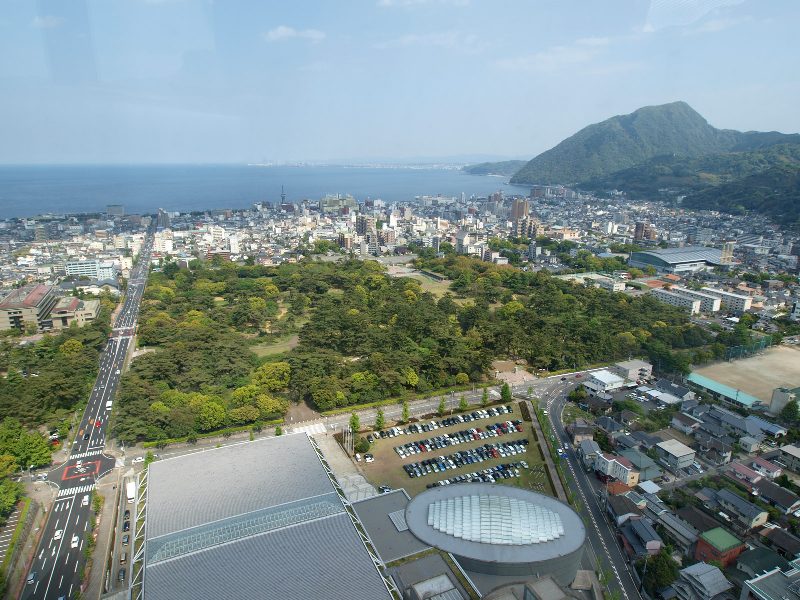
Hatoba Shrine is located in Motomachi, Beppu City, Oita Prefecture, and is known as the guardian shrine of the port, praying for maritime safety and harbor development. The shrine enshrines seven deities related to the ocean and navigation, also known as the 'Seven Shrines'. It is close to Beppu's famous Takegawara Onsen and Beppu Ginza shopping street, making it a suitable spot for a leisurely visit.
Getting There
The easiest way to reach Hatoba Shrine is to take the JR Nippo Main Line to 'Beppu Station' and walk about 9–10 minutes from the east exit. Walk along the shopping street towards Takegawara Onsen, and you will see the small shrine built on a stone terrace as you approach the area.
Highlights
The highlight of Hatoba Shrine is the enshrinement of seven deities related to the ocean and navigation, hence the name 'Seven Shrines', which has long protected the safety and prosperity of Beppu Port. The shrine was established in the third year of the Meiji era to pray for the safety and development of the old Beppu Port (Kusunoki Port), closely linked to Beppu's port history and maritime culture. The main deity, Ōmononushi, is also worshipped at Kotohira Shrine, and locally it has long been referred to as 'Konpira-sama'. In recent years, due to its proximity to the former home of famous pitcher Inao Kazuhiro, it has been nicknamed 'Inao Shrine', holding special significance for baseball fans. The shrine is located on a high ground behind Takegawara Onsen, surrounded by stone walls, creating a tranquil and simple atmosphere that contrasts interestingly with the bustling hot spring street, making it a great place to take a short break and meditate during a stroll in Beppu Onsen.
What to See
• Main Hall and Worship Hall: Established in 1870 (the third year of the Meiji era) to pray for the safety and development of the old Beppu Port, the building is small but well-structured, embodying the historical significance of the guardian shrine of the port. • Stone Terrace Shrine Grounds: The shrine is located on a high ground surrounded by stone walls, requiring visitors to climb stairs to enter, creating a visual height difference with the surrounding neighborhoods, making the shrine grounds particularly quiet and independent. • Seven Deities of the Sea: The shrine enshrines seven deities including Ōmononushi, Kichijōten (the legendary Empress Jingu), Kuramitsu no Kami, Sugawara no Kami, Ichikishimahime no Kami, Mitotsunomikoto, and Kotohira no Kami, symbolizing protection for maritime safety, port prosperity, and blessings for academics, arts, and commerce. • Approach and Torii Gate: In 1907 (the 40th year of the Meiji era), a tamagaki was built and a torii gate was donated when the shrine grounds were developed. The process of walking through the torii gate and ascending the steps allows visitors to gradually transition from the hustle and bustle of the hot spring shopping street into a serene religious space. • Nearby Scenery of Takegawara Onsen: The shrine is backed by Beppu's iconic public bathhouse 'Takegawara Onsen'. From the shrine grounds, visitors can enjoy the unique view of the low-rise buildings, alleys, and steam of Beppu's hot spring street, making it suitable for a visit before or after enjoying the hot springs and shopping street.
Hours & Admission
Hatoba Shrine is an open space, allowing visitors to freely worship at any time without specific opening or closing hours. There is no admission fee, and worship within the shrine is completely free, with a typical visit lasting about 10 minutes. There is no dedicated parking lot or public restroom on site, so if driving, visitors should use nearby coin-operated parking lots or restrooms at public facilities like Takegawara Onsen. According to some worship records, the goshuin (shrine stamp) can be obtained at Hirano Museum, which is about a 1-minute walk away; however, the actual method of obtaining it may vary, so it is recommended to confirm with the local tourist information center or the museum before visiting.
Address
16 Motomachi, Beppu City, Oita Prefecture
Travel Tips
When visiting Hatoba Shrine, it is recommended to combine it with a stroll through Beppu's hot spring street, with a typical stay of about 10–20 minutes, making it a suitable stop before or after soaking at Takegawara Onsen. Beppu is a hot spring tourism city, making it suitable for visits year-round. If you want to enjoy both the hot springs and the neighborhood stroll, the cool seasons of autumn, winter, and early spring are particularly comfortable; during the summer, when temperatures are higher, it is advisable to visit in the morning or evening for cooler temperatures. The shrine grounds consist of stone steps and a stone terrace, which may be slippery on rainy days, so it is recommended to wear non-slip shoes and be cautious. There are no parking lots or restrooms on site, and there are no staff members stationed at the shrine for inquiries. If you need travel information, you can obtain materials in advance at the tourist information center in front of Beppu Station or check online information. Nearby are nostalgic areas like Beppu Ginza shopping street and Takegawara Alley, where visitors can easily connect cafes, izakayas, and hot spring facilities, making it a great route to experience local life and the charm of a small town.
Nearby Dining
There are plenty of dining options around Hatoba Shrine, mainly concentrated in Beppu Ginza shopping street and the alleys around Takegawara Onsen, ranging from local diners to izakayas. If you want to taste local flavors of Beppu, consider traditional diners and izakayas nearby that serve oden, chicken tempura, and Bungo mackerel dishes, making it suitable for dining after evening worship to experience the local nightlife atmosphere. If you prefer light meals and coffee, there are also several nostalgic cafes and small dessert shops scattered throughout the shopping street, where you can arrange for a cup of coffee or a simple afternoon tea before or after worship, along with a stroll through the neighborhood. Since store hours vary, some small shops may be closed on weekdays or during the afternoon, so it is advisable to check the latest business information in advance or have alternative options ready.
FAQ
Q: What deities are mainly worshipped at Hatoba Shrine? What benefits do they provide? A: Hatoba Shrine mainly worships Ōmononushi, Kichijōten, Kuramitsu no Kami, Sugawara no Kami, Ichikishimahime no Kami, Mitotsunomikoto, and Kotohira no Kami, which are seen as guardians of maritime traffic safety, port prosperity, and various blessings for business and academics. Among them, Ōmononushi and Kotohira no Kami are related to maritime transport and navigation, continuing the religious significance of praying for the development and safety of the old Beppu Port (Kusunoki Port) at the time of its establishment; Sugawara no Kami is widely known as the god of learning, making it suitable for students or examinees to pray for academic success and smooth examinations. Because it shares the worship of Ōmononushi with Kotohira Shrine, it has long been referred to as 'Konpira-sama' locally, and can be seen as one of the 'small Konpira' faith centers in Beppu. Q: How do I get to Hatoba Shrine? How far is it from Beppu Station and Takegawara Onsen? A: Hatoba Shrine is about a 9–10 minute walk from JR Beppu Station, with a gentle route mainly along the shopping street, making transportation very convenient. Starting from the east exit of Beppu Station, follow the signs towards Beppu Ginza shopping street and Takegawara Onsen. Once you reach the area near Takegawara Onsen, you can see the entrance to the shrine built on the stone terrace along the small road behind. If taking a bus, as long as you can reach Beppu Station or the Takegawara Onsen area, it is generally within a 5–10 minute walking distance after getting off, making it very friendly for independent travelers. Q: Is there an opening time or admission fee for Hatoba Shrine? A: Hatoba Shrine is an open space, allowing visitors to freely enter and worship at any time without specific opening or closing hours. Worship is completely free, and no prior reservation is needed, allowing travelers to visit according to their own itinerary. Many visitors stop by before or after visiting Beppu's hot spring street or soaking in the hot springs. It is important to note that the shrine does not have abundant lighting facilities, so if visiting at night, be cautious of your steps; additionally, there are no dedicated parking lots or restrooms on site, so if needed, you can use nearby coin-operated parking lots and public facilities. Q: What are the alternative names for Hatoba Shrine? Why is it called 'Inao Shrine'? A: Hatoba Shrine is referred to as 'Seven Shrines' due to the enshrinement of seven deities, and it has long been called 'Konpira-sama' locally due to its main deity Ōmononushi being associated with Kotohira Shrine. Additionally, because the shrine is near the former home of famous pitcher Inao Kazuhiro, it has also been nicknamed 'Inao Shrine' by baseball fans and local residents, becoming a symbol of victory and success for baseball enthusiasts. These alternative names reflect the multi-layered connections between the shrine's faith in port safety, local life, and baseball culture, giving the small shrine grounds a rich narrative.