
Hehuan Mountain National Forest Recreation Area
Taiwan · Hualien County · Xiulin Township · Nature & Scenery
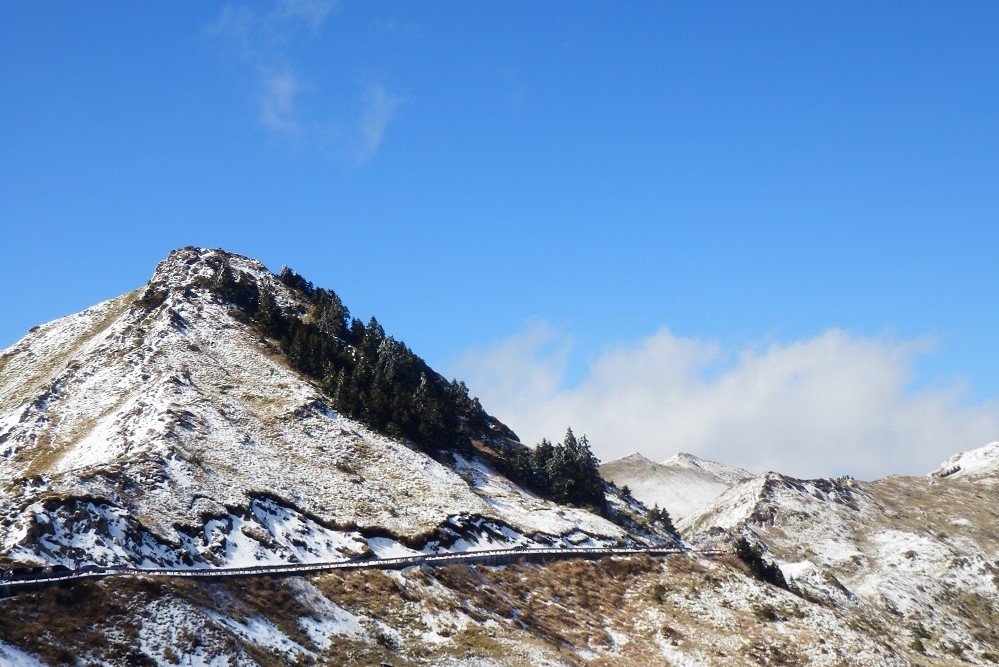
Image source: Taiwan_Opendata; license credits as shown.
Overview
When it comes to snow and high mountains, Hehuan Mountain is the top choice for many people in Taiwan, and that is exactly what makes Hehuan Mountain National Forest Recreation Area so uniquely scenic. Hehuan Mountain National Forest Recreation Area is Taiwan’s first national forest recreation area. It earned this honor as early as 1963 because of its exceptional scenery and alpine ecosystem. Here you can see vast Yushan bamboo grasslands, experience temperatures that are about 18°C colder than lowland areas, easily hike three of the park’s famous peaks that are all over 3,000 meters high—Hehuan Main Peak, Hehuan East Peak, and Shimen Mountain—and stay at Songxue Lodge to enjoy a magnificent sea of stars at night. The area is also home to many birds found only at high elevations, including the alpine accentor, Vinaceous rosefinch, and fire-tailed sunbird, waiting for you to visit. Snow scenery is one of Hehuan Mountain’s signature features. In winter, the pure white snow is one of the most enchanting dreamlike sights in subtropical Taiwan. Every May, the elegant Yushan rhododendron flower sea covers the green mountain slopes with red and white patches, almost like a fresh snowfall, creating one of the area’s most stunning seasonal scenes and showcasing the beauty of Hehuan Mountain National Forest Recreation Area throughout the year.
Getting There
[By car] National Freeway 6 → end of Puli Interchange → Provincial Highway 14 → Wushe → Provincial Highway 14A → Hehuan Mountain. From the end of National Freeway 6, take the Puli Interchange, follow Provincial Highway 14 to Wushe, then turn onto Provincial Highway 14A to reach Hehuan Mountain. [By car] Hualien Taroko → Provincial Highway 8 → Dayuling → Provincial Highway 14A → Hehuan Mountain. From Taroko in Hualien, take Provincial Highway 8 to Dayuling, then turn onto Provincial Highway 14A to reach Hehuan Mountain. (Provincial Highway 14A is an important route between central Taiwan and Hualien, and traffic jams are common on holidays.) [Public transportation] Bus information: first travel to Puli, then to Cingjing Farm. You can take Nantou Bus routes 6658, 6659, or 6664 to Cingjing Farm, then transfer to the Cingjing-Wuling-Hehuan Mountain route (6658A) to Songxue Lodge. Nantou Bus customer service: (049)2984-031. [Public transportation] Happiness Bus and Happiness Taxi operating information: [Fixed route (6658A)] Bus stop → National Guest House → Cingjing Farm Visitor Center → Guanshan Pasture → Green Green Grassland → Naruwan → Apple Orchard → Fujia Orchard → Renzhuang → Norwegian Forest → Songgang → Meifeng → Daoban House → Cuifeng → Yanfeng → Wuling → Songxue Lodge → Shimen Mountain → Hehuan Management Station → Xiaofengkou [Flexible route] Puli → Wushe → Cingjing Farm → Hehuan Mountain → Aowanda → Lushan Hot Spring → Lushan → Songgang → Cuifeng → Wanda → Guoxing → Yuchi Nantou Bus phone: 049-2984031 Website: http://www.ntbus.com.tw/cj-m.html Online reservation: http://www.ntbus.com.tw/bs-go.html
Highlights
Taiwan’s first national forest recreation area, spanning the alpine landscape on the border of Hualien County and Nantou County, is famous nationwide for snow viewing, stargazing, high-mountain hiking on famous 3,000-meter peaks, alpine flower fields, and birdwatching. In spring, Yushan rhododendrons and other alpine wildflowers bloom; in summer, the weather is cool and refreshing; in autumn, the colors of the grasslands and forests change; and in winter, the peaks are covered in snow, making this a truly beautiful highland realm in every season. At an elevation of about 2,300 to 3,400 meters, it is Taiwan’s highest national forest recreation area. From here you can look out over the Qilai mountain range and even Yushan, and experience an alpine ecosystem where bamboo grasslands and fir forests intertwine into a mountain paradise. Snow often falls in winter, giving Hehuan Mountain the nickname “Snow Town,” and making it a favorite snow-viewing destination for people in Taiwan. At high-elevation lodgings, visitors can also enjoy a sky full of stars and the Milky Way at night. The area is home to many endemic birds and plants of Taiwan’s high mountains, making it especially appealing to photographers, hikers, and nature lovers.
What to See
1. Hehuan Main Peak One of the core peaks of the Hehuan range, this is one of the more accessible 3,000-meter mountains in the area. The trail is relatively gentle, and on clear days you can see the Qilai mountain range and the peaks of the Central Mountain Range. Along the way, you can enjoy alpine bamboo grasslands and fir forest scenery, making it a popular choice for beginners trying their first high-mountain summit. 2. Hehuan East Peak A well-known 3,000-meter peak that rises above 3,400 meters. From the summit, the view is wide open, with sweeping views of the Hehuan Mountain Highway and surrounding ranges. The sunrise and sea of clouds are especially spectacular. In spring and summer, Yushan rhododendrons and other alpine flowers often dot the slopes, making it a favorite spot for photography enthusiasts. 3. Shimen Mountain Considered one of the most accessible 3,000-meter peaks, it has a short ascent and a gentler slope, making it ideal for beginners to alpine hiking. The trail offers expansive views, including distant looks at the Qilai range and the Hehuan peaks, and it is also a good place to watch sunrise, sea of clouds, and starry skies. 4. Yushan bamboo grasslands The park’s extensive Yushan bamboo grasslands are one of the most iconic landscapes of Hehuan Mountain. They are lush green in spring and summer, turn golden in autumn, and create a dramatic mountain scene together with the ridges and roadways. They can be enjoyed from both trails and roadside viewpoints. 5. Yushan rhododendron sea (around May each year) Around May every year, Yushan rhododendrons and red-haired rhododendrons bloom across the mountain slopes, with white, pink, and red blossoms spread over the green hillsides. From a distance, it looks as if a layer of floral snowfall has settled again, making it one of the most dreamlike spring scenes at Hehuan Mountain and an excellent time for flower viewing, hiking, and photography. 6. Snow scenery and winter silver mountains When cold fronts arrive in winter, Hehuan Mountain often sees snowfall and frost. The bamboo grasslands and mountain roads are covered in white, creating a silver landscape. Along Provincial Highway 14A and around Wuling, visitors can enjoy rare subtropical mountain snow scenery, attracting many people to build snowmen, play in the snow, and take photos. 7. Songxue Lodge area and the high-mountain starry sky Around Songxue Lodge, the area’s famous high-altitude lodging, visitors can admire the mountain range by day and enjoy an excellent stargazing site at night. With relatively little light pollution, clear nights can reveal a spectacular Milky Way and a sky full of stars. In winter, the snow scenery makes the experience even more magical. 8. Observing high-mountain bird species The park is home to many birds limited to high elevations, such as alpine accentors, Vinaceous rosefinches, and fire-tailed sunbirds, often found near forest edges, bamboo grasslands, and trailsides. For birdwatchers and nature observers, this is an excellent place to see Taiwan’s alpine birds up close, especially with binoculars or a telephoto lens. 9. Provincial Highway 14A and the Wuling area viewpoints The section of Provincial Highway 14A and the Wuling road that runs through Hehuan Mountain is a classic alpine road landscape. It offers distant views of the Qilai range, Nanhu Mountain, Yushan, and other famous peaks, while overlooking layers of valleys and seas of clouds. It is a must-drive route for many self-drive travelers and cyclists.
Hours & Admission
Parking: Small car: NT$25. Monday to Thursday (excluding holidays and national holidays), car parking is NT$25 per half hour. Large motorcycle over 250cc: NT$25 per half hour, with a daily maximum of NT$300. Parking has a 15-minute grace period. The parking lots use barrier control for entry and exit; cars are identified by license plate recognition and leave after paying at the self-service payment machine. Cars use AI dynamic image recognition for entry and exit. Large motorcycles use rear license plate recognition for entry and do not need to scan a QR code, but they must park in the designated recognition area; please avoid luggage boxes affecting recognition. In heavy snow or dense fog, the normal recognition and payment process remains in place for both cars and motorcycles; if extreme weather occurs, a separate announcement will be made. Payment methods at each parking lot are as follows: Hehuanshan Villa, Wuling, and Da-Kunyang: EasyCard, iPASS, cash, multiple mobile payments (LINE Pay, JKOPay, Taiwan Pay, Easy Wallet, Pi Wallet, PX Pay, and Full Pay), and online credit card payment. Xiaokunyang: EasyCard, iPASS, and the shared payment machines used by Da-Kunyang can also be used interchangeably. Cash is accepted only in the following denominations: NT$10, NT$50, and NT$100. Motorcycle: NT$20. For motorcycles with engine displacement less than or equal to 250cc, the fee is NT$20 per entry. At Kunyang Parking Lot, motorcycles enter by inserting NT$20 in coins (two NT$10 coins) and do not need to pay again when leaving. At Wuling Parking Lot, motorcycles may enter directly and can pay on exit using EasyCard, iPASS, or NT$20 in coins (two NT$10 coins). Cash is accepted only in the following denominations: NT$10, NT$50, and NT$100. Small car: NT$30. Friday to Sunday (including holidays) and national holidays, car parking is NT$30 per half hour. Large motorcycle over 250cc: NT$30 per half hour, with a daily maximum of NT$300. Parking has a 15-minute grace period. The parking lots use barrier control for entry and exit; cars are identified by license plate recognition and leave after paying at the self-service payment machine. Cars use AI dynamic image recognition for entry and exit. Large motorcycles use rear license plate recognition for entry and do not need to scan a QR code, but they must park in the designated recognition area; please avoid luggage boxes affecting recognition. In heavy snow or dense fog, the normal recognition and payment process remains in place for both cars and motorcycles; if extreme weather occurs, a separate announcement will be made. Payment methods at each parking lot are as follows: Hehuanshan Villa, Wuling, and Da-Kunyang: EasyCard, iPASS, cash, multiple mobile payments (LINE Pay, JKOPay, Taiwan Pay, Easy Wallet, Pi Wallet, PX Pay, and Full Pay), and online credit card payment. Xiaokunyang: EasyCard, iPASS, and the shared payment machines used by Da-Kunyang can also be used interchangeably. Cash is accepted only in the following denominations: NT$10, NT$50, and NT$100.
Address
No. 65, Guanyuan, Xiulin Township, Hualien County 972 Tel: (049)2802980
Travel Tips
1. Best seasons and recommended experiences - Winter (around December to March): Ideal for snow viewing and frost landscapes, but you should pay special attention to icy roads and traffic controls, and prepare for cold weather and safety. - Spring (around April to May): Yushan rhododendrons and alpine wildflowers are in bloom, making this the best season for hiking, flower viewing, and photography. Crowds are larger, so plan transportation and lodging early. - Summer (around June to August): The weather is cooler and pleasant, making it a good time for escaping the heat and stargazing. Afternoons are more likely to be foggy or have brief rain, so early morning and morning itineraries are best. - Autumn (around September to November): The weather is more stable and visibility is good, making it ideal for sunrise, sea of clouds, and distant mountain views, as well as comfortable hiking. 2. High-mountain climate and gear - Hehuan Mountain is about 2,300 to 3,400 meters above sea level, so temperatures are much lower than at low elevations, sometimes by about 18°C. A warm jacket is recommended year-round. - In winter, early morning, or at night, temperatures can be especially low. Bring layered warm clothing, a hat, gloves, and a windproof jacket. Shoes should ideally be non-slip hiking shoes or athletic shoes with good traction. - Weather changes quickly, so bring rain gear, a waterproof jacket, and a rain cover for your backpack. 3. Altitude sickness and health precautions - Because of the high altitude, some visitors may experience mild altitude sickness, such as headaches or shortness of breath. It is recommended to rest well before going up and avoid going quickly from low elevation straight to high elevation. - Plan a slower pace, avoid strenuous exercise, and drink plenty of water while staying warm. If you have chronic heart or lung conditions, consult a doctor in advance. 4. Transportation and road conditions - Hehuan Mountain lies on the border of Hualien County and Nantou County. It can generally be reached from either side via major mountain roads, and both self-driving and tour buses are common. - After winter weather or heavy rain, some road sections may have restrictions, rockfalls, or icy conditions. Check the latest road and weather information before departing and allow plenty of driving time. - Mountain roads have many curves and steep slopes, so those prone to motion sickness are advised to take motion sickness medication in advance and bring plastic bags and tissues. 5. Travel and safety reminders - Sunrise, starry skies, and snow scenery often require early morning or nighttime activity. Please keep warm, bring a headlamp or flashlight, and travel with companions. - Sunset comes early in the mountains, so be sure to estimate trail round-trip time and avoid being on the trail after dark. - Stay on existing trails and viewing areas. Do not leave marked routes or trample fragile alpine vegetation, and follow park notices and signs. - Garbage collection is difficult in the mountains, so please bring a trash bag and take all waste back down with you. 6. Photography and viewing suggestions - Sunrise and sea of clouds: Arrive before dawn at ridgelines or roadside viewpoints with open views, and pay attention to warmth and road safety. - Stargazing: Choose nights with no moon or weak moonlight, stay away from large buildings and vehicle lights, and give your eyes time to adapt to the dark so you can see the most spectacular Milky Way and starry sky. - Wildlife viewing: Use binoculars or a telephoto lens, keep a respectful distance, and observe quietly. Do not feed or disturb birds or other wild animals.
FAQ
Q: Is Hehuan Mountain National Forest Recreation Area suitable for families with children or beginner hikers? A: Although Hehuan Mountain is at high altitude, routes such as Shimen Mountain and Hehuan Main Peak are considered relatively accessible 3,000-meter hiking routes, and the distance and slope are manageable for beginners with decent fitness and families with older children. However, because of the high elevation, you still need to watch for altitude sickness, weather changes, and warm clothing. Beginners are advised to start with shorter, time-controlled trails and leave enough time for rest. Q: In which season can you see snow at Hehuan Mountain? A: Snow at Hehuan Mountain is most common during winter cold fronts, with a higher chance from December through February or March each year. Whether it actually snows depends on the weather that year. Even without snowfall, winter mornings and nights are still very cold, and frost and freezing scenes are common. Check the weather forecast and mountain road conditions before planning your trip. Q: Do you need a special park entry permit or mountain permit to visit Hehuan Mountain? A: Most visitors to Hehuan Mountain National Forest Recreation Area mainly use scenic highways, short trails, and beginner-friendly 3,000-meter routes, so a special park entry permit or mountain permit is usually not required. However, if you plan to climb more remote nearby high-mountain routes or do multi-day traverses, some routes may require entry or mountain permits. It is best to check the latest regulations in advance or contact the management authority and relevant national park information. Q: What safety points should I pay attention to when going to Hehuan Mountain for snow viewing or sunrise? A: When going up in winter or early morning, pay special attention to icy roads and heavy fog. Drive slowly and keep a safe distance from the vehicle ahead. Use snow chains if necessary and watch for traffic control information. During outdoor activities, wear warm, windproof, and waterproof layered clothing, along with gloves, a hat, and non-slip shoes, and avoid staying in strong winds for long periods. Sunrise and stargazing photography often take place in low temperatures, so it is recommended to travel with companions and monitor your physical condition at all times. If you feel dizzy, have a severe headache, or experience breathing discomfort, descend and rest as soon as possible.