
Pura Luhur Poten
Indonesia · Landmarks
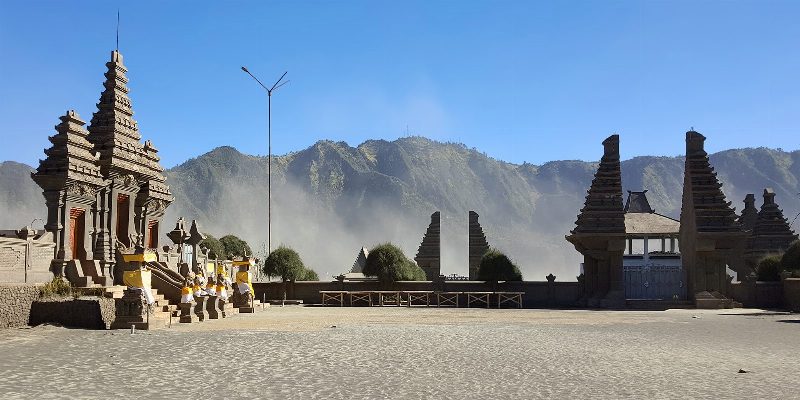
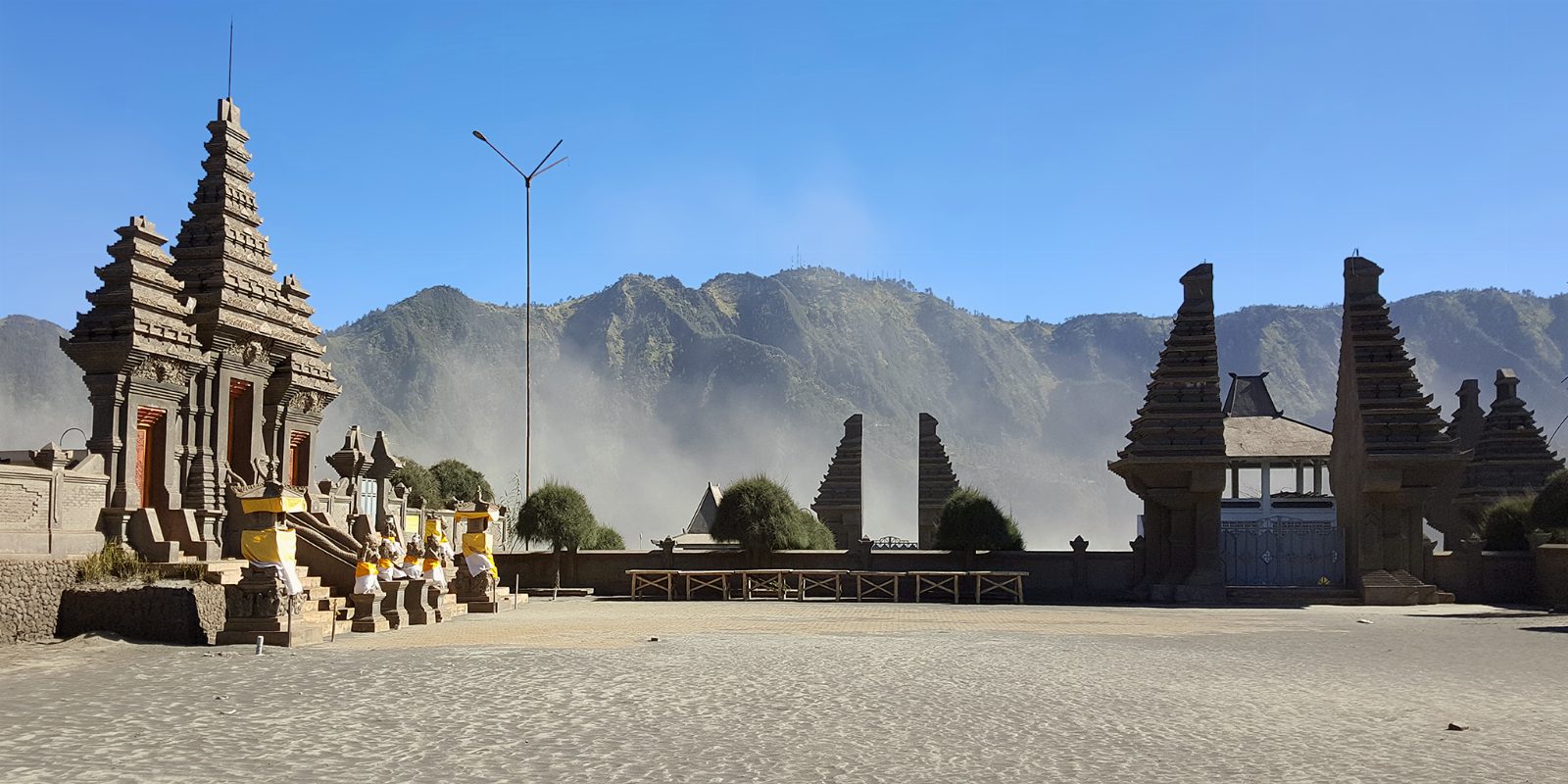
Image source: Wikimedia Commons; license credits as shown.
Overview
Pura Luhur Poten is an important Hindu temple located in the center of the 'Sea of Sand' (Laut Pasir/Segara Wedi) of Mount Bromo in East Java, Indonesia. It is one of the most sacred centers of belief for the Tenggerese people. The temple is constructed from black volcanic rock and stands on the barren volcanic sand plain at the foot of Mount Bromo and Mount Batok, offering a magnificent and mysterious landscape. This site is not only a must-visit for tourists heading to the Bromo crater but also the core location for traditional rituals such as the annual 'Yadnya Kasada'. For travelers, it showcases a unique blend of East Java's volcanic terrain and local religious culture.
Getting There
To reach Pura Luhur Poten, most travelers will first drive to the gateway village of 'Cemoro Lawang', and then enter the Sea of Sand area of Bromo-Tengger-Semeru National Park. From Cemoro Lawang or the national park parking area, visitors can walk, ride horses, or take a four-wheel drive jeep across the Sea of Sand to the temple, which takes about 20 to 40 minutes depending on the route and physical condition. If starting from Surabaya or Malang, travelers usually need to hire a car or join a one or two-day tour to the national park entrance, then transfer to local jeeps to enter the volcanic area.
Highlights
The main feature of Pura Luhur Poten is that it serves as an active religious worship center built from black volcanic rock, rather than just a tourist attraction. The temple is the core site for the annual 'Yadnya Kasada' and other rituals of the Tengger Hindu community, where devotees come to pray and offer livestock and agricultural products at the Bromo crater. The architectural layout follows a 'mandala' style, with multiple halls and altars that create a strong contrast with the surrounding gray-white sand. Early morning and dusk are the best times to appreciate the temple against the backdrop of Mount Bromo and Mount Batok, making it an excellent moment to enjoy the interplay of volcanic scenery and religious culture.
What to See
Key attractions around Pura Luhur Poten include: 1. **Volcanic Black Stone Temple Architecture**: The entire temple is made of local black volcanic stone, distinctly different from the commonly seen red brick Balinese temples, with a simple yet solemn appearance. 2. **Mandala-style Spatial Configuration**: The temple is divided into multiple courtyards and altar spaces, presenting a 'mandala' structure that symbolizes cosmic order and sacred realms. 3. **Sea of Sand (Laut Pasir/Segara Wedi) Landscape**: The temple stands in the middle of the vast volcanic sand plain, surrounded by a desolate gray-white expanse, creating an almost surreal scene. 4. **Mount Bromo and Mount Batok Background**: The temple is located at the foot of Mount Batok, adjacent to Mount Bromo, with layered volcanic cones visible from the sandy ground, offering spectacular views. 5. **Yadnya Kasada Ritual Scenes**: During the annual Yadnya Kasada festival, devotees gather between the temple and the crater to perform prayers and offerings, providing a vivid opportunity to observe Tengger traditional beliefs. 6. **Morning and Fog Atmosphere**: In the early morning or during foggy conditions, the temple appears intermittently through mist and sand, complemented by the distant volcanic outlines, making it ideal for photography and quiet reflection.
Hours & Admission
There is no additional admission fee for Pura Luhur Poten itself; visitors only need to pay the entrance fee for Bromo-Tengger-Semeru National Park (TNBTS) to access the temple area. The temple serves as a place for local devotees' daily and festive worship, and is generally open all day, although certain areas may be temporarily closed to the public during major rituals (such as Yadnya Kasada). The Yadnya Kasada festival usually occurs in a specific lunar month each year, lasting about a month, with peak rituals on several designated days, when crowds are larger, so it is advisable to arrange transportation and accommodation in advance. Specific opening hours and national park ticket prices may vary annually, so it is recommended to check with local travel agencies or the national park management for the latest information before departure.
Address
Pura Luhur Poten Gunung Bromo, Laut Pasir, Cemorolawang, Desa Ngadisari, Kecamatan Sukapura, Kabupaten Probolinggo, Jawa Timur 67254, Indonesia (within Bromo-Tengger-Semeru National Park)
Travel Tips
When visiting Pura Luhur Poten, it is essential to respect its nature as a sacred worship space for the Tengger Hindu community, rather than merely viewing it as a photo opportunity. It is recommended to visit in the early morning or late morning to avoid the common afternoon fog and high temperatures, and to easily combine it with a Bromo sunrise tour. The Sea of Sand is made of loose volcanic sand, making walking difficult, especially when it is windy, so it is advisable to wear sturdy shoes, long pants, and bring a mask or scarf to protect your mouth and nose, as well as your camera. There are few shelters and shops around the temple, so bring your own drinking water, sun protection, and warm clothing (as morning temperatures can be significantly low). During rituals like Yadnya Kasada, please remain quiet and do not disturb the proceedings; it is best to seek permission from locals or priests before taking photos. If riding horses or renting a jeep to cross the Sea of Sand, be sure to agree on prices in advance and choose reputable drivers and guides to ensure safety.
Nearby Dining
There are almost no formal dining facilities in the Sea of Sand area where Pura Luhur Poten is located, so travelers often eat or get simple supplies in nearby villages (especially Cemoro Lawang). Cemoro Lawang has several family-run small restaurants and guesthouse eateries that offer Indonesian home-cooked dishes, fried noodles, fried rice, and simple hot drinks, suitable for meals or breaks before and after sunrise tours. Near the national park entrance and parking area, some vendors sell ready-to-eat snacks and bottled drinks, but the selection is limited, so it is recommended to bring your own light snacks and water, especially for early morning Bromo volcano/temple tours. Some accommodations may offer 'packed breakfast' or simple meals for guests to take to viewing points or the Sea of Sand area, so it is advisable to inquire with hotels or guesthouses when making reservations.
FAQ
Q: Where is Pura Luhur Poten located? A: Pura Luhur Poten is located in the center of the Sea of Sand of Mount Bromo in East Java, Indonesia, and is part of Bromo-Tengger-Semeru National Park. The temple is situated between Mount Bromo and Mount Batok, and is typically accessed by walking, riding horses, or taking jeeps across the Sea of Sand after entering the national park from mountain villages like Cemoro Lawang. Q: How do I get to Pura Luhur Poten? A: To reach Pura Luhur Poten, travelers generally first take a car from Surabaya or Malang to Cemoro Lawang or other entrance villages, then enter the Sea of Sand area of Bromo National Park. From the parking lot or village, visitors can choose to walk, rent horses, or take jeeps to the temple, which takes about 20 to 40 minutes depending on the starting point and mode of transportation. Q: Is there an admission fee for Pura Luhur Poten? A: Visiting Pura Luhur Poten itself does not require an additional admission fee, but visitors must first pay the entrance fee for Bromo-Tengger-Semeru National Park to access the Sea of Sand area. The temple serves as a place for religious activities, and there are often donation boxes on-site where visitors can freely contribute to support the temple's maintenance and rituals. Q: What are the opening hours of Pura Luhur Poten? A: Pura Luhur Poten, as a local center of faith, is generally visible all day, with no specific tourist opening hours, but certain areas may be temporarily closed to visitors during important rituals. Whether visitors can enter depends on whether there are religious activities and on-site regulations, so it is advisable to respect the temple and priests' instructions and avoid disturbing worshippers during rituals. Q: What is the Yadnya Kasada festival, and what is its relation to the temple? A: The Yadnya Kasada festival is an important annual celebration for the Tengger Hindu community, where devotees bring livestock, agricultural products, and money to offer at the Bromo crater after praying at Pura Luhur Poten, seeking peace and prosperity. The festival usually lasts about a month, peaking on several key days, when large crowds of devotees and tourists gather between the temple and the crater, making it one of the most impactful moments to experience local culture. Q: Are there any dress or etiquette requirements for visiting Pura Luhur Poten? A: When visiting Pura Luhur Poten, it is recommended to dress modestly (avoiding overly revealing clothing) and to remain quiet and respectful during rituals or prayers, avoiding loud noises or climbing on structures. If you wish to photograph rituals or devotees, it is best to seek permission from them or the priests first; please follow the guidance of local guides or temple officials before entering specific altars or inner courtyards. Q: What is the best time to visit Pura Luhur Poten? A: Most travelers choose to visit Pura Luhur Poten in the early morning, often combining it with a Bromo sunrise and crater tour, as the light is soft and crowds are relatively sparse. If you want to experience the atmosphere of the Yadnya Kasada festival, keep an eye on the festival dates announced by the national park or local community each year, but expect large crowds and plan accommodation and transportation in advance. Q: Can I walk from Pura Luhur Poten to the Bromo crater? A: Yes, Pura Luhur Poten is on the route to the Bromo crater, and visitors typically cross the Sea of Sand past the temple before continuing to the crater's stairway entrance. It takes about another 20 to 30 minutes to walk from the temple to the start of the Bromo crater stairs, depending on individual walking speed and the condition of the sandy ground.