
Mangrove Ecology Education Center
Taiwan · New Taipei City · 淡水區 · Nature & Scenery
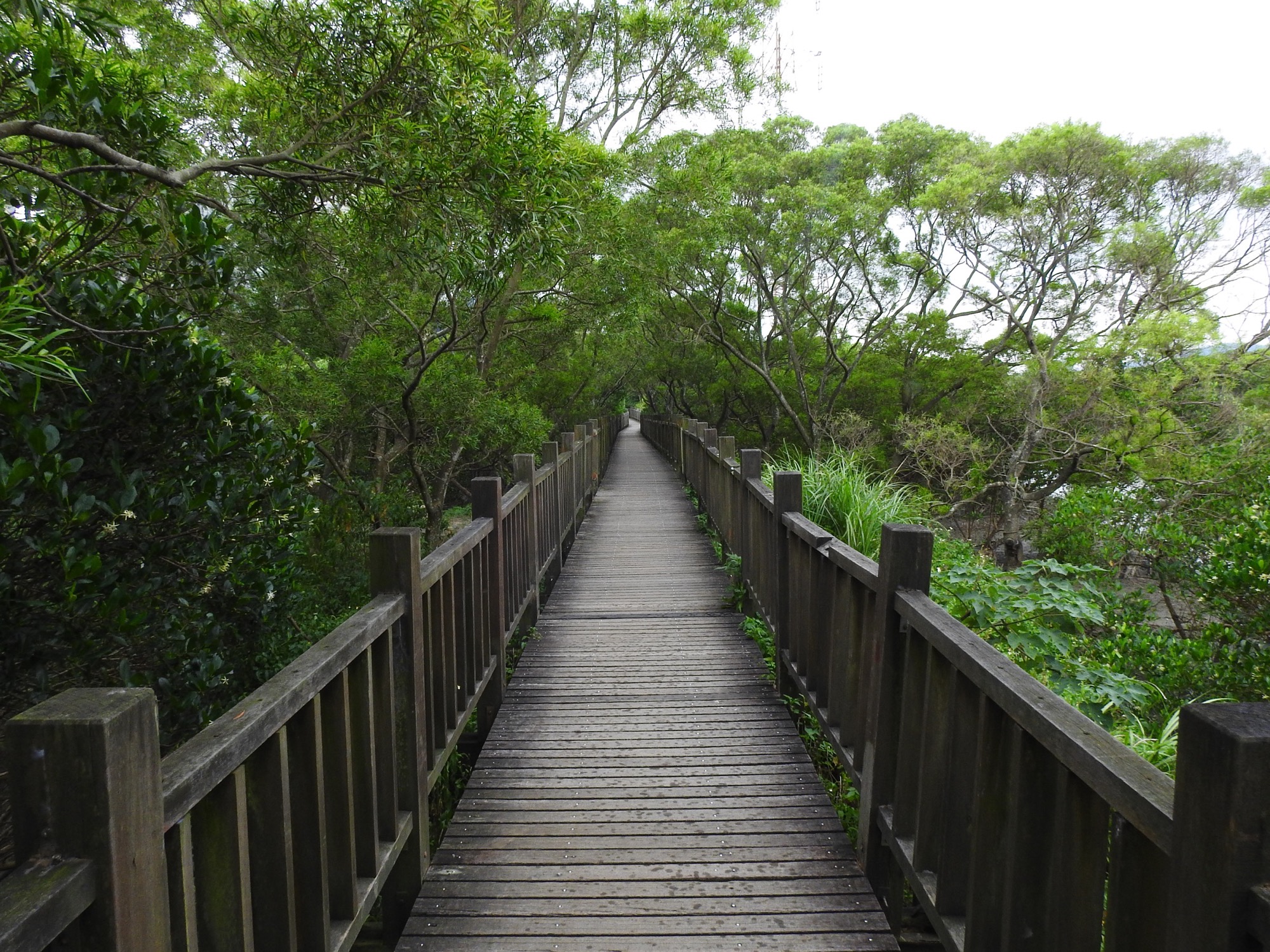
Image source: Taiwan_Opendata; license credits as shown.
Overview
The Mangrove Ecology Education Center is a small but charming environmental education center. Its indoor exhibition spaces include a static display area and a multimedia audiovisual room, using text panels, posters, light boxes, and multimedia presentations to introduce the growth of the mangrove’s signature species, Kandelia obovata, as well as the ecology of fiddler crabs, mudskippers, and water birds found in mangrove habitats. Through its excellent viewing windows, visitors can take in sweeping views of the mangrove forest, the estuary seascape of the Tamsui River, Guanyin Mountain, and the striking red Guandu Bridge. Because the center is located right next to the Tamsui Mangrove Nature Reserve, visitors can observe the mangrove ecosystem up close. If needed, visitors may apply in advance for a guided outdoor ecological trail experience, where they can personally explore the mangrove ecosystem and get close to water birds, intertidal organisms, and the rich variety of estuarine life in the Tamsui Mangrove Ecological Reserve.
Getting There
[By car] Route 1: Exit the Zhongshan Expressway at the Wugu interchange, head north on New Taipei City Route 5, continue via Chengtai Road, cross Guandu Bridge, then follow Minquan Road → Section 2 of Zhongzheng East Road → Mangrove Ecology Education Center. Parking is available at the paid lot at MRT Mangrove Station. [By car] Route 2: Exit the Zhongshan Expressway at the Chongqing North Road interchange, follow Chongqing North Road, cross Bailing Bridge, turn left onto Chengde Road and Dadu Road → Guandu Bridge → Minquan Road → Section 2 of Zhongzheng East Road → Mangrove Ecology Education Center. Parking is available at the paid lot at MRT Mangrove Station. [Public transport] By MRT: Tamsui Line, Mangrove Station, Exit 2. [Public transport] By bus: Get off at MRT Mangrove Station. Routes: 308 Tamkang University–Jiantan Station, 756 Tamkang University–Beimen, 818 St. John's University–Mangrove Station (suspended during winter and summer vacations), 821 Sanzhi–MRT Zhishan Station, 837 Xinchun Street–Fude Village, 857 Danhai–Banqiao, 864 Sanzhi–Jiantan Station, 878 Tamsui Station–Bali, 879 Sanzhi–Guandu, 880 Tamsui–Shulin, 882 Sanzhi–Mangrove Station, 883 Tamsui–Shulin–Danhai, 892 Shimen–Beimen, 893 Beixinzhuang–Taipei, Danhai MRT feeder bus: Danhai New Town–Guandu Station, F107 Ganzhen–Fude Village, F108 Ganzhen–Zhuwei Village, 1504 Danhai–Beimen, 1505 Danhai–Zhonghe, Red 23 Fisherman's Wharf–Zhuwei Station, Red 52 Danhai New Town–Mangrove Station.
Highlights
A small, refined ecological education center located on the second floor of MRT Mangrove Station, next to the Tamsui River Mangrove Nature Reserve. Its theme focuses on the mangrove’s signature species, Kandelia obovata, and estuarine wetland ecology. Through static exhibits, multimedia presentations, and guided tours, visitors can learn about fiddler crabs, mudskippers, water birds, and other key mangrove species and estuarine ecosystem life. The center also features excellent viewing windows and a viewing platform, allowing visitors to enjoy mangrove forests, the Tamsui River estuary, Guanyin Mountain, and the red Guandu Bridge. It is a popular destination for family visits and school field trips that combine ecological education with scenic views. It is also close to the Mangrove Boardwalk and attractions along the Danhai Light Rail, making it easy to plan a half-day or full-day outing.
What to See
1. Indoor static exhibition area: Uses illustrated panels, posters, and light boxes to explain how the mangrove ecosystem formed, the characteristics of mangrove plants, and the growth process of Kandelia obovata from germination to forest formation. The content is easy for families and students to understand. 2. Multimedia audiovisual area: Screens videos and presentations about mangrove ecology, combined with guided interpretation, helping visitors more intuitively understand the estuarine intertidal environment and the behavior of its organisms. It is an indoor option that remains suitable even on rainy days. 3. Viewing windows and platform: Facing the Tamsui River estuary, the education center has large viewing windows and a platform with views of dense Kandelia obovata mangroves, the estuarine waters of the Tamsui River, the ridgeline of Guanyin Mountain, and Guandu Bridge spanning the river. It is a good place for photography and for enjoying sunset and cloud changes. 4. Close observation of the nature reserve: Because the center is adjacent to the Tamsui Mangrove Nature Reserve, visitors can observe the mangrove forest, intertidal mudflats, and estuarine waters from nearby, and watch for fiddler crabs, mudskippers, and other wildlife. 5. Outdoor ecological trail (advance guided booking required): With prior application, visitors can enter the outdoor ecological trail accompanied by a guide and observe water birds, intertidal organisms, and diverse estuarine species in the reserve area. It is a popular outdoor learning activity for groups and schools. 6. Mangrove boardwalk and riverside embankment scenery (nearby): From the riverside ecological trail connected behind MRT Mangrove Station, visitors can walk along the Tamsui River shore and enjoy mangrove scenery and Kandelia obovata stands while looking out over the river and the view across the water.
Address
No. 68, Section 2, Zhongzheng East Road, Tamsui District, New Taipei City 251 Phone: 0916850886
Travel Tips
1. Best seasons and times to visit: Spring and autumn offer the most comfortable weather for outdoor trails and birdwatching. Summer has strong sunlight and high humidity, so earlier or later visits are recommended to avoid the heat. Winter is cooler, but clearer air often provides better views of Guanyin Mountain and Guandu Bridge. 2. Transportation advice: The center is on the second floor of MRT Mangrove Station on the Tamsui Line, and can be reached by elevator or stairs from Exit 2. It is convenient for visitors without cars, families, and older adults. You can also combine it with buses or the Danhai Light Rail for nearby attractions, making it easy to plan a public-transport day trip. 3. Reservations and guided tours: For school or group visits, it is recommended to apply in advance for guided interpretation and the outdoor ecological trail to ensure availability of group size and time slots. Individual visitors can usually freely explore the indoor exhibits and viewing windows. 4. Visiting etiquette and safety: When observing the mangrove and intertidal area outdoors, avoid stepping on plants or disturbing wildlife, do not pick up organisms or take natural items away, and follow the reserve’s regulations and the guide’s instructions. 5. Clothing and equipment: Wear lightweight, breathable clothing and comfortable walking shoes, with long pants recommended. A sun hat, rain gear, mosquito repellent, and drinking water can be prepared according to the season and personal needs. If you plan to stay on the trail for a longer time, pay special attention to sun protection and hydration in summer. 6. Photography and birdwatching tips: Both the indoor viewing windows and outdoor platform are suitable for photography. If you have binoculars or a telephoto lens, you can observe water birds and mangrove details more clearly. Avoid using strong flash when taking photos, as it may disturb wildlife. 7. Itinerary pairing: This visit can be combined with Tamsui Old Street, Fisherman's Wharf, and attractions around Zhuwei. Learning about mangrove ecology at the education center first, then heading to other sites for meals and sunset views, is a popular Tamsui one-day itinerary.
FAQ
Q: Is the Mangrove Ecology Education Center suitable for visiting with children or older adults? A: Yes. The center is not large but has a flat layout, with mostly indoor text and multimedia displays. It is located on the second floor of MRT Mangrove Station and is accessible by elevator, making it friendly for strollers and visitors with limited mobility. Combined with a short outdoor trail, it is relatively easy for family groups and three-generation outings. Q: Do I need to make a reservation before visiting the Mangrove Ecology Education Center? A: Individual visitors and families can usually enter freely without a reservation. However, guided tours or access to the outdoor ecological trail are generally reservation-based group activities. It is recommended to contact the center in advance and complete a booking to secure a spot and guide安排. Q: Which mangrove species can I see up close? A: Through the indoor exhibits and the nearby reserve environment, visitors can learn about the growth stages of Kandelia obovata and common mangrove species such as fiddler crabs, mudskippers, and various water birds. If you join the outdoor ecological trail tour, you may also observe more active estuarine organisms in the intertidal zone and around the estuary. Q: Is it still worth visiting the Mangrove Ecology Education Center on a rainy day? A: Yes. The center focuses mainly on indoor exhibits and multimedia, so it is not affected much by weather. Visitors can also enjoy mangrove and Tamsui River views through the large viewing windows. However, the outdoor ecological trail and boardwalk may need to be adjusted depending on the weather, so it is best to check conditions in advance and bring rain gear.