Mong Kok Kwan Tai Temple
Hong Kong · 旺角 · Landmarks
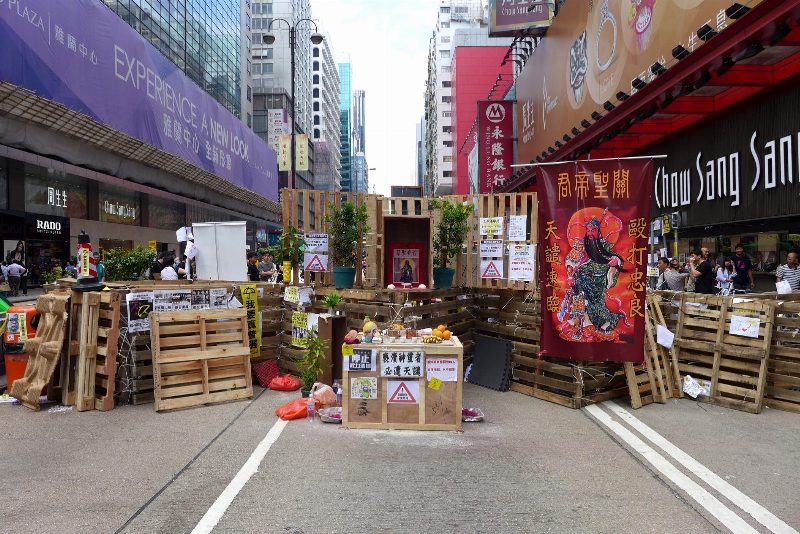
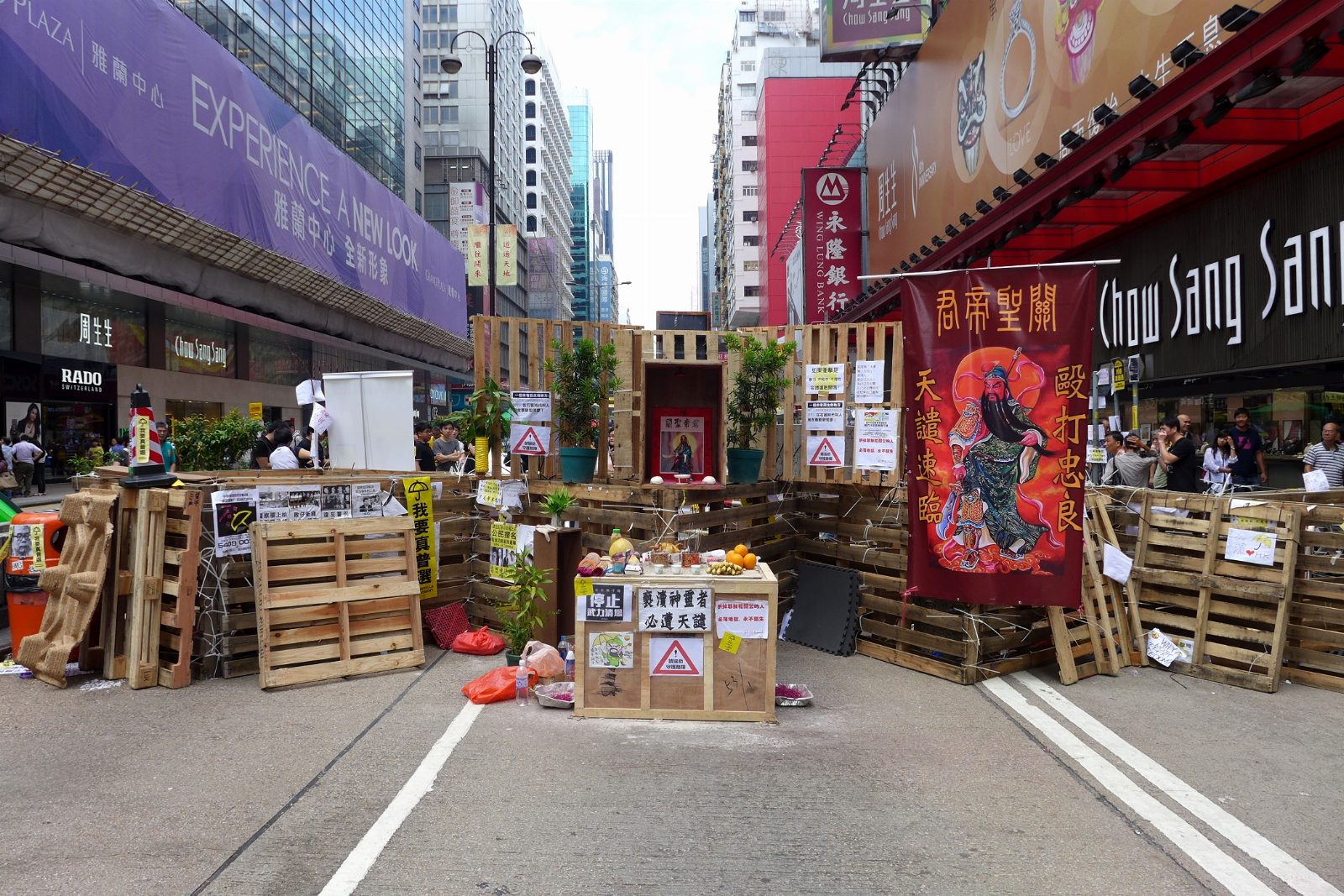
Image source: Wikimedia Commons; license credits as shown.
Overview
The Mong Kok Kwan Tai Temple was a small Kwan Tai temple temporarily built during the Umbrella Movement in 2014 in the Mong Kok Nathan Road occupation area, and it no longer exists. This temple was constructed by protesters seeking the protection of Kwan Tai over the occupied area, symbolizing a collective belief space of loyalty and guardianship, and was demolished during the police clearance operation later that year.
Getting There
The original site of the Mong Kok Kwan Tai Temple was located near the occupation area barriers on Nathan Road in Mong Kok, close to the entrances of the MTR Mong Kok Station and Yau Ma Tei Station, just a few minutes' walk away, but there is currently no temple structure at the site.
Highlights
The Mong Kok Kwan Tai Temple is a highly symbolic temporary religious space in the history of modern social movements in Hong Kong, reflecting a unique cultural phenomenon where citizens combined traditional Kwan Tai beliefs with the democratic movement. The temple was spontaneously built by protesters next to the occupation area barriers to worship Kwan Tai for blessings, becoming one of the frequently photographed scenes by media and visitors during the movement. Although the temple has been demolished, the name 'Mong Kok Kwan Tai Temple' still frequently appears in discussions and texts related to the Umbrella Movement and the memory of civic resistance in Hong Kong.
What to See
Since the Mong Kok Kwan Tai Temple was a temporary structure and was demolished in 2014, there are currently no physical buildings or specific sights to visit. According to reports and photographs from that time, the temple was very small, primarily constructed from wooden boards, canvas, and simple scaffolding, featuring a statue of Kwan Tai, incense burners, and offering tables, with slogans and prayer papers posted around it, creating an atmosphere between a neighborhood small temple and an installation art piece of the movement. If visitors wish to understand the related scenes, they can only rely on old photographs, news documentaries, or images and texts from exhibitions to recreate the appearance of that time.
Hours & Admission
The Mong Kok Kwan Tai Temple was a temporary structure built during the Umbrella Movement and was completely demolished during the police clearance operation on November 26, 2014. It is no longer open and there are no arrangements for public visits. Since the temple no longer exists, there are no current opening hours or ticketing systems; any mention of it as a 'sight' on travel websites or blogs is purely historical and not reflective of the current situation.
Address
The original site of the Mong Kok Kwan Tai Temple was located within the barrier area of the Nathan Road occupation zone in the Yau Tsim Mong District of Kowloon, approximately in the occupied space between the pedestrian and vehicle roads near Nathan Road and Argyle Street. The area has now returned to general vehicular and pedestrian use.
Travel Tips
Since the Mong Kok Kwan Tai Temple has long been demolished, travelers can no longer see any preserved buildings or formal memorials related to the temple at the site. Therefore, it is more suitable as part of a 'historical issue walk' or urban study rather than a traditional temple visit. Travelers interested in the Umbrella Movement and the history of social movements in Hong Kong can walk along Nathan Road from Mong Kok to Admiralty, combining visits to news photography exhibitions, social movement-themed bookstores, or cultural lectures to understand the symbolic significance of the 'Mong Kok Kwan Tai Temple' in the movement through texts and images. It is recommended to take the MTR to Mong Kok Station or Yau Ma Tei Station, then walk through the streets to experience the bustling city atmosphere while imagining the occupation scenes from historical photographs. Since this topic involves political and social stances, it is advisable to maintain respect and discretion when taking photos or interviewing local residents, avoiding forcing others to express their opinions.
Nearby Dining
Although the Mong Kok Kwan Tai Temple no longer exists, its original site is located in the heart of Mong Kok, surrounded by Hong Kong-style tea restaurants, street snacks, and various local eateries, making it an ideal area to experience Hong Kong's daily food culture. Travelers can enjoy Hong Kong-style milk tea, egg tarts, roasted meat rice, wonton noodles, and various clay pot rice and dai pai dong dishes around Nathan Road, Argyle Street, Shandong Street, and Soy Sauce Street, combining the city's culinary experience with modern historical memories into a themed journey. Due to the rapid turnover of restaurants, it is advisable to check the latest popular eateries before arrival or look for shops with local people queuing as reference choices.
FAQ
Q: Is the Mong Kok Kwan Tai Temple still there? Can I visit it? A: The Mong Kok Kwan Tai Temple was completely demolished during the police clearance in November 2014, and there are no temples available for visit at the site. This temple was originally a temporary structure built during the Umbrella Movement, not a permanent religious building, and Nathan Road has now returned to general vehicular traffic, so travelers can only understand its past through photographs and written materials. Q: How is the Mong Kok Kwan Tai Temple different from other Kwan Tai temples in Hong Kong? A: The biggest difference of the Mong Kok Kwan Tai Temple is that it was a temporary small temple spontaneously built by protesters during the Umbrella Movement, rather than a formal temple managed by a traditional community or Chinese temple committee. Other temples, such as the Sham Shui Po Kwan Tai Temple or the Kwai Chung Kwan Tai Temple, are formal religious buildings with longer histories and still in operation, while the Mong Kok Kwan Tai Temple is more like an installation that combines political demands, collective memory, and religious symbolism. Q: If I want to worship Kwan Tai in Hong Kong, where should I go? A: If travelers wish to worship Kwan Tai in Hong Kong, they can visit still-operating formal Kwan Tai temples, such as the Sham Shui Po Kwan Tai Temple on Hoi Tan Street in Sham Shui Po, or various Kwan Tai temples in the New Territories, all of which worship Kwan Tai and have incense burners and altars. In contrast, the Mong Kok Kwan Tai Temple has now become a historical term, suitable for understanding through literature rather than on-site visits. Q: What recommended activities can I arrange when traveling near the original site of the Mong Kok Kwan Tai Temple? A: When visiting the original site of the Mong Kok Kwan Tai Temple, you can arrange a neighborhood walk in Mong Kok and Yau Tsim Mong, including exploring Sneaker Street, Ladies' Market, Goldfish Street, and electronics malls, to experience the high-density urban landscape and street culture. Issues related to the occupation movement can be paired with visits to bookstores, independent cafes, or exhibition spaces to understand this segment of social movement history from multiple perspectives, combined with nearby tea restaurants and street snacks to create a deep cultural and culinary urban tour. Q: What should I pay attention to when discussing or photographing topics related to the Mong Kok Kwan Tai Temple? A: The Mong Kok Kwan Tai Temple involves the Umbrella Movement and political issues in Hong Kong. When discussing or photographing related topics, it is advisable to respect the wishes of local residents and shop owners, avoiding aggressive questioning or pushing for opinions, and maintaining a low profile and politeness. If participating in related lectures or events in cafes, bookstores, or exhibition spaces, it is important to follow venue rules and be aware of whether photography is allowed, and to understand that for many Hong Kong people, this history carries strong emotional and memory significance.