
Shetou Doushan Shrine
Taiwan · Changhua County · Shetou · Historic Sites
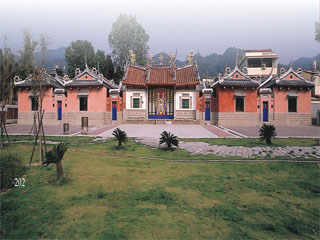
Image source: Taiwan_Opendata; license credits as shown.
Overview
The existing Shetou Doushan Shrine is a traditional Minnan-Hakka Han-style building from the Japanese colonial era. Its interior structure uses a raised-beam timber framework. The wood carvings are finely crafted, and the painted and lacquered decorations are especially distinctive to the region, showing the collaborative craftsmanship of artisans from Changhua and Yunlin. The shrine’s content and themes are rich and varied. It was partially and severely damaged in the 921 earthquake, but after reinforcement it has largely retained its original appearance, though further restoration is still needed. As a clan shrine, Doushan Shrine is not only a symbol of historical culture and ethnic spirit, but is also closely connected to the local social and human landscape. Source: Changhua County Cultural Affairs Bureau. Changhua County Cultural Affairs Bureau: 04-725-0057
Highlights
A traditional Xiao clan shrine in Shetou Township, Changhua County, this county-designated historic monument has over a century of history and bears witness to the local Han settlement and the development of the family line, carrying historical, religious, and ethnic-symbolic significance. Its architectural form is a traditional Minnan-Hakka Han style from the Japanese colonial period, using a raised-beam timber structure. The proportions of the beams and frame are balanced, and the spatial scale is elegant, making it an important case study for traditional clan shrine architecture. The interior wood carvings and painted decorations are highly refined, mostly featuring auspicious motifs and narrative scenes. The work also reflects the distinctive “dui-chang zuo” rivalry-and-collaboration style of craftsmen from Changhua and Yunlin, demonstrating local craftsmanship exchange and fusion. After the 921 earthquake and multiple restorations, the shrine still largely retains its original appearance. The garden and overall layout are well preserved, making it a representative place to understand Shetou’s local culture and family heritage.
What to See
Main hall and side wings layout: The shrine follows a two-hall, four-side-wing configuration. The main building and the left and right side wings are connected by small gatehouses and walls, forming a rectangular enclosed space. This is clearly different from the common three-sided courtyard shrine layout, and the central courtyard is ideal for observing the overall axis and symmetrical beauty. Raised-beam timber roof structure: The main hall roof uses a traditional raised-beam framework, with beams, purlins, and bracket-like timber members arranged in clear layers. The inner and outer side wings also show a combination of Japanese small-house framing and local xuyên dou-style framing, making this a technical highlight for architecture enthusiasts. Wood carving decoration: The beams, purlins, bracket ornaments, door lintels, and altar niches feature a wide variety of carvings, mainly flowers and birds, auspicious beasts, figures from stories, and lucky motifs. The delicate carving work showcases the skill of traditional artisans and rewards slow exploration of each symbolic detail. Painting and lacquer work: The painted and lacquered surfaces on columns, beams, and windows use vivid colors with traditional themes and a clear regional style. This is one of the few well-preserved painted clan shrines in the Shetou area, making it especially suitable for travelers interested in traditional art and photography. Ancestral worship space: As a shrine of the Xiao family, the interior houses ancestral tablets and related ritual facilities, offering a glimpse into the role of clan shrines in family cohesion, sacrificial ceremonies, and moral order. Garden and surroundings: The shrine garden and surrounding earth-mound space are well maintained. The environment is tidy and the circulation is clear, making it easy to combine with nearby attractions for a half-day or full-day cultural trip in Shetou.
Hours & Admission
Opening hours: 08:30-11:30, 14:00-17:00 (closed Saturdays and Sundays)
Address
No. 19, Qingxing Road, Shetou Township, Changhua County 511, Changhua County, Taiwan Phone: (04)8732621
Travel Tips
Recommended visit time: about 30 minutes to 1 hour. It can be combined with nearby clan shrines and the Qing Shui Yan area to form a cultural and natural sightseeing route in Shetou. Opening hours: Usually open on weekdays during the day, but generally closed on Saturdays, Sundays, and public holidays. Please confirm the latest opening information before departure to avoid disappointment. Visitor etiquette: As a family ritual space, visitors should speak softly, dress neatly, and avoid eating, making noise, or touching the altar or offerings without permission. Photography tips: A wide-angle lens is recommended for the overall courtyard and roof structure, while a brighter lens is useful for interior wood carvings and painted details. If rituals are taking place in certain areas, ask the manager for permission before photographing. Transportation note: Best reached by car or scooter. You can access Shetou Township from the expressway or east-west expressway network, then follow Qingxing Road by house number. The surrounding roads are ordinary rural lanes, so drive carefully and observe speed limits and intersection safety. Best season: It can be visited year-round. If combined with local agricultural scenery around Shetou, such as fields and the Shanjiao Road corridor, or with festival activities, the trip offers a stronger sense of rural culture. Suitable for: Travelers interested in clan shrine culture, historic architecture, wood carving, painted decoration, and local family history, as well as architecture and humanities students and families seeking cultural experiences.
Nearby Dining
The Shetou area is known for local snacks and traditional pastries, so it is recommended to look for food in Shetou town center or nearby villages before or after the visit and try local dishes and long-established snack shops. You can combine a visit to Shetou Doushan Shrine with nearby attractions such as the Qing Shui Yan Scenic Area, other clan shrines, and old streets, then have lunch or dinner in Shetou or Yuanlin for more convenient and varied dining options.
FAQ
Q:What makes Shetou Doushan Shrine worth a special visit? A:Shetou Doushan Shrine is the Xiao family’s clan shrine and a county-designated historic monument. Its architecture is a traditional Minnan-Hakka Han style from the Japanese colonial era, using a raised-beam timber structure. It features exquisite wood carvings and painted decoration, and displays the distinctive craftsmanship style of artisans from Changhua and Yunlin. With both architectural beauty and family-historical significance, it is especially suitable for travelers who appreciate traditional architecture and cultural heritage. Q:Do I need a reservation or ticket to visit Shetou Doushan Shrine? A:As a county-designated historic monument and clan shrine, Shetou Doushan Shrine is generally open for free visits. No ticket information is specifically listed, but since it is a family shrine with fixed opening hours, it is recommended to confirm by phone or official information before visiting to see whether it is open that day and whether prior contact is required, in respect of local management practices. Q:What nearby attractions pair well with Shetou Doushan Shrine? A:It can be linked with attractions around Shetou Township such as the Qing Shui Yan Scenic Area, Qing Shui Yan Temple, the Scout Camp, and other clan shrines, creating a half-day or full-day itinerary that combines clan-shrine culture, hiking trails, and natural scenery. It can also be combined with visits to nearby towns such as Yuanlin and Tianzhong. Q:If I do not know much about clan shrine culture, will I still understand it? A:Even without prior knowledge of clan shrine culture, you can appreciate its artistic value through the building layout, wood carvings, and painted decorations. The carvings often feature flowers and birds, auspicious beasts, and story scenes, representing meanings such as blessing, warding off evil, and honoring virtue. It is an accessible introduction to traditional family culture and a good starting point for understanding Taiwanese clan shrines and the history of Han settlement.