
Tengjhih National Forest Recreation Area
Taiwan · Kaohsiung · 桃源區 · Nature & Scenery
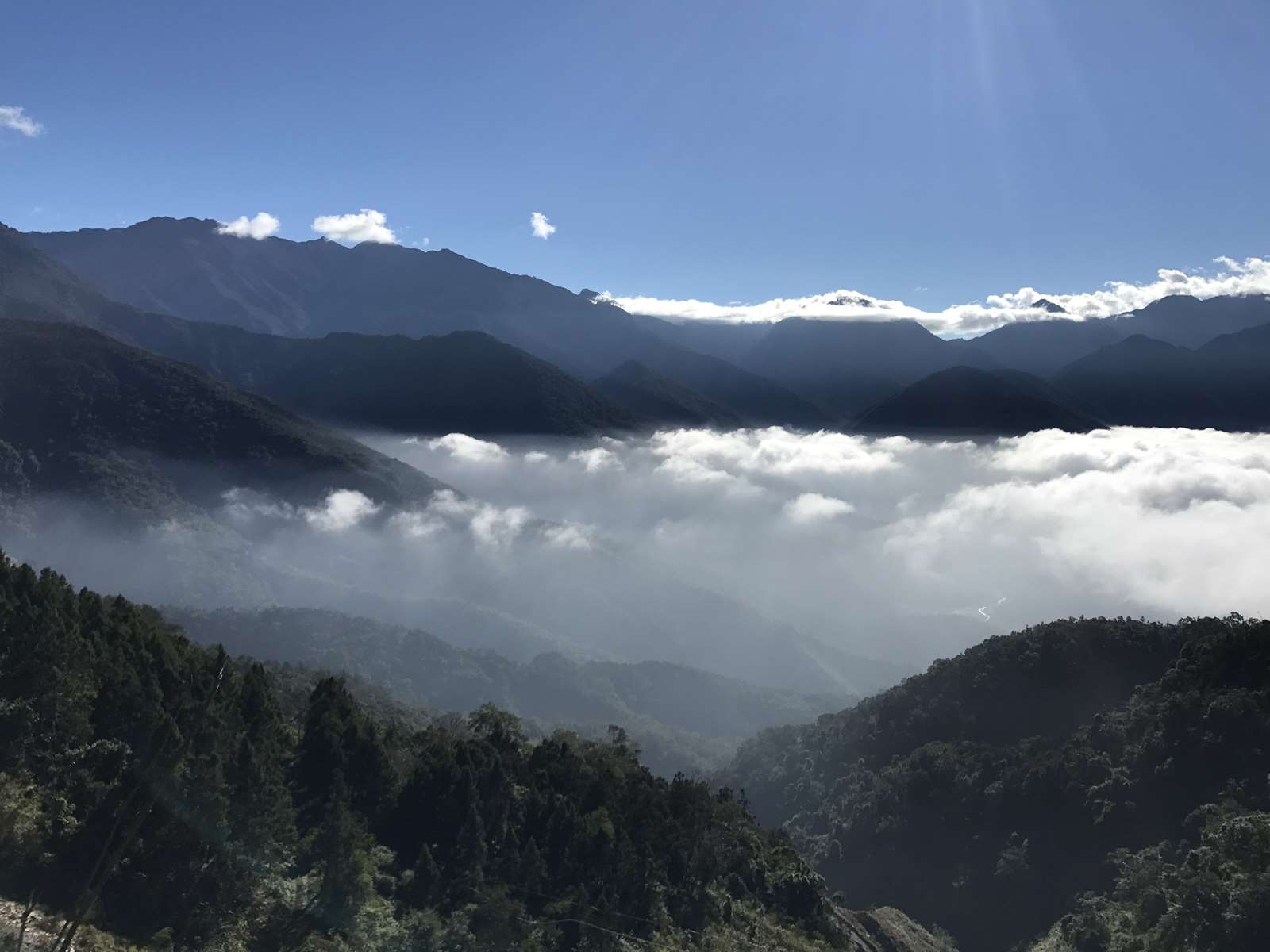
Image source: Taiwan_Opendata; license credits as shown.
Overview
Known for its poetic nickname “Forest Waves,” Tengjhih National Forest Recreation Area is one of the best places in southern Taiwan for forest bathing, summer escape, and ecological sightseeing. About a two-hour drive from Kaohsiung City, Pingtung City, and Tainan City, Tengjhih was once part of the Bunun people’s traditional living area. During the Japanese colonial period, Kyoto University established an experimental forest here, leaving behind rare Japanese cypress and large stands of Japanese cedar plantation, along with relics from the historic Liugui Defense Line. The park sits at an elevation of 1,500 to 1,804 meters and offers a cool, pleasant climate. In its mist forest zone, you can find large trees such as Taiwan incense cedar, Schima superba, and Castanopsis cuspidata, as well as the endemic Tengjhih begonia and many rare ferns. The area also supports rich wildlife, including uncommon insects such as Lucanus maculifemoratus, Actias ningpoana, and Formosana cicada. It is also one of the easiest places in Taiwan to spot the yellow tit, making it an especially rewarding destination for hiking and birdwatching.
Getting There
[By car] The access road to Tengjhih is currently impassable: In 2024, Tengjhih National Forest Recreation Area was affected in succession by Typhoons Gaemi, Krathon, and Kong-rey, which caused roadbed loss and slope rockfalls at the 18-kilometer mark on the Tengjhih access road, making passage impossible for vehicles and pedestrians. Disaster reconstruction work is currently being carried out by the Pingtung Branch Office.
Highlights
A high-elevation forest recreation area in the mountain district of Taoyuan District, Kaohsiung City, Tengjhih sits at about 1,500 to 1,804 meters above sea level and is known for its cool climate. Nicknamed “Forest Waves” and the “Little Xitou of Southern Taiwan,” it is a popular summer retreat and forest-bathing destination in the south. The park features a warm-temperate broadleaf forest and cloud forest environment with abundant moisture and frequent mist throughout the year, creating a strong mountain-forest atmosphere. It preserves plantation areas from the period when Kyoto University used the site as an experimental forest, including rare Japanese cypress and extensive Japanese cedar stands that form a neat and impressive landscape. Tengjhih was formerly part of the Bunun people’s living area and also contains historical relics such as the Liugui Defense Line from the Japanese colonial era, allowing visitors to learn about both Indigenous culture and modern history. Its ecological resources are rich, with the mist forest zone home to Taiwan incense cedar, Schima superba, Castanopsis cuspidata, Tengjhih begonia, and many rare ferns. The area also supports diverse insects and birds, making it an ideal place for nature observation and environmental education. It is one of the easiest places in Taiwan to observe the yellow tit, and it is well suited to birdwatching, insect watching, butterfly viewing, and trail hiking. The recreation area is about a two-hour drive from central Kaohsiung, Pingtung, and Tainan, making it practical for a day trip or an easy hiking outing.
What to See
1. Mist forest zone and warm-temperate broadleaf forest: Walk through a mist forest that stays moist year-round and observe tall tree species such as Taiwan incense cedar, Schima superba, and Castanopsis cuspidata while enjoying the cloud-veiled mountain scenery and fresh air. 2. Japanese cypress and Japanese cedar plantation area: This large artificial forest dates back to the Kyoto University experimental forest period of the Japanese colonial era. The straight, orderly stands create a landscape that feels almost like a Japanese mountain forest and are a highlight for photography and forest bathing. 3. Tengjhih begonia and rare ferns: The park’s signature Tengjhih begonia blooms in the right season and can be appreciated along related trails. Visitors should also look for many rare ferns under the forest canopy, making this a must-see for plant lovers and nature enthusiasts. 4. Liugui Defense Line and historical relics: The famous Liugui Defense Line and related military routes once passed through the park, and relics such as former guard posts can still be seen along the way, bearing witness to Japanese colonial rule and mountain defense infrastructure. 5. Birdwatching hotspot (yellow tit habitat): The park is one of the easiest places in Taiwan to observe the yellow tit. Along trails and forest edges, visitors may spot various mountain birds moving through the treetops and forest interior. 6. Insect observation area: In summer and during warm, humid periods, visitors may encounter rare or large insects such as Lucanus maculifemoratus, Actias ningpoana, and Formosana cicada, making the park a favorite for family nature observation and ecological photography. 7. Scenic overlooks and distant mountain views: From the park’s lookout points and viewing platforms, visitors can take in surrounding mountain peaks. On clear days, the expansive mountain scenery and sea of clouds offer a memorable high-altitude vista. 8. Bunun cultural background: Although it is not a dedicated cultural park, guided interpretation or related exhibits can introduce the area’s past as part of the Bunun people’s traditional living territory, helping visitors understand the connection between forests and Indigenous communities.
Address
No. 150, Baoshan Lane, Baoshan Village, Taoyuan District, Kaohsiung City 848 Phone: (07)6893118
Travel Tips
Before visiting, be sure to check the official website or the management authority’s announcements to confirm whether the park is open, the road conditions, and whether advance reservation or visitor limits are required, so you do not arrive to find it closed or have to wait a long time. The park is in a high-elevation mountain area with a large day-night temperature difference, so even in summer a light jacket is recommended; in autumn and winter, warm clothing and rain gear are necessary to handle changing weather. Because the area is moist year-round and often foggy, it is advisable to wear non-slip hiking shoes or trail shoes and bring a raincoat or waterproof jacket; relying only on an umbrella is not recommended for safe walking. Bring your own water and enough snacks, as supplies in the mountains are limited, especially if you plan a longer itinerary or multiple hikes. As the park is a nature conservation area, please do not feed wildlife or collect plants, insects, or rocks, and take all trash back down the mountain to help protect the environment. For birdwatching and insect observation, binoculars or a telephoto lens are recommended, and visitors should remain quiet and keep an appropriate distance to minimize disturbance to wildlife. If driving, be aware that mountain roads have many curves and cliffside sections; slow down, watch for falling rocks and weather changes, and prepare motion-sickness medication if needed. If you are unsure about trail difficulty or your fitness level, check trail lengths and estimated times at the visitor center or on interpretive signs first, then choose a route that suits your ability. When the fog is heavy, some sections may be slippery and visibility may be poor, so it is best to travel with companions and allow plenty of time for the return trip to avoid still being on the mountain after dark.
FAQ
Q: What season is best for visiting Tengjhih National Forest Recreation Area? A: Tengjhih is a high-elevation mountain area with a cool climate year-round, making summer the most popular season for escaping the heat. Spring is good for flowers and new leaves, autumn brings rich color changes in the forest, and winter is cooler and wetter but often offers excellent misty scenery. Even so, it is best to check mountain weather and road conditions before departure to choose the most suitable time to visit. Q: Do I need special gear or clothing for hiking in the park? A: It is recommended to wear hiking shoes or trail shoes with good slip resistance, and to bring a light raincoat, a waterproof jacket, and warm clothing. Weather changes quickly at high elevation, and forest trails are often slippery because of moisture. If you plan to stay longer or hike multiple trails, trekking poles, a hat, and enough water and snacks can also improve comfort and safety. Q: What representative plants and animals can be seen in Tengjhih? A: In terms of plants, visitors can see large trees such as Taiwan incense cedar, Schima superba, and Castanopsis cuspidata, as well as Tengjhih begonia and many rare ferns. In terms of animals and insects, the area is home to species such as Lucanus maculifemoratus, Actias ningpoana, and Formosana cicada. The park is also regarded as one of the easiest places in Taiwan to observe the yellow tit, making it a popular site for birdwatching and ecological observation. Q: Is Tengjhih National Forest Recreation Area suitable for family visits? A: The park is quiet, its trails are well planned, and it offers abundant plants, insects, and birds, making it very suitable for families to enjoy forest bathing, nature observation, and easy hiking together. However, because it is in a mountain area, some sections are sloped or slippery, so young children should be supervised by adults at all times, and families should choose shorter, easier trails to balance safety and stamina.