Toyokuni Shrine Karamon
Japan · 東山區 · Landmarks
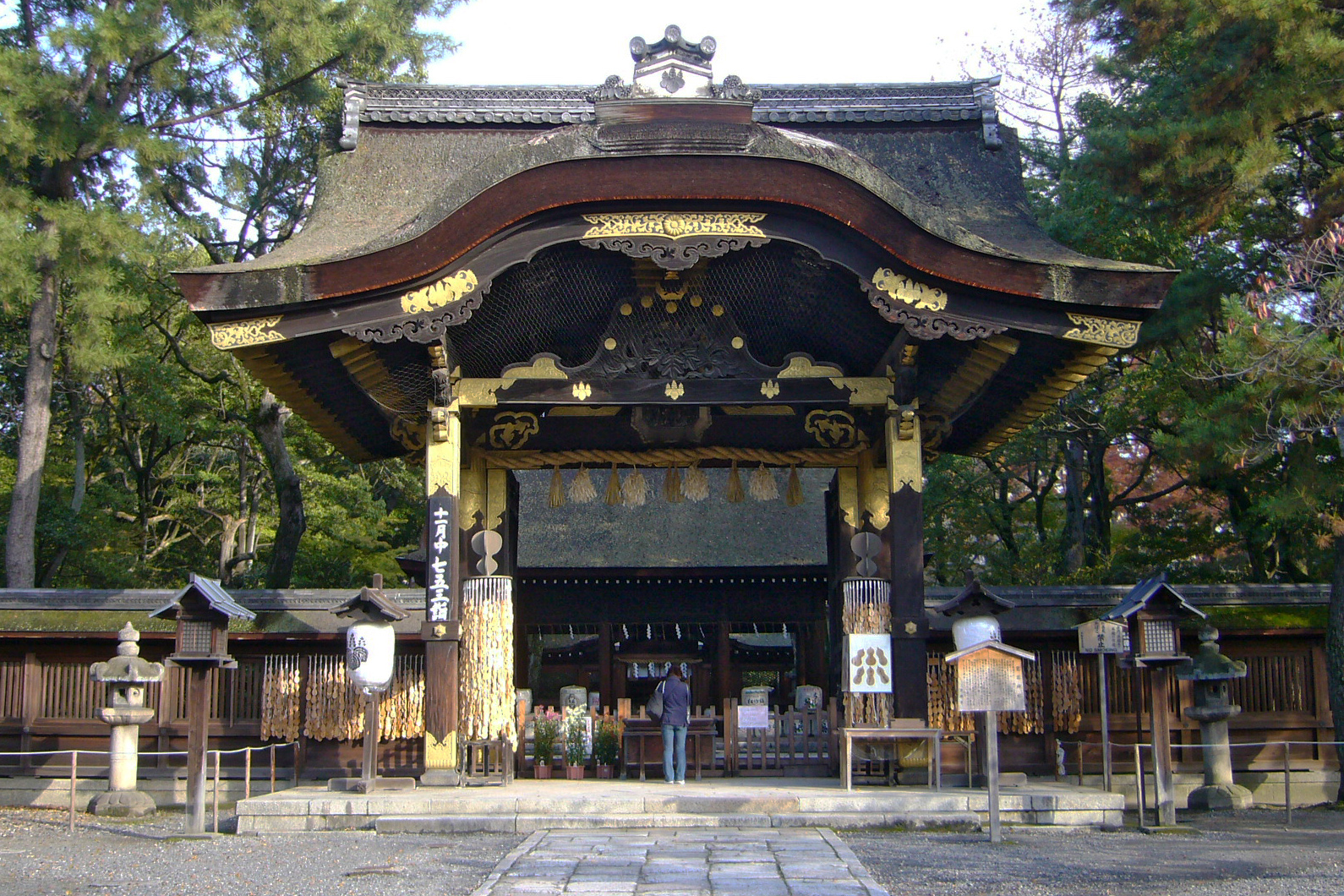
Image source: Wikimedia Commons; license credits as shown.
Overview
The Toyokuni Shrine Karamon is the magnificent main gate of the Toyokuni Shrine located in the Higashiyama district of Kyoto. It has been designated as a National Treasure of Japan, representing the highest standards of carving and architectural decorative art from the Momoyama period. This gate was originally a castle gate of Fushimi Castle and has been relocated to Nijo Castle and Nanzenji's Kinjitsu-in before finally being moved to its current location during the Meiji period, making it highly representative for the study of Toyotomi Hideyoshi and Momoyama culture.
Getting There
The most convenient way to reach the Toyokuni Shrine Karamon is to take the Keihan Main Line to 'Shichijo Station' and walk about 7 minutes to the shrine entrance. Alternatively, you can walk about 10 minutes from 'Kiyomizu Gojo Station', or take a Kyoto City Bus to 'Museum Sanjusangendo-mae' and walk a few minutes to reach the temple and shrine area in Higashiyama.
Highlights
The most distinctive feature of the Toyokuni Shrine Karamon is its extremely ornate Momoyama-style carvings and decorations. The gate is in the 'four-legged gate' style with a karahafu roof, showcasing a strong sense of power and luxurious aesthetics. The gate and the lintel are adorned with exquisite wood carvings and gold leaf decorations of peonies and Chinese lions, regarded as one of the representative works of Momoyama culture. It is also one of the few karamon gates located at a shrine rather than a castle or temple, making it extremely valuable.
What to See
1. Main Body of the Karamon: The Karamon features a four-legged structure combined with a karahafu roof, with beautiful curves and a harmonious overall proportion, reflecting the luxurious and magnificent architectural style of the late 16th century Momoyama period. 2. Exquisite Wood Carvings and Decorations: The doors and the transom are intricately carved with plants, animals, and geometric patterns, enhanced with colors and gold leaf. Up close, the strong three-dimensional quality of the carvings can be appreciated, regarded as a crystallization of the craftsmanship of the time. 3. Historical Context of Toyotomi Hideyoshi: The Karamon originally belonged to Fushimi Castle and is closely related to the Toyotomi regime. It was later moved to Nijo Castle and Nanzenji's Kinjitsu-in, finally relocated to Toyokuni Shrine during the Meiji period, symbolizing the historical context of Hideyoshi's rise to power, decline, and restoration during the Meiji era. 4. Atmosphere within the Shrine: Standing in front of the Karamon, you can enjoy a distant view of the shrine hall and the surrounding space, with greenery, stone lanterns, and guardian dogs creating an interesting contrast with the ornate gate, making it suitable for photography and quietly experiencing the shrine's atmosphere. 5. Nearby Temple and Shrine Attractions: The Toyokuni Shrine is adjacent to Hōkō-ji and Sanjusangendō, allowing for an easy walking route connecting the temples and shrines on the southern side of Higashiyama, enriching a half-day or full-day itinerary.
Hours & Admission
Visitors can freely explore the Toyokuni Shrine grounds (including the exterior of the Karamon). The approach and the area in front of the gate are open all day, and general worship does not require an admission fee. Special exhibition spaces such as the shrine's treasure museum may charge a fee and have specific opening hours, so it is recommended to check the latest announcements or tourism information websites for Toyokuni Shrine before visiting.
Address
530 Chayamachi, Yamato Oji Higashiyama Ward, Kyoto City, Kyoto Prefecture, Japan (within Toyokuni Shrine)
Travel Tips
It is recommended to arrange a visit to the Toyokuni Shrine Karamon while exploring the southern Higashiyama temples (such as Sanjusangendō, Hōkō-ji, and Chishaku-in) to save travel time and create a smooth walking route. Early mornings or evenings have fewer crowds, making it easier to capture photos without people and to closely observe the details of the carvings on the gate; rainy or overcast days are also suitable for photography, as the soft light enhances the three-dimensional quality of the carvings. The Karamon is a national treasure and can only be viewed from the outside; please do not touch or lean against the gate, and observe the rules of silence and photography within the shrine. There is a lack of large shade nearby, so please pay attention to sun protection and hydration in summer, and keep warm in winter.
Nearby Dining
In the area around the Toyokuni Shrine Karamon, there are several Japanese restaurants and cafes in the Higashiyama Shichijo area, where you can enjoy set meals, soba noodles, or light snacks and coffee before or after your visit. Walking north towards Gojo-zaka and Kiyomizu-zaka, there are traditional Kyoto wagashi shops, tea houses, and restaurants serving yudofu, suitable for pairing with a visit to Kiyomizu Temple. If you prefer a wider variety of dining and dinner options, you can take the Keihan train one stop to 'Gion Shijo' or 'Sanjo' for more diverse culinary choices.
FAQ
Q: Is the Toyokuni Shrine Karamon open for entry or passage underneath? A: The Toyokuni Shrine Karamon is generally only open for exterior viewing, and visitors usually cannot pass underneath or enter the inner space closely to protect the national treasure building and the details of the carvings. There are usually ropes or barriers set up, and it is recommended to maintain an appropriate distance while taking photos from the approach and to follow the on-site instructions and regulations from shrine staff. Q: Is there an admission fee to visit the Toyokuni Shrine Karamon? A: There is no admission fee to visit the Toyokuni Shrine Karamon and the general areas within the shrine, as it is open for free. Only when entering the treasure museum or special exhibitions may there be a separate admission fee, which varies by period. Q: What is the best time and season to visit the Toyokuni Shrine Karamon? A: The Toyokuni Shrine Karamon is suitable for visiting year-round, with the cherry blossoms in spring and the maple leaves in autumn providing the most beautiful scenery, ideal for pairing with flower and leaf viewing in Higashiyama. Weekday mornings or evenings have fewer crowds, allowing for a more leisurely appreciation of the carvings and photography; rainy or overcast days also have a unique atmosphere, with the gold leaf and carvings appearing more delicate under soft light. Q: How do I get from Kyoto Station to the Toyokuni Shrine Karamon? A: To get from Kyoto Station to the Toyokuni Shrine Karamon, you can take the Keihan Main Line one stop to 'Shichijo Station' and then walk about 7 minutes, or take a Kyoto City Bus to near 'Museum Sanjusangendo' and walk to the shrine. If you choose to walk, it takes about 20 minutes from Kyoto Station through the Higashiyama Shichijo area, allowing you to visit attractions like Sanjusangendo and the museum along the way. Q: How is the Karamon different from a typical shrine torii or sanmon? A: The Karamon is different from a typical torii; it is a magnificent gate structure with a roof and doors, rather than a symbolic gate post. Its design often features a karahafu roof with extensive carvings and paintings, primarily used at the entrances of castles, temples, or buildings related to powerful figures. The Toyokuni Shrine Karamon is one of the few national treasure-level karamon gates located within a shrine, possessing both historical and artistic value, making it an important artifact for studying Momoyama culture and the Toyotomi regime.