
Turtle King Rock
Taiwan · Kaohsiung · Liouguei District · Temples & Shrines
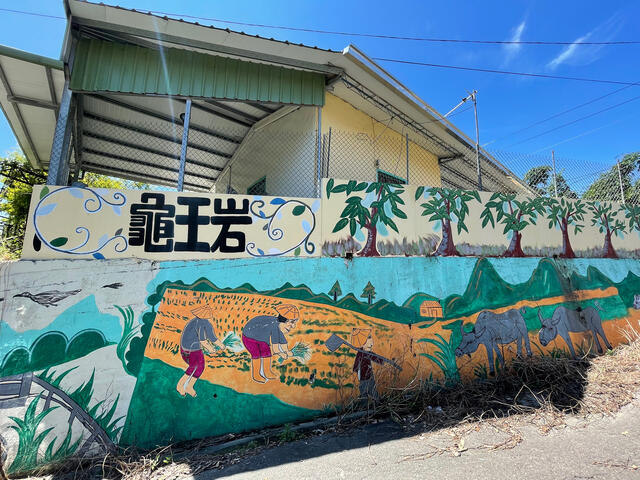
Image source: Taiwan_Opendata; license credits as shown.
Overview
Turtle King Rock is located beside the Laonong River in Liugui District. It is an imposing mountain rock with a kingly presence, shaped like a turtle king, with a Chinese pistache tree growing beside it.
Highlights
• A massive rock landscape beside the Laonong River in Liugui District, Kaohsiung, whose shape closely resembles a turtle king with its head raised high, carrying strong symbolic meaning and local religious significance. • The largest of the many turtle-shaped boulders in the area, it is regarded as an important setting in the legend of Liugui’s place name and its local cultural stories. • A Chinese pistache tree grows and entwines beside the rock, with roots gripping the cliff face and creating a distinctive symbiotic scene of stone and tree that is often a favorite photography subject. • Locals traditionally regard Turtle King Rock as a guardian deity; a small shrine or Turtle King temple was once built nearby to offer worship, with the belief that it protects residents from flooding. • After Typhoon Morakot, Turtle King Rock and the small shrine beside it still stood by the riverbank, becoming a symbol of “protecting Liugui” and rebirth, and a relaxed stop that can be combined with nearby mountain and river scenery.
What to See
• Main body of Turtle King Rock: It looks like a turtle standing proudly with its head raised. The rock is huge and especially eye-catching in the landscape of the Laonong River floodplain and riverbank, and it is the largest of the local turtle-shaped boulders. • Symbiotic scene of the Chinese pistache tree and rock face: A Chinese pistache tree grows along one side of the rock, with its trunk, branches, and leaves closely intertwined with the rock body. Its roots cling to the cliff face, presenting a natural landscape of mutual dependence between tree and stone, suitable for close observation and photography. • Laonong River valley scenery: From the access path where Turtle King Rock is located and from nearby viewpoints, visitors can look out over the Laonong River floodplain, the river valley, and the mountains on both sides. The scenery changes between the dry season and the rainy season, making it a good spot for a brief stop to appreciate the valley terrain. • Turtle King worship and small shrine: Local residents once built a small shrine beside the largest turtle-shaped rock to worship the “Turtle King,” offering items such as cabbage and carrots to pray for the protection of their homes and to guard against flooding. Visitors can experience the atmosphere of local belief and its surrounding stories on site. • Legend behind the Liugui place name: According to legend, six large rocks once lay scattered in the Laonong River floodplain below Liugui Bridge. From a distance, they looked like six turtles floating in the river, which is said to be the origin of the name “Liugui.” Turtle King Rock is the largest of these stones, and visitors can imagine the riverbank’s former appearance and the changes to the riverbed over time.
Address
Liugui District, Kaohsiung City 844 Phone: (07)6871234
Travel Tips
• Suggested time to stay: The official suggested visit time is about 15 minutes, which is enough for a simple offering or prayer at the shrine and to enjoy the Laonong River and surrounding mountain views. It is well suited as a short stop within a Liugui or Maolin day trip. • Best time and season to visit: ‑ Morning or afternoon light is softer, making the layers of the rock and valley more visible and better for photos. ‑ During the rainy season or typhoon periods, the river level in the Laonong River is higher and the valley scenery changes noticeably. Please pay close attention to weather conditions and the safety of roads and embankments. It is not recommended to approach the riverbed during heavy rain or when heavy-rain or typhoon warnings are in effect. • Transportation and walking route: ‑ Turtle King Rock is located beside the Laonong River near Liugui Bridge. It is usually more convenient to visit by car or scooter, and it can be combined with nearby attractions in Liugui town, Baolai, and Maolin. ‑ After arrival, follow the on-site signs and walk along the access path to get a closer view of the rock and the Chinese pistache tree. Please follow local safety and route instructions and do not climb the rock. • Worship and local customs: ‑ If you plan to pray at the small shrine or Turtle King temple, a simple respectful gesture with palms together is sufficient; no complicated ritual is required. ‑ Avoid striking the rock, carving on it, or stacking stones, so as to preserve both the natural landscape and the dignity of the worship site. • Safety and environmental protection: ‑ Rocks by the river are slippery; please do not approach the edge of the riverbed after rain or when the water level is high. ‑ Do not break branches from the Chinese pistache tree or nearby plants, and do not leave excessive incense ash, paper money, or trash on site. Keep the area clean to protect the ecology of the river valley. • What to bring: ‑ Light walking shoes or sneakers for moving around the access path and riverside area. ‑ Sun protection such as a hat and sunscreen, plus drinking water. In summer, mountain areas in Kaohsiung have strong sunlight and the valley can feel hot and humid. ‑ A light raincoat or umbrella during the rainy season to deal with afternoon thunderstorms in the mountains.
Nearby Dining
In local travel plans, Turtle King Rock is often combined with Liugui Old Street, Liugui town, or the hot spring areas of Baolai and Laonong. Along the way, visitors can try Hakka and Taiwanese home-style dishes, set meals, snacks, tea treats, or mountain produce dishes common in the Liugui area. It is best to arrange meals according to your itinerary and choose snack shops, restaurants, or coffee and tea shops in Liugui town or nearby commercial areas for food and rest, with meal breaks planned together with stops in Liugui or Baolai.
FAQ
Q:How long should I spend visiting Turtle King Rock? A:The official suggested stay is about 15 minutes, which is enough for a simple prayer at the small shrine, taking photos, and viewing the Laonong River and surrounding mountain scenery. If you combine it with other Liugui attractions, you can adjust the stay time based on your itinerary. Q:Does Turtle King Rock require an admission fee? What are the opening hours? A:Turtle King Rock is an open river-valley landscape and official information shows it is open 24 hours a day. No admission fee is currently listed. However, before departure it is still recommended to check the latest local announcements or temporary traffic controls, and to visit during daylight for safety. Q:Do I need hiking gear to visit Turtle King Rock? A:Turtle King Rock is mainly a riverside scenic spot reached by a short access path, so professional hiking equipment is usually unnecessary. Light, comfortable shoes are sufficient. However, the ground can be slippery after rain, so please still pay attention to your footing and the safety of slopes near the river. Q:What cultural stories or legends are associated with Turtle King Rock? A:Local legend says that there were originally six large rocks in the Laonong River floodplain under Liugui Bridge, which from a distance looked like six turtles floating in the river, giving rise to the name “Liugui.” The largest of these is respectfully called Turtle King Rock. Residents built a small shrine to worship it, offering items such as cabbage and carrots to pray for village protection and flood prevention. After Typhoon Morakot, Turtle King Rock still stood by the riverbank and is often seen as a symbol of protection for Liugui and of rebirth.