Wongaksa Temple Site Ten-Story Stone Pagoda
South Korea · Q24514750 · Landmarks
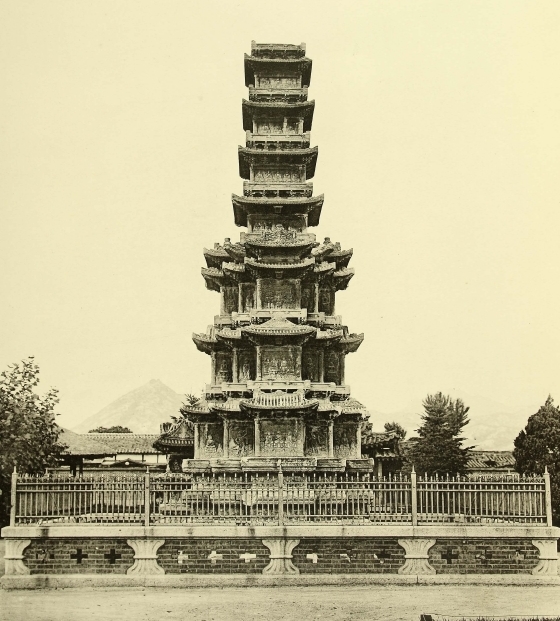
Image source: Wikimedia Commons; license credits as shown.
Overview
The Wongaksa Temple Site Ten-Story Stone Pagoda is a representative stone pagoda from the Joseon Dynasty located in Tapgol Park, Jongno District, Seoul. It is also designated as National Treasure No. 2 of South Korea. The pagoda is carved from stone to resemble wooden construction and is well-preserved, currently displayed under glass protection in the heart of Seoul, connected to the modern historical landscape of Tapgol Park.
Getting There
Take Seoul Subway Line 1 or Line 3 to Jongno 3-ga Station, and walk about 5 minutes towards Jonggak from Exit 1 to reach the stone pagoda in Tapgol Park.
Highlights
One of the most representative stone pagodas of the Joseon Dynasty, designated as National Treasure No. 2 of South Korea. The pagoda is intricately carved, featuring designs of dragons, phoenixes, lions, lotus flowers, and bodhisattvas, showcasing high artistic and historical value. The stone pagoda is located within Tapgol Park, where you can also see memorial facilities related to the March 1st Movement, making it suitable for a combined visit.
What to See
The main body of the ten-story stone pagoda: approximately 12 meters tall, made of gray-white marble, with a spectacular appearance. Glass protection display: The pagoda is currently protected by a glass structure, allowing for close viewing while minimizing weathering damage. Historical sites around Tapgol Park: including the octagonal pavilion, Wongaksa stele, and memorial facilities related to the March 1st Movement.
Hours & Admission
Admission to the park is **free**. Opening hours are generally **year-round**, from March to October 09:00 to 18:00, and from November to February 09:00 to 17:00. Some travel pages indicate that Tapgol Park is open all day, but the more consistent official travel information follows the timings provided by the Korea Tourism Organization.
Address
99 Jongno, Jongno District, Seoul, South Korea, within Tapgol Park.
Travel Tips
It is recommended to visit during the day for better visibility of the intricate carvings on the pagoda and the glass protection display. This site holds both historical and modern significance, and can be visited alongside the March 1st Movement-related relics in Tapgol Park. The spring and autumn climates are more comfortable; if planning a walking itinerary, you can also explore the urban attractions around Jongno and Jonggak.
Nearby Dining
The area around Tapgol Park is in the center of Seoul, offering a variety of dining options, with nearby areas like Jongno, Jonggak, and Insadong for meals. Korean cuisine, cafes, and casual dining spots are most common in the vicinity, making it suitable for breaks before or after your visit. As specific official recommended restaurants are not listed, it is advised to choose nearby eateries based on your route on the day of your visit.
FAQ
Is there an admission fee? No, both Tapgol Park and the Wongaksa Temple Site Ten-Story Stone Pagoda are free to visit. What is the nearest subway station? The nearest station is Jongno 3-ga Station, about a 5-minute walk away. Can the pagoda be viewed up close now? Yes, it can be viewed up close, but there is glass protection around the pagoda. Is it just the pagoda worth seeing, or is the whole park worth visiting? Tapgol Park itself is also a point of interest, featuring the octagonal pavilion, stele, and memorial facilities related to the March 1st Movement.