Ching Fu Temple

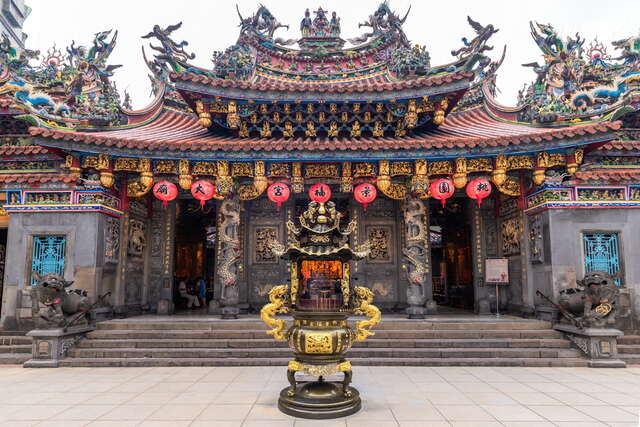
Image source: Taiwan_Opendata; license credits as shown.
Overview
Ching Fu Temple in Taoyuan City, located in the city center, is both a religious sanctuary and a testament to cultural history. As an important faith center in the Taoyuan area, it is affectionately referred to as the 'Great Temple' by local residents, having long been integrated into their lives and emotions. Moreover, the festive activities here make it a popular highlight for cultural tourism.
Highlights
Ching Fu Temple is a designated historic site and important faith center in Taoyuan City, dedicated to the worship of the God of Opening Zhang. It is affectionately nicknamed 'Great Temple' by locals. The temple was originally built during the Qing Dynasty and was reconstructed during the Japanese colonial period, blending Qing Dynasty artifacts, plaques, and traditional architectural techniques, witnessing the development of the Holo immigrant settlement and local religious culture. The temple is bustling with incense offerings and frequent festive activities, making it a core location to understand Taoyuan's old city, experience traditional beliefs, and local customs.
What to See
1. Temple Square and Golden Dragon Fountain: The spacious temple square in front of Ching Fu Temple is an important space for festive activities and processions, creating a lively atmosphere known as 'Great Temple Entrance'. The square features a golden dragon-shaped fountain, symbolizing good fortune and blessings, making it a popular spot for tourists and worshippers to take photos and make wishes. 2. Xieshan Roof and Mountain Gate: During its reconstruction in the 1920s, Ching Fu Temple retained its wide square and later built a mountain gate and four small gates. The front hall's roof adopts the 'Xieshan' design, giving the temple a towering and grand appearance, leading locals to refer to it as the 'Great Temple'. Upon closer inspection of the roof, ridge, and mountain walls, one can appreciate the exquisite craftsmanship of traditional artisans in the cut-and-paste decorations and paintings. 3. Main Hall and Qing Dynasty Plaques: The main hall enshrines the God of Opening Zhang and other deities, preserving many Qing Dynasty artifacts and plaques, which are crucial for understanding the history and religious significance of Ching Fu Temple. Among them are plaques from the Jiaqing period, such as 'He Sheng Zhuo Ling' and 'De Bian Qun Li', featuring ancient calligraphy and remarkable presence, witnessing the long-standing importance of Ching Fu Temple in the Taoyuan area to both officials and the public. 4. Courtyard Layout and Siheyuan Space: Ching Fu Temple is a traditional temple building in a Siheyuan style with two halls and two protective rooms. The front hall and main hall exhibit the unique craftsmanship of the courtyard layout, which is quite rare in northern Taiwan's temple architecture. The left and right protective rooms serve as Dragon and Tiger Halls, also adopting the Xieshan design, enhancing the solemnity of the temple, making it suitable for detailed observation of the beams, woodwork, and carving details. 5. Ancient Artifacts and Divine Palanquins, Altar Tables: The temple houses ancient artifacts like the 'Candle Stand Immortal' and intricately crafted altar tables and divine palanquins, reflecting the Holo culture and traditional craftsmanship. Although most are enshrined inside the hall and cannot be touched closely, visitors can still appreciate the beauty of wood carvings, paintings, and gold leaf decorations from a distance. 6. Old City Environment and Surrounding Attractions: Ching Fu Temple is located near the Zhongzheng Road roundabout, surrounded by the core of Taoyuan's old city, with streets adjacent to shops, markets, and old alleyways. A short walk from the temple square leads to Wenchang Park, art spaces transformed from Japanese dormitories, and other attractions, extending the faith-based visit into a leisurely stroll through the old city, experiencing Taoyuan's urban changes and diverse landscapes.
Travel Tips
The best time to visit Ching Fu Temple is to combine temple festivals with a stroll through the old city, allowing you to experience both the fervor of faith and the daily life of the city. On weekdays, the atmosphere is relatively quiet, making it convenient for photography and detailed observation of the architecture; during lunar festivals and major ceremonies, the crowds are bustling, ideal for travelers wanting to experience traditional temple fairs. It is recommended to reserve at least 30 minutes to 1 hour to leisurely explore the temple area and its surroundings, starting by feeling the atmosphere of the 'Great Temple Entrance' in the square, then entering the hall for worship, observing the architecture and plaques, and finally extending the walk to nearby parks and historical districts. If you want to avoid crowds, consider visiting on weekday mornings or afternoons; if you wish to capture lively scenes, pay attention to the main festival dates in the lunar months of January, February, and July. When entering the temple for worship and visits, it is advisable to dress appropriately, avoiding overly revealing clothing, and to keep noise levels low to show respect to the deities and fellow worshippers. Before taking photos, please pay attention to temple announcements and staff instructions, avoiding the use of flash that may disturb rituals, and it is also inappropriate to disturb ongoing ceremonies and festivals up close. The temple enshrines multiple deities, and if you are unfamiliar with the order of worship, you may observe briefly at the temple entrance or ask staff or volunteers for guidance to respect local customs. If you have needs for lighting lamps or other rituals, you can also inquire at the service desk to complete registration and rituals according to temple guidelines. Ching Fu Temple is located near the city center roundabout, close to public transport hubs, making it easy to reach surrounding shopping areas and other attractions, suitable as a starting point for a half-day or full-day itinerary in Taoyuan's old city. If driving or riding a motorcycle, be aware that parking spaces nearby can be tight, so it is advisable to plan parking in advance or opt for public transportation.
Nearby Dining
The area surrounding Ching Fu Temple is the old city commercial district and traditional street, where many local snacks and long-established shops gather, making it a great place to taste popular street food. Along Zhongzheng Road and the alleys around the temple square, you can often find noodle shops, snacks, desserts, and beverage stores, offering choices from breakfast to afternoon tea. The traditional noodle stalls, rice vermicelli, flat rice noodles, oyster dishes, and snack stalls near the temple entrance are well-known flavors passed down among local residents, perfect for dining or taking a break before or after worship. You can also connect Ching Fu Temple with nearby old streets, markets, and art spaces, exploring local delicacies and drinks while walking, allowing you to experience the daily food scene of Taoyuan residents within a short walking distance.
FAQ
Q: Which deity is primarily worshipped at Ching Fu Temple? A: The main deity worshipped at Ching Fu Temple in Taoyuan is the God of Opening Zhang, making it an important faith center for this belief in the Taoyuan area. The temple also enshrines multiple deities, forming a multi-deity worship space that holds a central position in the religious life of residents in the fifteen villages of Taoyuan and surrounding areas. Q: Why is Ching Fu Temple called 'Great Temple'? A: Ching Fu Temple is called 'Great Temple' by locals due to its grand appearance and spacious square, as well as its significance as an important faith center for the people of Taoyuan. The front hall features an Xieshan design, and the configuration of the mountain gate and side gates makes the temple particularly prominent in the city center streetscape, reinforcing the impression of it being a 'Great Temple'. Q: What are some representative folk activities and festivals at Ching Fu Temple? A: Important folk activities at Ching Fu Temple include the procession on the 17th day of the lunar first month, the birthday celebration of the God of Opening Zhang on the 15th day of the lunar second month, and the lighting of lanterns and the Pu Du ceremony held in the lunar seventh month. In some years, there are also peace prayers and related ceremonies, attracting many worshippers and tourists to participate, making it an important opportunity to experience Taoyuan's traditional religious culture. Q: What nearby attractions can be visited when visiting Ching Fu Temple? A: When visiting Ching Fu Temple, you can also explore nearby old city streets, parks, and historical Japanese buildings. A short walk from the temple square leads to nearby parks for recreation, old streets and markets, or to stroll in art spaces that retain the appearance of Japanese dormitories, combining worship with urban cultural exploration.