Guishan Beach
Taiwan · Kinmen County · 烈嶼鄉 · Nature & Scenery
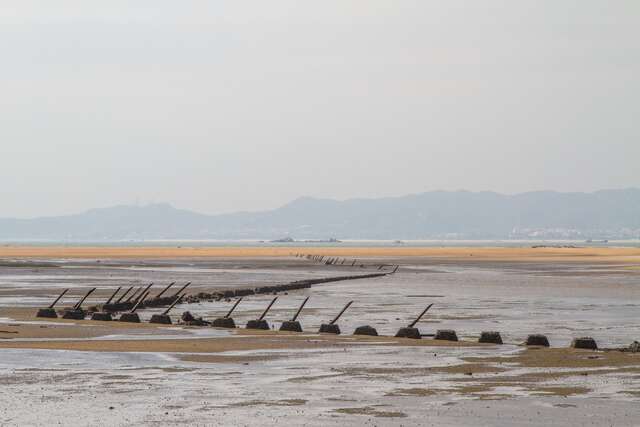
Image source: Taiwan_Opendata; license credits as shown.
Overview
Guishan, formerly known as Turtle Mountain, is located west of Lingshui Lake in Lieyu and extends along the southern coast. The L19 military position still quietly watches over Guishan.
Highlights
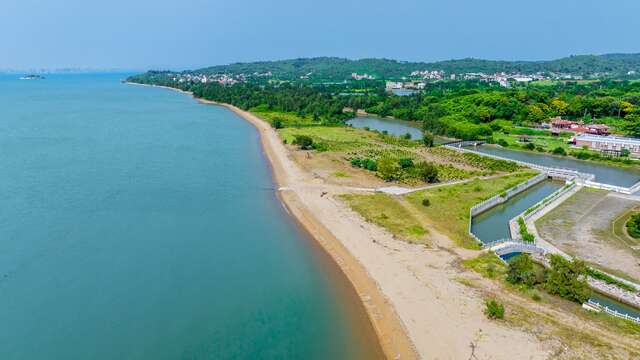
Guishan Beach is a peaceful coastline that combines battlefield atmosphere with natural ecology, making it ideal for enjoying sandbar-lagoon scenery and intertidal ecology. Located west of Lingshui Lake in Lieyu, the beach’s offshore sandbar and curved spit create a distinctive lagoon landscape. Together with military features such as the square-grid sea, anti-landing rail obstacles, and the L19 position, it is a must-visit seaside spot when traveling to Little Kinmen.
What to See
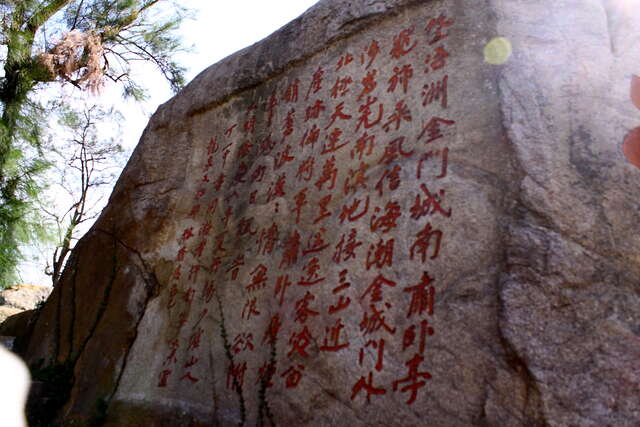
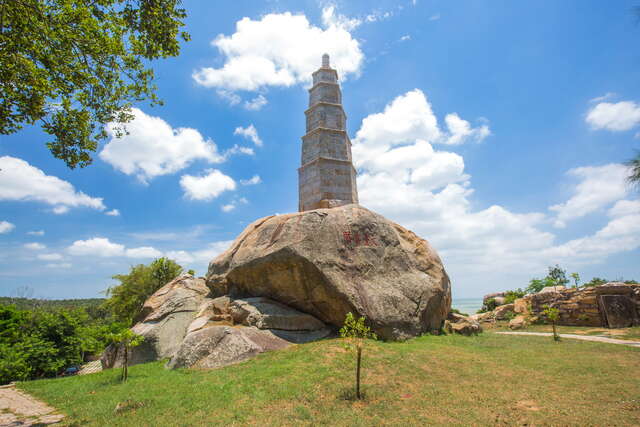
1. Sandbar lagoon and winding spit: Guishan Beach has a stretch of fine sand, with an offshore sandbar extending into the sea and a spit curving back toward the land, forming a sandbar-lagoon landscape. At low tide, the outlines are especially clear and the view is broad. 2. Intertidal ecology: The lagoon and intertidal zone support a rich variety of marine life and wetland ecology. It is a good place to observe small marine organisms, shellfish, and algae, making it ideal for close contact with nature, but visitors should pay attention to tide safety. 3. L19 battlefield landscape: Behind the beach on Guishan, the L19 position and military facilities remain, quietly guarding the coast. They reflect Lieyu’s past battlefield history and are well suited for a leisurely walk while experiencing Kinmen’s distinctive military heritage. 4. Rail obstacles and military defenses: Steel-rail obstacles and other defensive structures can be seen on the beach. These were once coastal fortifications designed to stop landings, and today they serve as distinctive features for photography and for learning about battlefield relics. 5. Square-grid sea / square-wave sea scenery: At low tide, waves from two different directions intersect in front of the beach, cutting the water surface into square-like patterns known as the “square-grid sea” or “square-wave sea.” It is a rare ocean phenomenon worldwide. 6. Views of Lieyu’s coastline: Guishan extends along the southern coast and offers expansive views of the surrounding sea and shoreline. In the afternoon and at dusk, the light is softer, making it a good time to photograph seascapes and silhouettes.
Address
Guishan Beach, Nanhuan Road, Lieyu Township, Kinmen County 894 Phone: (08)2364411
Travel Tips
It is best to visit Guishan Beach in a season with stable weather and good visibility, and to go around low tide so you can enjoy the sandbar lagoon, intertidal life, and square-grid sea scenery. Avoid approaching the shore during strong winds, heavy rain, or rough sea conditions. Wear comfortable, slip-resistant shoes or sandals, bring a sun hat, sunscreen, and enough drinking water. If you plan to enter the intertidal zone, pay close attention to tide times and your own safety, and do not go alone into deeper water. Because Guishan still preserves the L19 position and battlefield facilities, please follow on-site notices, do not climb military structures or enter restricted areas, and help protect both your safety and local cultural heritage. It is recommended to combine Guishan Beach with nearby Lingshui Lake and other Lieyu battlefield attractions into a half-day or full-day itinerary. You can travel by scooter or local transport, and leave time for walking by the sea, taking photos, and enjoying the quiet atmosphere.
FAQ
Q: What are the main features of Guishan Beach? A: Guishan Beach is known for its sandbar-lagoon landscape, rich intertidal ecology, and battlefield scenery such as the L19 position and rail obstacles, showing a coastal setting where nature and military heritage coexist. Visitors can enjoy special sea conditions such as the square-grid sea, stroll along the fine sandy beach, and experience the historical atmosphere of Lieyu’s former coastal defense front. It is especially suitable for travelers who enjoy the sea, photography, and battlefield culture. Q: What safety precautions should be taken when visiting Guishan Beach? A: When visiting Guishan Beach, pay special attention to tide changes and footing. Avoid going deep into the lagoon or intertidal zone at high tide, and do not approach deep water or rocky areas to reduce the risk of getting stranded or slipping. Also, because the beach has military relics such as the L19 position and rail obstacles, visitors should follow signs and restricted zones, not climb or damage facilities, and pay attention to children’s activity areas to ensure a safe and smooth trip. Q: How much time is suitable for a visit to Guishan Beach? A: Guishan Beach is suitable as part of a half-day or full-day trip to Lieyu, and a stay of about one to two hours is usually enough for a leisurely walk, photography, and observing intertidal ecology. It is recommended to combine it with nearby Lingshui Lake and other battlefield attractions, and to arrive around low tide if possible so you can fully appreciate the sandbar lagoon and square-grid sea scenery. If you visit near sunset, you can also photograph the evening glow over the sea. Q: What other nearby attractions can be visited together with Guishan Beach? A: Nearby attractions include Lingshui Lake and several battlefield sites in Lieyu, allowing the itinerary to combine natural scenery with military culture. According to travel information, commonly paired spots include Lingshui Lake, Jiu Gong Tunnel (Siwei Tunnel), and the settlements of Lieyu Township. Visitors can plan a loop route based on transportation connections to enrich the overall travel experience.