Wentai Pagoda
Taiwan · Kinmen County · 金城鎮 · Historic Sites
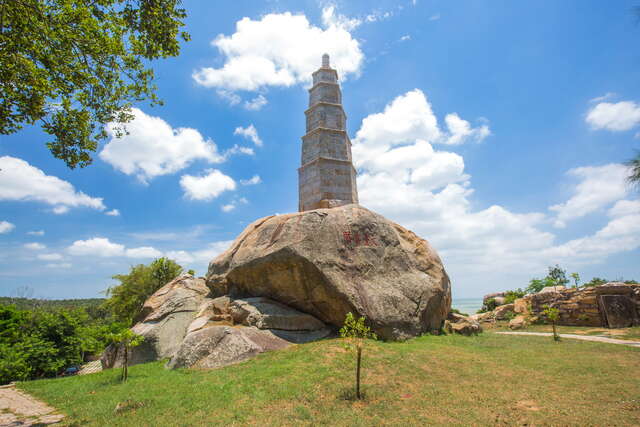
Image source: Taiwan_Opendata; license credits as shown.
Overview
Wentai Pagoda was built in the Ming dynasty in 1387 (Hongwu 20) and is one of the three stone pagodas ordered by the Hongwu Emperor and built on Kinmen by Zhou Dexing, the Marquis of Jiangxia. It is also the only Ming-dynasty stone pagoda in Kinmen that has not been destroyed by war or damaged by shellfire.
Highlights
Wentai Pagoda was built in Hongwu 20 of the Ming dynasty and is one of the few surviving Ming-dynasty stone pagodas in Kinmen. It is also the most completely preserved representative relic among the “Three Pagodas of Kinmen.” Wentai Pagoda is constructed from local granite as a five-story, hexagonal solid pagoda. Its form narrows gradually from the base upward, giving it a solid, upright appearance with a distinctly simple and ancient beauty. Wentai Pagoda was once an important navigational landmark, and it also symbolizes literary success through the imagery of “Kui Xing shining brightly” and “Kui Xing kicking the Dipper,” embodying cultural aspiration and religious belief. Wentai Pagoda has never been damaged by war or shelling and has been designated a national historic site. It is an important place for understanding Kinmen’s military and coastal defense history.
What to See
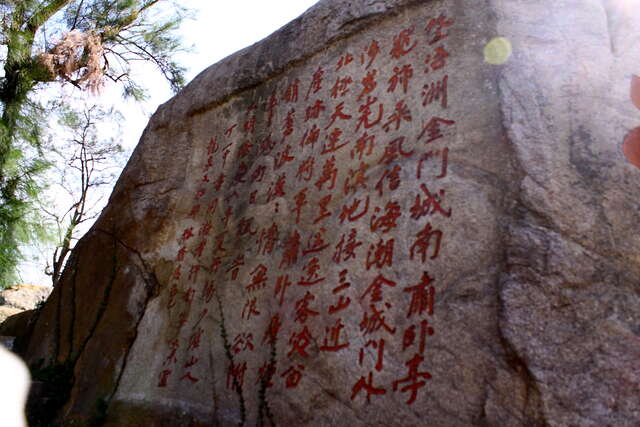
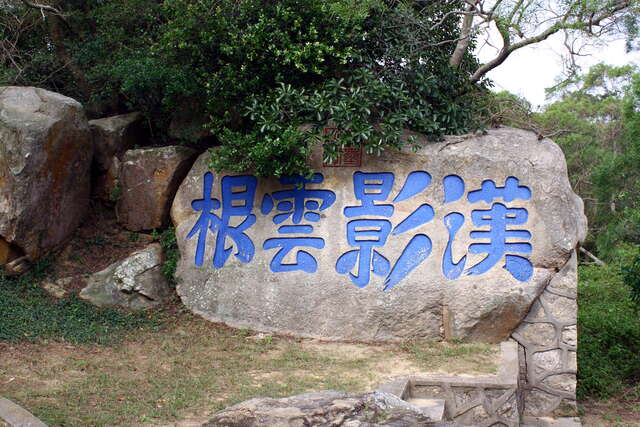
The pagoda itself: Wentai Pagoda stands on the summit of Nanpan Mountain. It is a hexagonal, five-story solid stone pagoda built from granite blocks in alternating vertical and horizontal courses. The lines are clean and the tiers are distinct, with a gourd-shaped finial at the top, creating a solemn and dignified ancient-pagoda appearance. Stone carvings and imagery on the pagoda: Under the eaves facing Kinmen City, the characters “Kui Xing Shining Brightly” are carved, with a relief of “Kui Xing Kicking the Dipper” below. These symbols express the wish for flourishing literary fortunes and success in the imperial examinations, reflecting the spiritual aspirations of scholars and students. Inscriptions and calligraphy beneath the pagoda: On the large rock below the pagoda are the ink inscription “Wentai Pagoda” written by Chen Hui, a hundred-household officer in the 35th year of the Wanli reign of the Ming dynasty, and the calligraphy “The Nation’s Golden Fortress” by the renowned painter Zhang Daqian. These works echo Kinmen City’s role as a strong coastal defense position. Scenery around Kinmen City and Nanpan Mountain: Wentai Pagoda is located on the southern outskirts of Old Kinmen City at the southern end of Nanpan Mountain. From here, visitors can overlook the terrain around Kinmen City and the coastal defense landscape, gaining a sense of the strategic location of the Kinmen Defense Thousand-Household Office City built in the Ming dynasty to resist wokou pirates. Understanding the “Three Pagodas of Kinmen”: Wentai Pagoda is known together with the Taiwu Mountain Reflection Pagoda and the Shuitou Maoshan Pagoda as the “Three Pagodas of Kinmen.” The latter two were rebuilt, while Wentai Pagoda is the only ancient pagoda preserved intact since the Ming dynasty, making it ideal for a themed historical journey.
Address
No. 100, Daguten Ancient Gugang, Gucheng Village, Jincheng Township, Kinmen County 893, Taiwan (near Gucheng Elementary School) Phone: (08) 232-8638
Travel Tips
The best time to visit Wentai Pagoda is during a clear season with good visibility, when the views of Kinmen City and the surrounding landscape are especially open. The pagoda and distant scenery are also easier to photograph in favorable light. Wear lightweight, non-slip shoes when visiting Wentai Pagoda. Some sections involve slopes and stone steps, so proper footwear makes the climb safer and allows for easier stops and photos around Nanpan Mountain. A visit to Wentai Pagoda can be combined with Old Kinmen City, the Xuejiang Xiaowo stele group, and other military and historic sites on Kinmen to gain a fuller understanding of the island’s history from the Ming dynasty coastal defense system to modern wartime heritage. As a national historic site, visitors are advised not to climb the pagoda or engrave on the stone carvings. This helps protect the granite structure and its valuable inscriptions. Please also take your trash with you and respect the local environment and cultural heritage. Kinmen is often windy and exposed to strong sunlight. For longer outdoor visits, bring a hat, sunscreen, and enough drinking water. In winter, extra warm clothing is recommended to cope with the sea breeze.
FAQ
Q:What are the historical and cultural features of Wentai Pagoda? A:Wentai Pagoda is one of three stone pagodas built in 1387 under the order of the Hongwu Emperor and carried out by Zhou Dexing, the Marquis of Jiangxia. It is also the only Ming-dynasty stone pagoda in Kinmen that has survived to the present without damage from war or shelling. Originally used as a navigational marker, the pagoda bears the imagery of “Kui Xing Shining Brightly” and “Kui Xing Kicking the Dipper,” symbolizing wishes for literary success. Below the pagoda are also the inscription by the Ming military officer Chen Hui and Zhang Daqian’s calligraphy “The Nation’s Golden Fortress,” giving it dual significance as both a military coastal-defense landmark and a symbol of education and culture. Q:What are the architectural highlights of Wentai Pagoda? A:Wentai Pagoda is a hexagonal, five-story solid stone pagoda built from locally sourced granite. It narrows gradually from the base upward, with each level marked by projecting strip-like granite eaves. The layered design is clear and orderly, and the top is finished with a gourd-shaped finial. Overall, it presents a heavy, stable, yet sharply defined visual impression, making it a rare and well-preserved example of Ming-dynasty stone pagoda architecture in Kinmen. Q:What nearby attractions can be visited with Wentai Pagoda? A:When visiting Wentai Pagoda, you can also explore nearby Old Kinmen City, the Kinmen Defense Thousand-Household Office City, the scenery around Nanpan Mountain, and the stele group known as Xuejiang Xiaowo. These sites together provide a broader understanding of Ming-dynasty Kinmen coastal defense, city fortifications, and literati inscriptions. You can also extend the trip to include the Taiwu Mountain Reflection Pagoda and the Shuitou Maoshan Pagoda to complete the “Three Pagodas of Kinmen” route. Q:What kind of travelers is Wentai Pagoda suitable for? A:Wentai Pagoda is especially suitable for travelers interested in historical sites, military and coastal-defense culture, and traditional stone architecture. It is also ideal for those who enjoy climbing to higher viewpoints and photographing ancient pagodas and landscapes. Combined with Kinmen’s battlefield attractions and traditional settlements, it offers a deeper experience of the island’s layered history and cultural character.