Ewha Womans University Centennial Hall
South Korea · Historic Sites
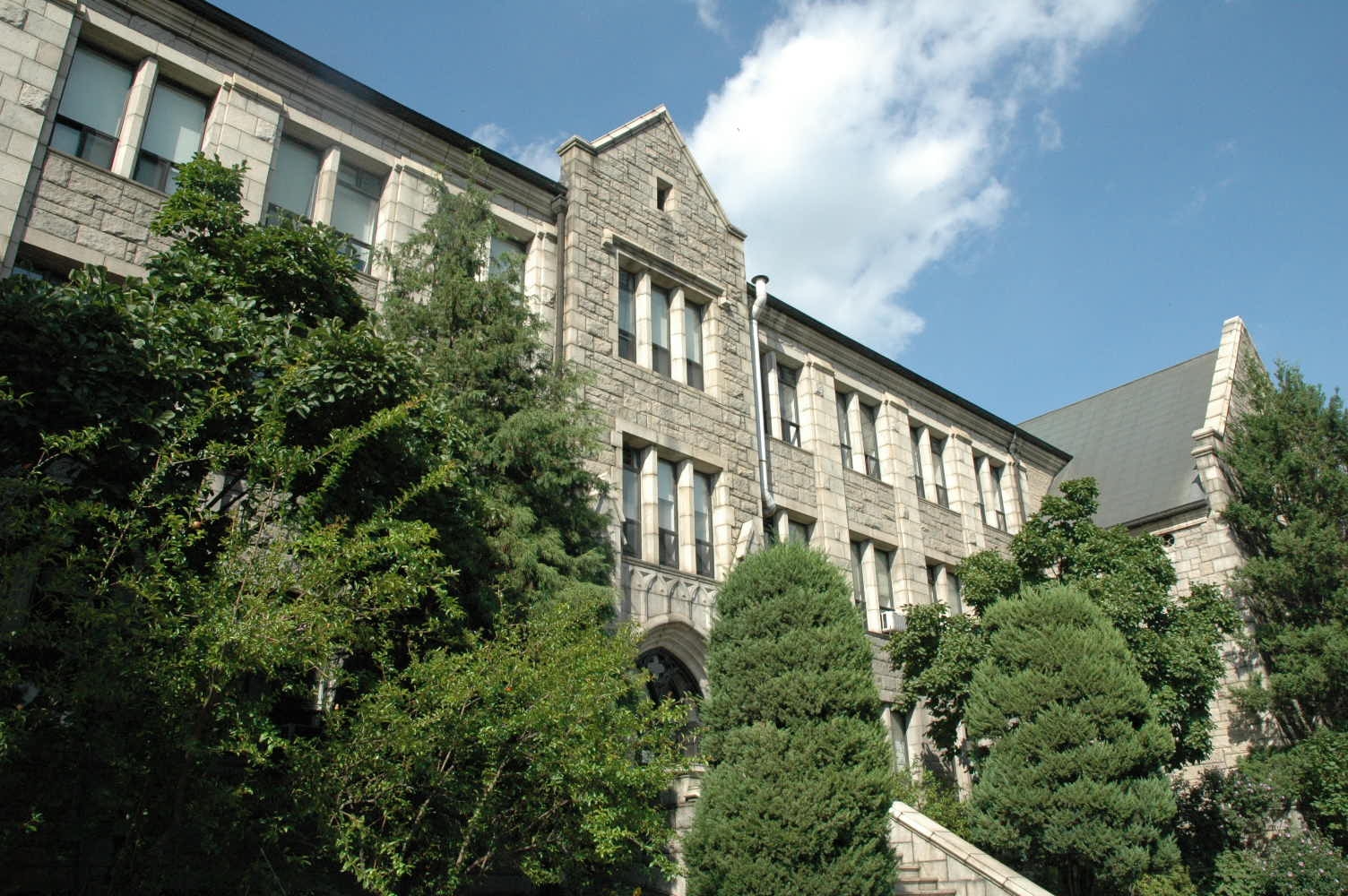
Image source: Wikimedia Commons; license credits as shown.
Overview
Ewha Womans University Centennial Hall is an educational and performance complex built to commemorate the 100th anniversary of Ewha Girls’ High School. It is located on the Ewha Girls’ High School campus in Jeong-dong, Jung District, Seoul. The building stands on the former site of Fleh Hall, which was demolished after a fire in 1975, and has 5 floors above ground and 3 basement levels. It includes multi-purpose facilities such as the professional theater Hwaam Hall. In addition to serving as a venue for school-based education, concerts, and performances, it is also regarded as an important landmark in Seoul’s modern educational history because of its historical background and the atmosphere of Jeong-dong Street.
Getting There
To reach Ewha Womans University Centennial Hall, take Seoul Metro Line 1 or Line 2 to City Hall Station. From Exit 1 on Line 1 or Exit 12 on Line 2, walk about 10 minutes along Deoksugung Stone Wall Road toward Seoul Museum of Art. You can also take Line 5 to Seodaemun Station, use Exit 5, walk about 300 meters toward the Kyunghyang Shinmun building, turn right, then continue about 300 meters toward Deoksugung; this route also takes about 10 minutes to the school gate and Centennial Hall entrance.
Highlights
The greatest appeal of Ewha Womans University Centennial Hall is its commemorative architecture, which blends the memory of modern educational history with a contemporary performance venue. The building has 5 floors above ground and 3 basement levels, with a total floor area of about 9,486 square meters. It is fully equipped with professional sound and lighting systems and can host a wide range of events, including musicals, concerts, and school ceremonies. The centerpiece, Hwaam Hall, has about 430 seats and good sightlines. It regularly hosts student and outside performances, including English-language musicals, and is one of the few school-affiliated professional theaters in central Seoul. The hall and floor lobbies also display works by Ewha Girls’ High School alumnae artists, creating a strong cultural and artistic atmosphere together with the historic Jeong-dong streetscape.
What to See
Hwaam Hall: The main theater space in the hall, with about 427 to 433 seats. The stage and audience area are well balanced, making it suitable for musicals, plays, concerts, and other school and outside performances. Memorial and exhibition spaces: The first- and second-floor lobbies regularly feature paintings, sculptures, and other works by alumnae artists from Ewha Girls’ High School, allowing visitors to enjoy both school history and artistic creation while waiting for a performance. Educational and multi-purpose spaces: As an education building, it contains classrooms, seminar rooms, and multi-use spaces for lectures, workshops, and various student activities, continuing Ewha Girls’ High School’s tradition as a pioneer in women’s education. Café and open space: Next to the hall is the atmospheric café Birds N Bugs, along with a rest area facing the plaza. These are popular places to meet friends or take photos before and after performances.
Hours & Admission
As a school-based educational and performance facility, Ewha Womans University Centennial Hall is generally open on weekdays only to specific users such as students, faculty, and staff. For the public, admission usually comes through performances, concerts, and other events. Opening hours and entry methods vary by performance or event, and most shows are held in the evening or on weekends. Ticket information is usually announced by the organizer or through related ticketing sites. Prices vary depending on the program and seating category, and some school events or educational programs may offer free or discounted admission. It is recommended to check the performance information and official announcements in advance for the latest ticket prices and entry rules. The attached parking lot offers discounted parking for performance audiences, with a common plan of 4 hours for KRW 4,000 and an additional KRW 2,000 per 30 minutes beyond that. Actual charges are subject to on-site and organizer announcements.
Address
26 Jeongdong-ro, Jung District, Seoul, South Korea (lot number: Jeong-dong 32-1), on the Ewha Womans University campus, near Deoksugung Palace and Seoul Museum of Art.
Travel Tips
The most convenient way to visit Ewha Womans University Centennial Hall is to plan your trip around a performance or a specific event and confirm in advance whether there is a show that day and whether the venue is open to the public, so you do not arrive to find it closed. The Jeong-dong area includes Deoksugung Palace, Seoul Museum of Art, former foreign legation buildings, and historic churches, so it is worth setting aside time to walk Deoksugung Stone Wall Road and combine it with a performance at the hall or a campus visit. Although the attached parking lot offers discounted parking for performance audiences, traffic can be congested after a show, so if you are attending during peak times or on weekends, public transportation is the better choice. On performance days, arrive early to pick up tickets and be seated. Hwaam Hall has a compact seating layout, and even middle and rear seats usually offer good views, but it is still advisable to check the seating chart in advance for a more comfortable experience. In winter, the streets of Jeong-dong can be windy, and in summer the sun can be strong. If you plan to walk between Deoksugung Stone Wall Road and City Hall Station, prepare warm clothing, sun protection, and drinking water according to the season.
Nearby Dining
The café Birds N Bugs next to the hall is the most convenient place for coffee and light meals before or after a performance. It has a quiet, artsy atmosphere, and many students and audience members gather there. Within about a 5 to 10 minute walk, Jeong-dong Road and the area around City Hall Station offer many Korean set-meal restaurants, cafés, and casual dining spots, making it easy to combine lunch or dinner with a visit to Deoksugung or the City Hall area. If you walk toward Seodaemun Station, you will also find many neighborhood restaurants and bakeries popular with office workers, which are practical dining options before or after a show. If you prefer large chain restaurants and food courts in department stores, the major commercial complexes near City Hall offer even more variety.
FAQ
Q: What is Ewha Womans University Centennial Hall mainly used for? A: Ewha Womans University Centennial Hall primarily commemorates the 100-year history of Ewha Girls’ High School and serves as a combined educational and performance space. Its main facility is Hwaam Hall, a theater that seats about 430 people. In addition to school ceremonies, concerts, and English-language musicals, the hall is also occasionally rented out for musicals, performances, and lectures, continuing Ewha Girls’ High School’s tradition in women’s education and cultural arts. Q: How do I get to Ewha Womans University Centennial Hall by subway or bus? A: To reach Ewha Womans University Centennial Hall, take Subway Line 1 or Line 2 to City Hall Station. From Exit 1 or Exit 12, walk about 10 minutes along Deoksugung Stone Wall Road toward Seoul Museum of Art to reach the school gate and Centennial Hall. You can also take Line 5 to Seodaemun Station, use Exit 5, walk about 300 meters toward the Kyunghyang Shinmun building, turn right, and then walk about 300 meters toward Deoksugung to arrive; by bus, get off around Seoul Museum of History or City Hall and walk from there. Q: Does Ewha Womans University Centennial Hall have fixed visiting hours? A: Ewha Womans University Centennial Hall does not have fixed visiting hours for general tourists. Opening and entry times mainly depend on each performance or event. Performances or events are usually held on weekday evenings or weekends, and audience members enter according to the time shown on their ticket. If there is no performance, it is generally not open to the public, so it is recommended to check the day’s program or organizer announcements before visiting. Q: Do I need to reserve tickets in advance to see a performance at Ewha Womans University Centennial Hall? A: Most public performances at Ewha Womans University Centennial Hall usually require advance ticket purchase. Tickets are generally sold online or by phone through the organizer. Some school events or public lectures may allow free or on-site entry, but spaces are limited, so it is still best to check the program information and seat availability in advance through the school, the organizer, or a ticketing site. Q: Is there parking at Ewha Womans University Centennial Hall, and how much does it cost? A: Ewha Womans University Centennial Hall has an attached parking lot and offers discounted parking for performance audiences. A common rate is about KRW 4,000 for 4 hours, with an additional KRW 2,000 for every 30 minutes beyond 4 hours. Actual charges depend on on-site announcements. To speed up traffic flow after performances, the venue often uses a prepaid system: drivers pay the discounted parking fee when entering, and can leave quickly by showing a stamped parking ticket or a ticket stub at exit. Q: What other attractions near Ewha Womans University Centennial Hall can I visit together? A: Ewha Womans University Centennial Hall is close to Deoksugung Palace, Deoksugung Stone Wall Road, and Seoul Museum of Art, making it a classic walking route that combines a palace, modern architecture, and art exhibitions. The Jeong-dong area also preserves former foreign legation buildings and historic churches. Combined with the plazas and cultural facilities around City Hall and Gwanghwamun, it is well suited to a half-day or full-day itinerary centered on a Jeong-dong historical and cultural walk plus a performance at the hall.