Old Russian Legation, Seoul
South Korea · 서울 · Historic Sites
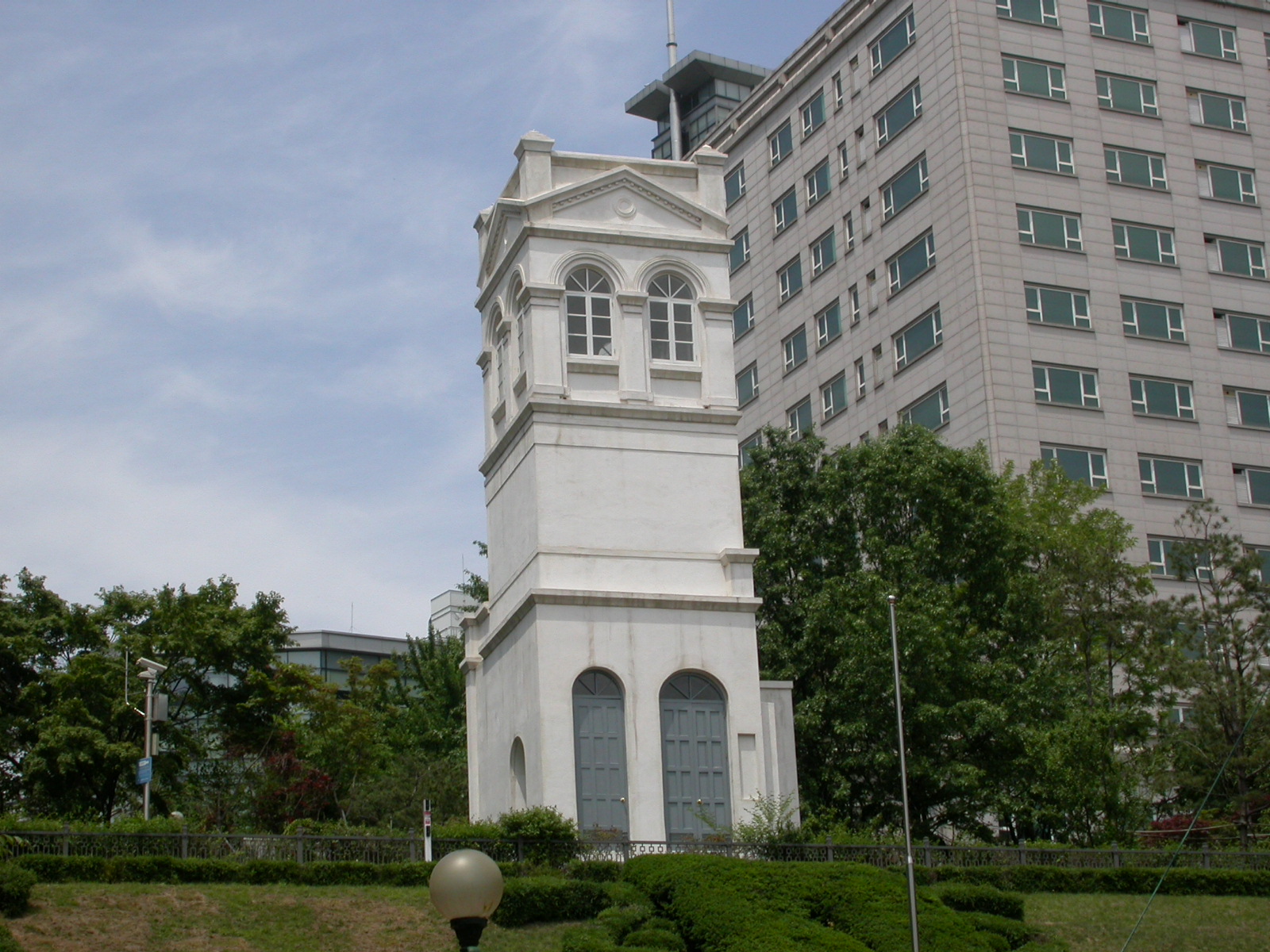
Image source: Wikimedia Commons; license credits as shown.
Overview
The Old Russian Legation in Seoul is a relic of a modern Western-style diplomatic building on the hill in Jeongdong, Jung District, Seoul, South Korea. It was also a historic site where King Gojong of Joseon sought refuge during the A-gwan Pacheon incident. Built in 1890, this two-story brick building with a tower was mostly destroyed during the Korean War, and today only part of the basement and a three-story observation tower remain, overlooking Deoksugung Palace and downtown Seoul. The surrounding area has been developed into Jeongdong Park and walking routes connected to the Gojong’s Road trail, making it one of the representative places to experience modern and contemporary Korean history together with the cityscape.
Getting There
The most convenient way to reach the Old Russian Legation in Seoul is to take the subway to City Hall Station or Seodaemun Station and then walk to the entrance of the legation ruins above Jeongdong Park. From Exit 1 or 12 of City Hall Station on Lines 1 and 2, it takes about 10 minutes on foot, or from Exit 5 of Seodaemun Station on Line 5, about 10 to 15 minutes on foot to reach the Jeongdong area, then follow the signs in the park and walk up the stairs to the building ruins at the top of the hill.
Highlights
The greatest feature of the Old Russian Legation in Seoul is its role as the site of the A-gwan Pacheon historical event, where King Gojong stayed for an important political turning point from 1896 to 1897 while escaping coups and threats in the late Joseon period. The building itself was designed in a European Renaissance-style two-story brick form, with arched windows on all sides, gable decorations, and a tall tower, symbolizing the diplomatic presence and influence of the Russian Empire in Hanseong at the time. Although most of the main building was destroyed during the Korean War, the remaining tower and foundation still preserve the outline of a modern Western legation, and together with the Jeongdong hill and Deoksugung scenery, form a highly symbolic urban landmark. The surrounding Jeongdong Park and Gojong’s Road trail also allow visitors to connect Deoksugung Palace, historic churches, and modern buildings on foot, offering a full sense of Seoul’s modern and contemporary diplomatic and court history.
What to See
The main things to see at the ruins of the Old Russian Legation in Seoul include: 1. Tower and surviving outer walls: Today only a white brick tower about three stories high and parts of the outer walls remain. These are the most representative parts of the original building completed in 1890, featuring arched windows and simplified Renaissance-style decoration, making it a striking landmark on the Jeongdong hill. 2. Underground structure ruins: The original building was a two-story brick structure with one to two basement levels. After the Korean War, most above-ground sections were destroyed, and only part of the basement and the tower were preserved during restoration work in the 1970s. Although they are not generally open to visitors inside, they show the large scale of the former legation. 3. Jeongdong hill scenery: The elevated site of the legation overlooks Deoksugung Palace and old downtown Seoul. In the past, its wide view made it a gathering place for Western legations, and today the tower still stands out on the skyline. It is a good place to look up and take photos from Jeongdong Park. 4. Jeongdong Park and stairway path: Visitors can reach the legation ruins by climbing the stairs inside Jeongdong Park. The route is linked by shaded paths and interpretation boards, allowing visitors to understand the history of the site as it changed from royal grounds to the Russian legation and later to a modern park. 5. Entrance to Gojong’s Road: Below the legation is the restored Gojong’s Road, a small path that recreates the route King Gojong secretly used to flee from Deoksugung Palace to the Russian Legation for refuge. It is a popular walking route for experiencing the atmosphere of this historical story.
Hours & Admission
The exterior ruins of the Old Russian Legation in Seoul are located in an open hillside area, so in principle they can be viewed and visited around Jeongdong Park at any time, with no clearly fenced ticketed entrance and no regular public access to the inside of the tower. Jung District tourism information indicates that the walking routes and park area in Jeongdong are open 24 hours, but actual nighttime lighting and safety conditions are subject to park rules, so visiting during the day or in the evening is recommended. The legation building and underground structure are currently protected as a nationally designated historic site (Historic Site No. 253), and most travelers visit for exterior viewing and photography, while special visits or academic investigations require prior application to the managing authority.
Address
21-18 Jeongdong-ro, Jung District, Seoul, South Korea
Travel Tips
The best seasons to visit the Old Russian Legation in Seoul are spring and autumn, when Jeongdong Park and the surrounding streets are filled with maple leaves, ginkgo trees, and flowers, creating especially beautiful photos with the tower ruins. It is recommended to combine the trip with a walk around Deoksugung Palace, the Deoksugung Stonewall Road, Jeongdong Church, and nearby modern buildings such as the former site of Paichai Hakdang, to create a half-day to full-day modern history and cultural walking route. Because the ruins are at the top of a hill, you will need to climb stairs and slopes from Jeongdong Park, so visitors with limited mobility should allow extra time and wear comfortable non-slip walking shoes. There is no large parking facility in the area, so driving is less convenient; public transportation such as the subway and buses is recommended. When taking photos, please pay attention to heritage protection signs and do not climb over fences or on the ruins, to avoid damaging cultural assets or putting yourself at risk.
Nearby Dining
The Jeongdong and City Hall areas around the Old Russian Legation have many cafes and restaurants, making it easy to rest and eat after a walk. Along Jeongdong Road and Deoksugung Stonewall Road, there are many distinctive cafes and dessert shops where you can enjoy coffee, Korean desserts, or light meals while taking in street views and modern building exteriors. Around City Hall Station and Gwanghwamun Station, there are various Korean restaurants, barbecue shops, and casual dining places, all within about a 10 to 15 minute walk from the legation, making them good choices for traditional Korean food or modern creative cuisine. If you want a quick meal, you can also use department stores, food courts, and chain fast-food outlets around the City Hall and central business district areas, which is convenient for fitting into your itinerary.
FAQ
Q: Can I enter the interior of the Old Russian Legation in Seoul? A: Ordinary visitors cannot enter the tower or the underground structure of the Old Russian Legation in Seoul. They can only view and photograph it from the outside. Most of the building was destroyed during the Korean War, and the remaining tower and foundation are a nationally designated historic site. For safety and heritage protection, only the surrounding paths are normally open, and special visits require separate application to the managing authority. Q: Do I need a ticket to visit the Old Russian Legation in Seoul? A: No ticket is required to view the exterior of the Old Russian Legation in Seoul or to walk the Jeongdong Park paths. It is an open space that can be visited freely. Since there is no ticket office or fixed entrance, visitors may come and stroll or take photos at any time during the day, but they should still follow park regulations and heritage protection notices. Q: How do I walk from the subway station to the Old Russian Legation in Seoul? A: It takes about 10 to 15 minutes on foot from City Hall Station or Seodaemun Station to the Jeongdong hill area where the Old Russian Legation in Seoul is located. From Exit 1 or 12 of City Hall Station, walk toward Deoksugung Palace and Jeongdong Road, enter Jeongdong Park, and follow the signs and stairs up to the white tower ruins at the top of the hill; or from Exit 5 of Seodaemun Station, pass through the government building area and then continue uphill along Jeongdong Road. Q: Does the Old Russian Legation in Seoul have specific opening hours? A: As a historic site, the exterior of the Old Russian Legation in Seoul is located in Jeongdong Park and an open hillside area, so in principle it can be viewed from outside at any time and does not have a clearly defined ticketed opening schedule. However, since the tower itself is not open to the public inside, most visitors come during the day for photos and walking. Nighttime lighting and safety conditions vary by park management and season, so it is recommended not to stay too late. Q: What is the connection between the Old Russian Legation in Seoul and the A-gwan Pacheon incident? A: The Old Russian Legation in Seoul was the place where King Gojong stayed for more than a year during the A-gwan Pacheon incident of 1896 to 1897, and it is therefore regarded as an important site for understanding late Joseon diplomacy and the transition to the modern era. During this period, Gojong fled threats in the palace and stayed in a room at the Russian Legation. The pro-Japanese cabinet fell, the pro-Russian cabinet was established, and modern political and enlightenment movements such as the Independence Club developed, which is why the legation tower, though now only a ruin, has great historical significance.