Haiyin Temple
Taiwan · Kinmen County · Jinhu Township · Historic Sites
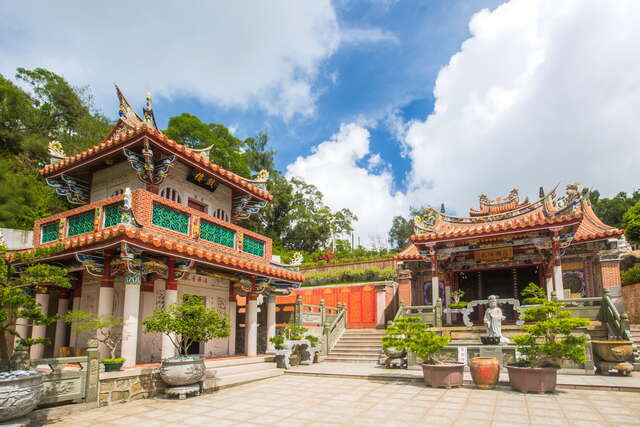
Image source: Taiwan_Opendata; license credits as shown.
Overview
Haiyin Temple, built during the Song dynasty, has more than 800 years of history. Because it is located in a hollow near the summit of Mount Taiwu, it was historically called Taiwu Rock Temple. Seen from afar, Mount Taiwu resembles a hermit lying on his back, and local people describe it as a place where an immortal reclines on the ground, giving the mountain a sense of spiritual energy. Haiyin Temple, built on this auspicious site, is especially popular for incense offerings. Every lunar New Year’s Day on the ninth day of the first month, Kinmen residents of all ages come up the mountain to worship at Haiyin Temple, making it one of Kinmen’s important religious festival activities.
Highlights
Haiyin Temple is a Buddhist ancient temple located in the hollow near the summit of Mount Taiwu in Kinmen. It was founded during the Song dynasty and is both an important religious sanctuary and a hiking attraction. The temple receives heavy incense offerings, especially on the ninth day of the first lunar month, when residents from across the island come up the mountain with their families to pray for blessings. Visitors can experience more than 800 years of history, the graceful mountain form of Mount Taiwu known as the immortal reclining on the ground, and a peaceful, solemn space for Buddhist devotion.
What to See
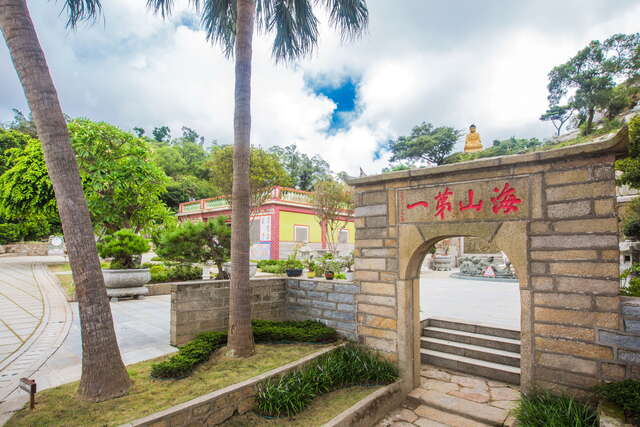
1. Temple gate and temple layout: Haiyin Temple was built according to the mountain terrain, with its structures unfolding from front to back along the valley. Although the site is not large, the layout is neat and well layered, creating the atmosphere of a small but refined mountain practice site. 2. Main hall and Guanyin statue: The temple’s main hall is the primary space for worship. It houses a Guanyin statue with nearly a hundred years of history and the Eighteen Arhats. The solemn atmosphere makes it a central place for many visitors and local residents to pray and fulfill vows. 3. The former name Taiwu Rock Temple: Because Haiyin Temple sits in a hollow at the top of Mount Taiwu, it was historically called Taiwu Rock Temple. Walking through the temple grounds, visitors can imagine the appearance of an early mountain temple and feel the historical depth of one of Kinmen’s earliest famous Buddhist temples. 4. Mount Taiwu’s immortal reclining landscape: From Mount Taiwu, the mountain resembles a hermit lying on his back, and locals call it the immortal reclining on the ground. Mist, trees, and rock faces around the area add spiritual atmosphere to the temple, making it a good place for photography and mountain views. 5. Hiking trail and walking experience: The ancient trail leading to Haiyin Temple along Mount Taiwu offers beautiful scenery and is suitable for combining hiking, sightseeing, and a temple visit. The trip offers exercise, culture, and spiritual relaxation all at once.
Address
No. 1, Haiyin Temple, Jincheng Township, Kinmen County 891 Tel: (08)2334703
Travel Tips
When visiting Haiyin Temple, choose a clear day with good visibility to better appreciate the full mountain shape of Mount Taiwu and the surrounding scenery. Reaching the temple requires walking on mountain paths and stairs, so comfortable walking shoes or hiking shoes are recommended, and enough time should be set aside for the ascent and visit according to your fitness level. The ninth day of the first lunar month, known as Tian Gong Sheng, is the busiest religious festival at Haiyin Temple. If you want to experience the local faith atmosphere, this is the best time to visit, but crowds will be heavy, so parking and itinerary planning should be arranged in advance. Visiting on a normal day or outside festival periods is quieter and more suitable for travelers who want a peaceful worship experience or a slow walk around Mount Taiwu. Conditions in the mountains can be windier and cooler than at lower elevations, so bring a light jacket, sun protection, and drinking water depending on the season, and pay attention to safety and litter disposal. As Haiyin Temple is a Buddhist sacred site, photography, visits, and clothing should remain respectful. Lower your voice when entering the halls and respect local worshippers and their faith practices.
FAQ
Q: What are the main features and highlights of Haiyin Temple? A: Haiyin Temple is a mountain Buddhist temple built during the Song dynasty at a hollow near the summit of Mount Taiwu. It is known for its long history, graceful mountain scenery, and strong incense-burning devotion. The temple was formerly called Taiwu Rock Temple and is now one of Kinmen’s important Buddhist sanctuaries. It enshrines a Guanyin statue and the Eighteen Arhats, and visitors can experience hiking, an ancient temple visit, and local religious culture at the same time. Q: When is the best time to visit Haiyin Temple to experience local religious atmosphere? A: The ninth day of the first lunar month, Tian Gong Sheng, is the best time to experience the religious atmosphere of Haiyin Temple. On that day, Kinmen residents come up the mountain to worship at the temple with their families. During the festival, incense smoke fills the air and crowds are lively, making it a good time to understand Kinmen folk beliefs and temple festival culture, though the mountain path and temple area will be more crowded. Q: What etiquette should be observed when visiting Haiyin Temple? A: When visiting Haiyin Temple, speak softly, dress appropriately and respectfully, and show consideration for worshippers who are praying. When taking photos in and around the halls, avoid disrupting the flow of people, do not touch offerings or statues casually, and follow the temple’s notices and instructions to help maintain a clean and solemn environment. Q: Is Haiyin Temple suitable for families with children or older adults? A: Haiyin Temple is suitable for families with children and older adults, but physical ability should be considered because reaching the temple requires walking along mountain paths and stairs. Kinmen residents also often bring both young and old up the mountain during Tian Gong Sheng, showing that the route is generally manageable for most people. As long as enough time is reserved, the pace is kept slow, and proper shoes and water are prepared, older adults and children can safely enjoy this journey that combines hiking and faith.