Han Ying Yun Gen Inscription
Taiwan · Kinmen County · 金城鎮 · Historic Sites
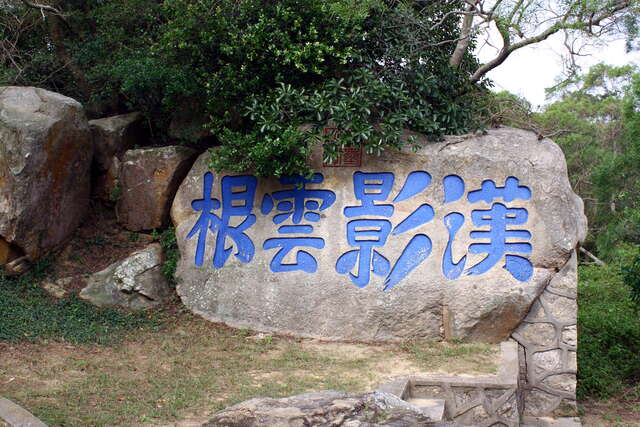
Image source: Taiwan_Opendata; license credits as shown.
Overview
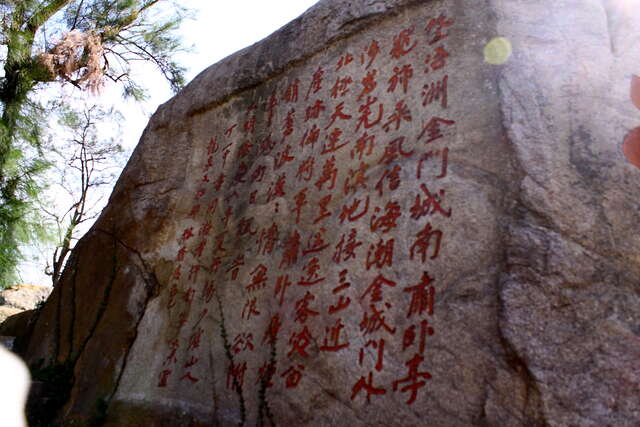
Located on Xiantai Hill on the south side of Gugang Lake in Jincheng Township, Kinmen, this is one of the surviving stone inscriptions handwritten by the Ming Lu King. Lu King, acting as regent and seeking to restore the Ming dynasty, stayed on Kinmen Island for more than 10 years. This inscription, carved between 1652 and 1654 during the Yongli reign, reflects his resolute spirit and has been designated a county-level historic site. What is seen today consists of two carvings with reversed inscriptions; according to legend, the original stele once stood on a slope, later collapsed, and the text ended up upside down. Later generations then found a similar cliff face and made a rubbings-based recarving, creating the current reversed-inscription appearance.
Highlights
A **county-level historic site** on Xiantai Hill south of Gugang Lake in Jincheng Township, Kinmen County, this cliff inscription is a relic handwritten by Zhu Yihai, the regent of the Ming Lu Kingdom, and is closely tied to the history of the Southern Ming in Kinmen. Two visible carvings associated with the words “Han Ying Yun Gen” can be seen on site, reflecting the legend of the stone’s collapse, later restoration, and recarving, and making this landmark especially distinctive.
What to See
**Main Han Ying Yun Gen inscription**: Observe the carved characters and the condition of the stone surface to experience the historical atmosphere of this late-Ming relic. **Two carvings with reversed inscriptions**: The reversed-text phenomenon seen today is associated with the legend that the original stone collapsed, the text became inverted, and later generations made a copy on another cliff face. **Gugang Lake and Xiantai Hill scenery**: The site is on a hillside south of Gugang Lake, surrounded by lakeside rocks and trees, making it suitable for scenic walks and photography. **Related late-Ming inscriptions**: Nearby are other important historical traces, including the cursive-script inscription “Bì Dùn” by Dong Yangxian and other poetic carvings from the same area.
Travel Tips
It is recommended to include this site as part of a half-day or full-day visit around **Gugang Lake** and **Xiantai Hill**, since seeing the surrounding historic sites helps explain the background. The site involves stone carvings and hillside terrain, so **comfortable walking shoes** are recommended, and visitors should be careful on wet stone surfaces and uneven ground. It is especially rewarding for visitors interested in history, calligraphy, and historic monuments; if you mainly want natural scenery, it can also serve as a cultural stop during a lakeside walk. When taking photos, pay attention to the angle of the stone surface, because the reversed inscriptions and inverted traces are the most distinctive viewing features here.
FAQ
Q: Where is the Han Ying Yun Gen Inscription? A: The Han Ying Yun Gen Inscription is located on Xiantai Hill on the south side of Gugang Lake in Gugang Village, Jincheng Township, Kinmen County. Q: What is the historical significance of the Han Ying Yun Gen Inscription? A: It is one of the surviving inscriptions handwritten by Zhu Yihai, the regent of the late Ming Lu Kingdom. It reflects the history of Southern Ming activity in Kinmen and has been designated a county-level historic site. Q: Why are there reversed inscriptions? A: According to legend, the original stone collapsed and the inscription became inverted, after which later generations found a similar cliff face and made a copied recarving, resulting in the reversed-inscription appearance seen today. Q: How is the Han Ying Yun Gen Inscription best visited? A: It is best visited together with attractions around Gugang Lake, with the focus on observing the stone inscription and understanding its late-Ming historical context.