Chiu Liang-kung Mother Chastity Arch
Taiwan · Kinmen County · 金城鎮 · Historic Sites
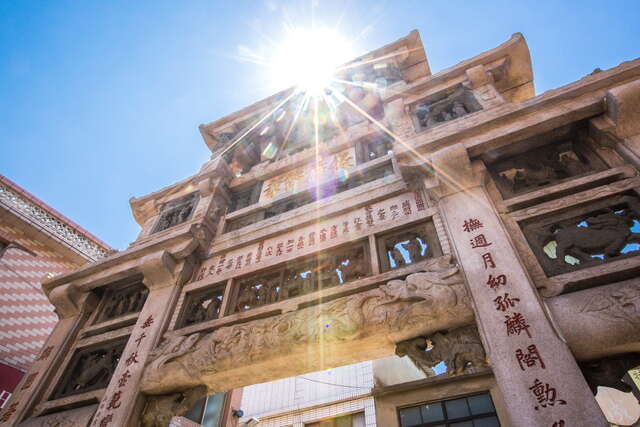
Image source: Taiwan_Opendata; license credits as shown.
Overview
Qiu Liang-gong’s mother, Ms. Hsu, was the wife of Qing Dynasty General Zhenwei Qiu Zhiren. Not long after Qiu Liang-gong was one month old, his father Qiu Zhiren passed away, and Ms. Hsu, who was still quite young at the time, worked hard to raise him from infancy to adulthood.
Highlights
Chiu Liang-kung Mother Chastity Arch is a stone archway built in 1812, during the 17th year of the Jiaqing reign of the Qing Dynasty, to honor the chastity and filial devotion of Qiu Liang-gong’s mother, Ms. Hsu. It is also one of Kinmen’s important national monuments and landmarks. Visitors can admire the finely carved four-pillar, three-bay archway made of granite and qingdou stone, while also learning about Ms. Hsu’s moving story of becoming widowed at a young age and raising Qiu Liang-gong into a famed general. The archway is grand in scale and exceptionally well preserved, and is regarded as one of the most complete and magnificent archways in the Taiwan, Penghu, Kinmen, and Matsu area and in the Fujian-Taiwan region. Often called the “No. 1 Arch of Fujian and Taiwan,” it is a cultural attraction not to be missed when visiting the old streets of Jincheng and the Houpu area. The surrounding district is a busy part of Jincheng with traditional streets, making it ideal for combining a visit to nearby government buildings, old streets, and temples for a full experience of Kinmen’s history, culture, and everyday atmosphere.
What to See
1. Main chastity archway: The main archway is a four-pillar, three-bay stone structure, built primarily with granite and complemented by qingdou stone in the middle sections and carvings. Its imposing form and balanced proportions make it a highlight for appreciating traditional stone arch craftsmanship. Visitors can view the sculptural details on the pillars, beams, and inscribed plaques up close and experience the meticulous workmanship of Qing-era artisans. 2. Exquisite stone carvings and inscriptions: The archway preserves many intricate and delicate stone carvings and written inscriptions, most of which relate to traditional values such as chastity and loyalty. Looking upward, visitors can see plaques and couplets that record the imperial commendation of Ms. Hsu’s chastity and praise her virtuous conduct. They are well worth reading slowly to understand how society at the time honored “chastity” and “raising a child with proper discipline.” 3. Ms. Hsu’s story of chastity and filial devotion: The archway was built to honor Ms. Hsu, Qiu Liang-gong’s mother, who remained faithful to her late husband for more than 20 years after being widowed before the age of 30. She raised her son, who was only one month old at the time, entirely on her own and helped him grow into a military officer. Standing beneath the archway, together with on-site guide text or interpretive signs, allows visitors to better understand this difficult mother-son story and its model significance in local society. 4. Atmosphere of the “No. 1 Arch of Fujian and Taiwan” title: Chiu Liang-kung Mother Chastity Arch is known for its large scale, excellent preservation, and refined carving, earning it the reputation of the “No. 1 Arch of Fujian and Taiwan.” Amid the everyday foot traffic and traditional market atmosphere of the Jincheng district, the archway stands out with a solemn and elegant historical presence. It is a popular photo spot and a landmark where many tour groups and independent travelers stop for group pictures. 5. Dongmen, Guanyin Pavilion, and the surrounding streetscape: The archway is located in the Dongmen area of Jincheng Township, near Guanyin Pavilion and major streets such as Juguang Road and Minsheng Road. The surrounding area consists of traditional shopping streets and residential communities. Visitors can explore nearby old shops, temples, and former government sites before or after visiting the archway, and experience the historical texture of Jincheng as Kinmen’s former political and commercial center.
Address
No. 55, Section 1, Juguang Road, Dongmen Village, Jincheng Township, Kinmen County 893, Taiwan Tel: (08)2328638
Travel Tips
The easiest way to visit Chiu Liang-kung Mother Chastity Arch is to include it in a walking or cycling route through Jincheng Town, linking old streets, historic sites, and shopping areas in one trip. Since the archway is near a street intersection, it is generally open for casual daytime visits, and it is recommended to allow about 30 minutes to 1 hour to examine the carvings and surrounding street views. Kinmen’s spring and autumn weather is the most comfortable for walking and outdoor sightseeing. Summer sunlight can be intense, and winter northeast monsoon winds can be strong, so bringing a hat, light jacket, sunscreen, and windproof clothing is advisable. The area around the archway has relatively heavy vehicle and pedestrian traffic, so be mindful of passing vehicles and people when taking photos. If you are interested in historical background, it is helpful to learn a little beforehand about the Qing Dynasty chastity system and the stories of Qiu Liang-gong and Ms. Hsu, or to look for on-site interpretive signs and guided information. You can also combine the visit with nearby historic and religious buildings, such as Jincheng Old Street, former government sites, and temples, to create a more in-depth cultural itinerary. If restoration or cleaning work is underway, scaffolding and protective installations may affect the view for photography. Before planning your trip, check announcements from Kinmen County’s cultural or tourism authorities so you can adjust your visit time and photography expectations.
Nearby Dining
Chiu Liang-kung Mother Chastity Arch is located near Jincheng Township’s streets and traditional commercial district, where many local snack shops, cafés, and casual dining spots are within walking distance and make convenient places to rest and eat during your itinerary. After visiting the archway, it is recommended to stroll through the Jincheng Old Street area, sample Kinmen’s local dishes and traditional desserts, and combine the outing with shopping for famous local products and souvenirs so that cultural exploration and food experiences can be enjoyed together.
FAQ
Q: Where is Chiu Liang-kung Mother Chastity Arch, and how do I get there? A: Chiu Liang-kung Mother Chastity Arch is located in the Dongmen area of Jincheng Township, Kinmen County, near Guanyin Pavilion and major streets such as Juguang Road and Minsheng Road. It is a prominent landmark in the Jincheng old street area. It is within walking distance from the Jincheng downtown area, and most bus, taxi, or rental-car itineraries to Jincheng Township can easily include it as part of a nearby sightseeing route, often together with nearby government-site ruins, temples, and old streets. Q: Do I need tickets or a reservation to visit Chiu Liang-kung Mother Chastity Arch? A: Chiu Liang-kung Mother Chastity Arch is an outdoor stone archway located in a street setting, and in general it is an open space that visitors can access freely. Tickets or advance reservations are usually not required. If the site is undergoing restoration, cleaning, or construction, fences or scaffolding may be installed around it, so it is a good idea to check official Kinmen County announcements before visiting to confirm any temporary route changes or impacts on photo angles. Q: What can I do at Chiu Liang-kung Mother Chastity Arch? A: At Chiu Liang-kung Mother Chastity Arch, visitors can closely appreciate Qing Dynasty stone-arch craftsmanship, observe the structure made of granite and qingdou stone, examine the delicate carvings and plaque inscriptions, and learn through interpretive text about Ms. Hsu’s story of chastity and raising a child to fame. The archway is also a great place for photographs, and afterward you can continue walking along the street to connect with Jincheng Old Street, the commercial district, and other historic sites for a district stroll that combines history and everyday life. Q: How much time should I reserve for a visit to Chiu Liang-kung Mother Chastity Arch, and what kind of travelers is it suitable for? A: Visiting Chiu Liang-kung Mother Chastity Arch itself usually takes about 20 to 30 minutes. If you include reading the interpretive material, taking photos, and exploring the surrounding streets, it is recommended to allow about 30 minutes to 1 hour. This attraction is suitable for travelers interested in history, culture, and traditional architecture, and it is also a good place for families and older visitors. Through a straightforward story and the physical monument, visitors can learn about the Qing Dynasty concept of “chastity and filial devotion” and Kinmen’s local historical memory.