Qiu Lianggong Historic House
Taiwan · Kinmen County · 金城鎮 · Historic Sites
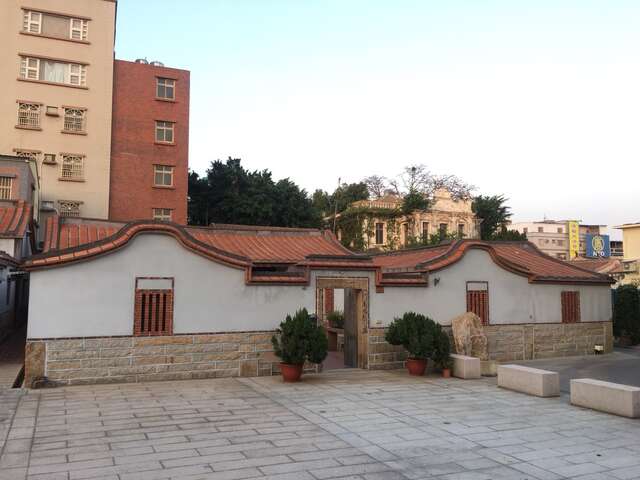
Image source: Taiwan_Opendata; license credits as shown.
Overview
This building is the ancestral home of Qiu Lianggong, located in the middle section of Wujiang Street in Jincheng Township. Inside, it still preserves a square bronze mirror and two carved stone tablets with dragon motifs and imperial edicts. The tablets are 61 cm high and 85 cm wide, and the two characters for “imperial edict” on each tablet are said to measure about 12 cm square. According to local tradition, when Lianggong was granted a noble title, the emperor heard that his family residence was very modest and therefore ordered the construction of a noble mansion, presenting these two edict stones to be placed in front of the mansion gate. The building is a one-hall-four-wing layout with a left projecting extension and wall enclosure.
Highlights
Qiu Lianggong Historic House is a Qing-dynasty Minnan-style traditional residence and county-designated heritage site on Wujiang Street in Jincheng, Kinmen. It was once the ancestral home and former residence of Qiu Lianggong, a Qing official who served as Viceroy of Zhejiang and Waterways. The house follows the traditional one-hall-four-wing layout. Its plain, understated exterior hides valuable historic relics such as a square bronze mirror and carved stone tablets with dragon motifs and imperial edicts, reflecting the restrained yet prosperous lifestyle of a prominent Kinmen family.
What to See
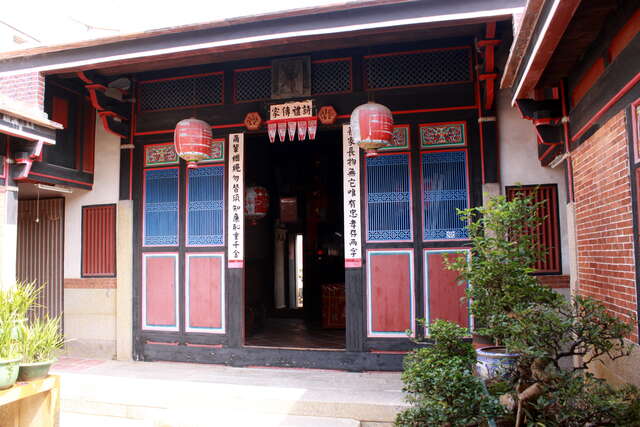
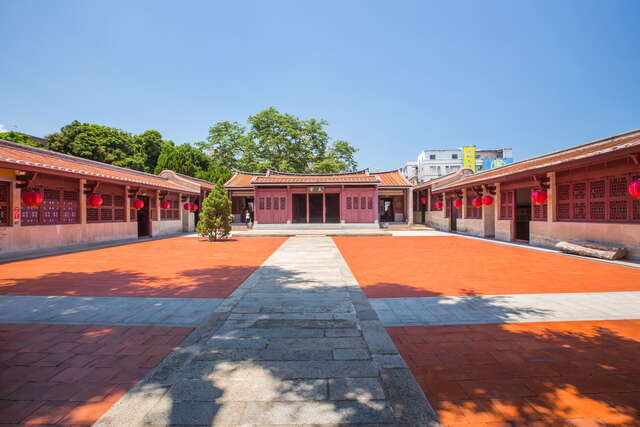
1. Building layout and exterior: Qiu Lianggong Historic House consists of two traditional Minnan-style courtyard houses and follows the one-hall-four-wing form. The lower half of the walls is built of large stone blocks, while the upper half combines brick, stone, and wood. The roof is covered with red tiles, and the interior has red-brick flooring, presenting the simple and reserved style of a traditional Kinmen mansion. 2. Ancestral home space and traces of daily life: The historic house was originally the ancestral home and former residence of Qiu Lianggong. Although it once fell into disrepair, restoration by the county government and the family has largely preserved its traditional residential appearance, allowing visitors to sense the spatial scale and everyday atmosphere of a Qing-dynasty Kinmen gentry family while walking through the old streets. 3. Square bronze mirror: A square bronze mirror is still preserved inside the house, serving as evidence of the household items once used by the owner and passed down through the family. Together with the plain furnishings and materials inside the house, it illustrates the local culture of official families in Kinmen, where status was high but living was not extravagant. 4. Carved dragon imperial-edict stones: Two stone tablets carved with dragon motifs and imperial edicts remain in the house. Each measures about 61 cm in height and 85 cm in width, with the two characters for “imperial edict” on each tablet said to be about 12 cm square. Tradition says that after Qiu Lianggong was granted a noble title, the emperor heard that his ancestral home was modest and therefore bestowed these stones to be placed before the mansion gate as part of a noble residence. Because the plan was never completed, they remained in the ancestral home and became objects rich in historical legend. 5. Air-raid shelter and wartime memory: Within the historic house grounds is also an air-raid shelter added during the 823 Artillery Bombardment. This layers modern wartime history onto the traditional Qing-era residence, allowing visitors to observe multiple historical periods of Kinmen—from the Qing dynasty to the military administration era—in one place. 6. Qiu Cuo Ding and the neighborhood atmosphere: In front of the house is an open square space known locally as “Qiu Cuo Ding.” It connects with the surrounding streets and alleys of the Houpu urban area, the nearby Qing-era Kinmen Fort Commander's Office, and other historic buildings. The area is ideal for a walking route that lets visitors experience the full historic character of old Jincheng.
Address
No. 27, Wujiang Street, Jincheng Township, Kinmen County 893 Phone: (08)2328638
Travel Tips
The best way to visit Qiu Lianggong Historic House is to include it in a walking tour of Houpu Old Street in Jincheng. It can be reached from the middle section of Wujiang Street, and the area is compact, making it suitable for leisurely walks and photography. Spring and autumn are the most comfortable seasons in Kinmen, with softer light and less wind, making strolls through the old streets and historic-house area more pleasant. In winter, the northeast monsoon can be strong and the weather feel cold, while summer sunlight is intense, so it is best to avoid staying outdoors in the courtyard and open square around midday. Wear comfortable walking shoes or sneakers when visiting. The house has traditional red-brick floors and courtyard spaces with level changes, so sturdy footwear will make the visit safer and more comfortable, and also make it easy to combine the trip with nearby sights such as the Qing-era Kinmen Fort Commander's Office. As a county-designated heritage site and private family property, visitors should follow posted instructions and avoid climbing, scratching, or touching historic elements and the imperial-edict stones. When taking photos, check whether photography is restricted in certain areas, and keep noise low to respect local residents and preserve the heritage setting. If you plan to spend a longer time in old Jincheng, it is useful to check local bus schedules or taxi information in advance and arrange your itinerary around the Jincheng transport area so you can connect smoothly with other villages or battlefield sites.
Nearby Dining
The Houpu area of Jincheng Township is one of Kinmen’s main urban districts. Around Wujiang Street, where Qiu Lianggong Historic House is located, there are many local snack shops and beverage stores, making it easy to sample Kinmen flavors and light meals while visiting historic sites on foot, though shop brands and menu items depend on actual opening conditions on the day.
FAQ
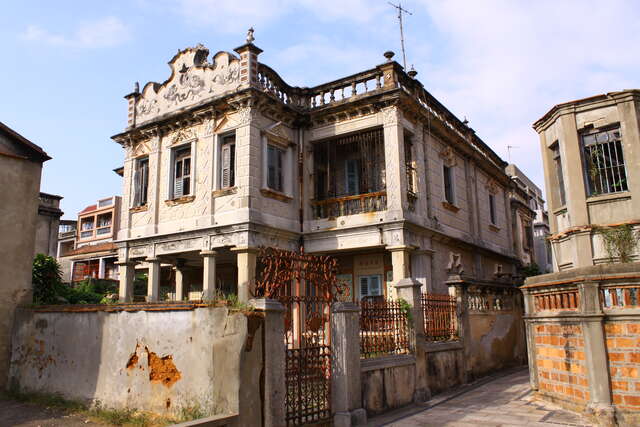
Q: What is the main attraction at Qiu Lianggong Historic House? A: The main attractions are the traditional Minnan mansion layout, the square bronze mirror, and the carved dragon imperial-edict stones, along with the historic district atmosphere that connects it to Houpu Old Street. Although the building was the ancestral home and former residence of a prominent military official, its exterior is very plain. Through details such as the stone walls, red-tile roof, and red-brick flooring, visitors can sense the understated lifestyle of a Qing-dynasty Kinmen gentry family, while the bronze mirror and imperial-edict stones inside preserve the legendary story of Qiu Lianggong’s ennoblement and the emperor’s order to build a noble mansion. Q: What is the relationship between Qiu Lianggong Historic House and the Qiu Lianggong Motherhood and Chastity Archway? A: Qiu Lianggong Historic House was the ancestral home and former residence of Qiu Lianggong, while the Qiu Lianggong Motherhood and Chastity Archway was built to honor the chastity and virtue of his mother. They are separate structures, but both are related to the Qiu family and its notable achievements. Visitors can walk through Jincheng to connect the archway, the historic house, and nearby heritage buildings, and understand Qiu Lianggong and his family from the perspectives of family residence, memorial archway, and official compound, revealing their importance in Kinmen’s local society and Qing military history. Q: Do I need a reservation or ticket to visit Qiu Lianggong Historic House? A: Public information currently only states that Qiu Lianggong Historic House is a county-designated heritage site in Kinmen. Whether a reservation or ticket is required depends on on-site notices and the latest regulations from the Kinmen County Government. It is advisable to check Kinmen tourism information or official county sources before departure, or ask at the Jincheng Visitor Center after arrival to confirm open areas, guided services, and any visiting notices so the trip goes smoothly. Q: Which nearby attractions can be combined with a visit to Qiu Lianggong Historic House? A: A visit to Qiu Lianggong Historic House can be combined with Houpu Old Street, the Qing-era Kinmen Fort Commander's Office, and nearby historic buildings for a compact walking route through the city center. The house is in the Houpu urban area and only a short distance from the county-designated Qing-era Kinmen Fort Commander's Office. There are also many traditional residences and early modern Western-style buildings nearby, so depending on your time you can arrange a half-day or full-day cultural route through Jincheng and gain a deeper understanding of Kinmen’s military, commercial, and clan history.