Gulongtou Shuiwei Tower
Taiwan · Kinmen County · 金寧鄉 · Historic Sites
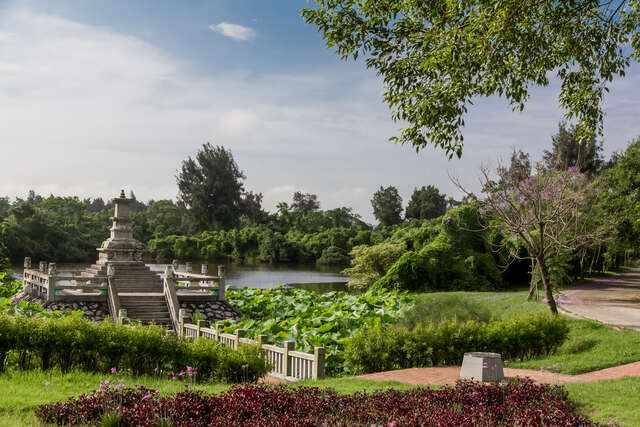
Image source: Taiwan_Opendata; license credits as shown.
Overview
On the shore of Shuangli Lake stand a Shuiwei Tower and a Fengshiye, forming a distinctive cultural landscape. The Beishan Shuiwei Tower was built in the 32nd year of the Qianlong reign of the Qing dynasty (1767) and is listed as a county-level historic site. It was intended to suppress tidal waters and help preserve prosperity, reflecting its feng shui significance.
Highlights
Gulongtou Shuiwei Tower is a county-designated feng shui tower in Guning Village, Jinning Township, Kinmen County, beside Shuangli Lake. Together with the Fengshiye on the opposite shore, it forms a highly representative folk-culture landscape. Built in the 32nd year of the Qianlong reign of the Qing dynasty, the tower originally served as a symbolic structure for restraining tidal waters, protecting the community, and praying for the settlement’s prosperity. It is also an important landmark for entering the Nan Mountain and Beishan settlements in Guningtou. Visitors here can experience Kinmen’s unique feng shui beliefs, the natural scenery of Shuangli Lake, and the battlefield atmosphere of Guningtou.
What to See
1. The Shuiwei Tower itself: The Shuiwei Tower is a small three-tiered square tower standing on a raised base, built of granite. A gourd-shaped finial sits on top, giving the simple structure a striking presence amid the greenery. Its form is a rare type of feng shui tower in Kinmen and is regarded as an object for suppressing water-related misfortune and as an important local religious symbol. 2. The tower base and platform design: The Shuiwei Tower stands on a two-tiered platform base: the upper level is a seven-step square pyramid, while the lower level is a square pyramid platform built from rubble stone. A nine-step stone stairway on one side leads up to the platform, and stone railings surround the structure, showing a design that combines traditional craftsmanship with practical function. 3. Shuangli Lake and the surrounding greenery: Next to the tower lies the scenic Shuangli Lake, where the lake surface reflects the tower and the Fengshiye. The surrounding greenery, farmland, and lakeside views complement one another, making it a pleasant place for walking, photography, and quiet immersion in the rural landscape. 4. Guandi Temple and the atmosphere of the "Shuangli Ancient Site": The Shuiwei Tower is located on the right side of the Guandi Temple, known locally as "Chushuilianhua" and also called the Shuangli Ancient Site. As a gateway landmark to the Nan Mountain and Beishan settlements, the area links temples, villages, and historic battlefield sites, creating a special atmosphere shaped by ancestral settlements and wartime heritage. 5. The Fengshiye across the lake and the feng shui landscape: The Shuiwei Tower on the shore of Shuangli Lake faces the Fengshiye across from it. One suppresses floodwater, while the other restrains wind-related misfortune, forming a feng shui line of defense that protects the Beishan settlement. Visitors can also explore nearby Fengshiye sites and experience Kinmen’s diverse culture of protective ritual objects.
Address
South of Guning Elementary School, Jinning Township, Kinmen County 892 Phone: (08)2324174
Travel Tips
1. Suggested visit time and route: Plan for about 30 minutes to 1 hour to stroll around the tower and lakeside, and combine the visit with nearby attractions such as the Guningtou War Museum, Beishan Old Western-Style House, and the Shuangli Lake trail for a half-day or full-day trip. 2. Best season and time to visit: Autumn and winter are cooler and drier, making outdoor walking and sightseeing more comfortable. Clear weather with soft light, especially in the early morning or afternoon, is best for photographing the tower and its reflection on the lake. Summer sun can be intense, so avoid midday heat and take sun protection measures. 3. What to bring and what to wear: Wear light, comfortable walking shoes for the steps and lakeside paths, and bring a hat, sunscreen, and drinking water. If you plan to take photos, a wide-angle lens or your phone’s wide-angle mode will help capture both the tower and the lake scenery in one frame. 4. Transportation and location tips: Gulongtou Shuiwei Tower is located south of Guning Elementary School in Jinning Township, in the Shuangli Lake area, and is often included as a stop on sightseeing routes in the Guningtou area. Before heading there, check local bus schedules or self-drive routes in advance, and be mindful that rural roads can be narrow, so slow down and yield appropriately. 5. Visiting etiquette and safety: As a county-designated historic site and local religious landmark, the tower should not be climbed, vandalized, or used as a seat. Avoid eating or making loud noise on the base, and be careful on the stone steps and platform, which may be slippery after rain. 6. Combine the visit with nearby cultural experiences: Gulongtou (Guningtou) is an ancestral settlement centered on the Li surname, and the surrounding area still preserves traditional Minnan village scenery and wartime landscapes. Setting aside time to visit nearby old houses, battle remnants, and Fengshiye sites will give you a more complete understanding of the story behind the Shuiwei Tower.
FAQ
Q: What makes Gulongtou Shuiwei Tower special, and why is it worth visiting? A: Gulongtou Shuiwei Tower is a feng shui tower built during the Qing dynasty and a county-designated historic site. It combines lakeside scenery, aesthetic form, and folk belief, making it a great place to visit together with Shuangli Lake and Guningtou battlefield sites. The tower is a three-tiered square stone structure with a clearly layered base and platform, and together with the Fengshiye across the lake, it protects the Nan Mountain and Beishan settlements. It represents Kinmen’s distinctive feng shui culture of "suppressing water" and "controlling wind," and the lake’s reflection and greenery also make it an excellent spot for photography and learning about local culture. Q: Is there an admission fee to visit Gulongtou Shuiwei Tower? A: Gulongtou Shuiwei Tower is an open historic site and is generally understood to be freely accessible without a ticket. If you need the latest information on admission fees or special visiting rules, it is best to check official information from Kinmen County or Kinmen National Park before departure. Q: How much time should I plan for a visit to Gulongtou Shuiwei Tower? A: A visit usually takes about 30 minutes if you simply walk around the tower and take photos by the lake. If you include the Shuangli Lake trail, nearby Guandi Temple, and other Guningtou battlefield attractions, it is better to reserve half a day to a full day. The site is suitable for walking, reading interpretive materials, and observing the arrangement of the feng shui tower and Fengshiye, so there is no need to rush. Q: What should I pay attention to for safety or etiquette at Gulongtou Shuiwei Tower? A: When visiting Gulongtou Shuiwei Tower, respect its status as both a historic site and a place of faith: do not climb the tower, carve graffiti, lean or sit on the railings, or eat at the base. The stone steps and platform may be slippery after rain, so watch your footing. If you also visit nearby temples and villages, keep your voice down and respect the daily routines of local residents.