Sihang Warehouse Battle Memorial
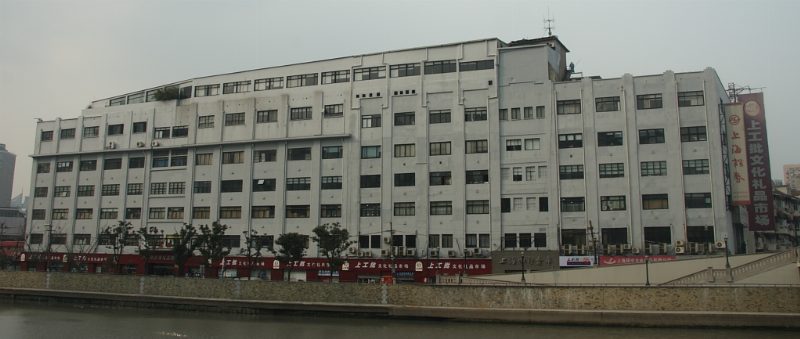
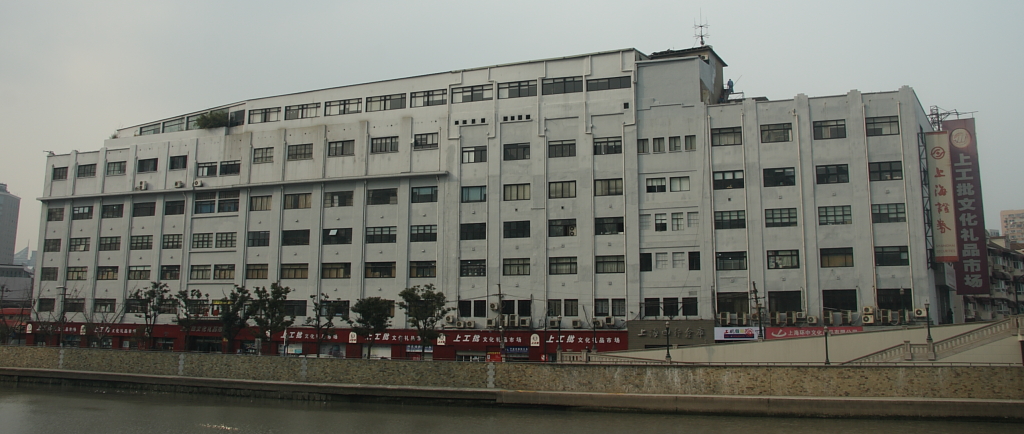
Image source: Wikimedia Commons; license credits as shown.
Overview
The Sihang Warehouse Battle Memorial is a memorial site and museum dedicated to the Second Sino-Japanese War, transformed from the historical warehouse site, located on Guangfu Road along the northern bank of Suzhou Creek in Jing'an District, Shanghai. The museum focuses on the events of the 1937 'Defense of Sihang Warehouse' and the 'Eight Hundred Heroes', presenting the key battle of the Shanghai Campaign through artifacts, images, and recreations. The building itself is a six-story reinforced concrete structure, with exterior walls that retain bullet holes and battle damage, making it an important war site and patriotic education base in Shanghai. In 2019, it was designated as a national key cultural relic protection unit under the name 'Sihang Warehouse Anti-Japanese War Site'.
Getting There
The most convenient public transport to reach the Sihang Warehouse Battle Memorial is to take Shanghai Metro Line 8 or Line 12 to 'Qufu Road Station', and then walk about 5 to 10 minutes to arrive. Visitors can also take several bus routes to the 'Xizang North Road Qufu Road' area and walk to the entrance of the scenic area.
Highlights
The main feature of the Sihang Warehouse Battle Memorial is its original wartime warehouse structure, combined with exhibition spaces and an outdoor memorial square, which fully presents the historical scenes of the 'Defense of Sihang Warehouse'. The exhibitions include sections such as 'Bloody Battle of Shanghai', 'Defending Sihang', 'Lone Resistance', and 'Immortal Monument', using artifacts, sculptures, images, and multimedia to recreate the intensity of the Shanghai Campaign and the bravery of the Nationalist troops. The exterior walls intentionally retain wartime bullet marks and damage, allowing visitors to directly feel the brutality of war and the weight of history in the city center. As a national 3A-level scenic area and a national-level anti-Japanese war memorial site, this place is an important venue for studying modern Chinese war history and conducting patriotic education.
What to See
The main areas for visiting include the memorial hall's entrance hall, which introduces the emotions and historical background of the defending soldiers and their families through texts, images, and 'family letters'. The core exhibition areas 'Bloody Battle of Shanghai', 'Defending Sihang', 'Lone Resistance', and 'Immortal Monument' introduce the battle conditions of the Shanghai Campaign, the process of the Defense of Sihang Warehouse, the situation of the lone troops, and the post-war remembrance of the 'Eight Hundred Heroes' both domestically and internationally. The museum uses artifacts, wartime equipment, sculptures, large paintings, and multimedia displays to partially recreate the indoor battle scenes and defensive works, enhancing the immersive experience for visitors. The outdoor Sihang Warehouse building and memorial square are also worth a visit, with visible bullet marks and battle damage on the walls, the original iron gate retained at the entrance, and wreaths and memorial installations often found in the square, making it suitable for quiet reflection.
Hours & Admission
The Sihang Warehouse Battle Memorial is open to the public from Tuesday to Sunday during the day, and is closed on Mondays for maintenance and exhibition organization. Most travel and official information indicates that the general opening hours are from 09:00 to 16:30, with entry stopping at 16:00. Some sources mention a brief closure during lunchtime, so it is recommended to check the latest local announcements before visiting. The memorial is currently a free attraction, but some platforms mention that online real-name reservations are required to control visitor flow, especially during peak seasons and holidays, it is advisable to book in advance to avoid disappointment. Entry requires passing through security checks, so please allow time for queuing and security, and have personal identification ready to comply with on-site management requirements.
Address
21 Guangfu Road, Jing'an District, Shanghai, China (near the northern bank of Suzhou Creek, northwest side of Xizang Road Bridge).
Travel Tips
It is recommended to allocate about 1 to 2 hours for visiting the Sihang Warehouse Battle Memorial. If you wish to read the exhibition boards in detail and watch audiovisual materials, you may want to arrange for more time. The scenic area combines indoor exhibitions with outdoor architectural appearances, making it suitable for visits in all seasons, but it can be crowded during holidays and summer vacations, so visiting on weekdays is more comfortable. The museum mainly features serious historical content and war imagery, making it suitable for travelers and student groups interested in modern history. When bringing children, it is advisable to communicate in advance to avoid overwhelming them. Comfortable footwear is recommended, as the exhibition is primarily a walking tour, and visitors should respect on-site regulations, refraining from loud noises, running, or inappropriate photography in serious exhibition areas. The Sihang Warehouse is located in the city center, and after visiting, you can conveniently arrange to visit Jing'an Temple, the Nanjing West Road shopping area, or other cultural attractions in Jing'an District, creating a half-day or full-day historical and shopping walking route.
Nearby Dining
The Sihang Warehouse Battle Memorial primarily focuses on exhibitions and memorials, with limited dining options available on-site. It is recommended to walk to nearby restaurants and snack shops around Qufu Road Station and Xizang North Road for meals. The Qufu Road area is close to the city center and several commercial districts, where you can find various Shanghai local dishes, Sichuan cuisine, as well as chain fast food and cafes, making it suitable for dining or a short break before or after your visit. The overall dining options in Jing'an District are rich, and if you are willing to walk a few more stops or take the metro, it is easy to find higher-end or specialty restaurants in shopping areas like Nanjing West Road and Jing'an Temple as an extension of your itinerary. Due to the mature urban area nearby, convenience stores and beverage shops are also quite abundant, making it very easy to grab a quick drink and simple snacks.
FAQ
Q: What historical event does the Sihang Warehouse Battle Memorial primarily commemorate? A: The Sihang Warehouse Battle Memorial primarily commemorates the 'Defense of Sihang Warehouse' during the Shanghai Campaign in 1937 and the heroic deeds of the 'Eight Hundred Heroes'. This defense was held by the National Revolutionary Army troops inside the Sihang Warehouse, resisting the Japanese army's attack, and it served as a concluding action of the Shanghai Campaign, greatly boosting the morale of the Chinese military and civilians at the time, and it received widespread attention from international media due to the warehouse's location facing the Suzhou River and adjacent to the British and American concessions. Q: What are the opening hours of the Sihang Warehouse Battle Memorial and is there an admission fee? A: The general opening hours of the Sihang Warehouse Battle Memorial are from Tuesday to Sunday, 09:00 to 16:30, and it is closed on Mondays. Some information indicates that entry stops at 16:00 or that there are segmented openings during lunch. The memorial is a free attraction, but some platforms mention that online reservations are required for entry, so it is advisable to check the latest local announcements or make reservations through official channels before visiting to ensure a smooth experience. Q: What is the most convenient transportation method to reach the Sihang Warehouse Battle Memorial? A: The most convenient way to reach the Sihang Warehouse Battle Memorial is to take Metro Line 8 or Line 12 to 'Qufu Road Station', and then walk about 5 to 10 minutes to the entrance at 21 Guangfu Road. If taking the bus, you can choose from several routes such as 18, 46, or 108 to the nearby stops at 'Xizang North Road Qufu Road', and then walk to your destination. Q: How long should I plan to spend visiting the Sihang Warehouse Battle Memorial? A: It is generally recommended to allocate about 1 to 2 hours for visiting the Sihang Warehouse Battle Memorial, which is sufficient to browse the main exhibition areas and the outdoor architectural appearance. If you wish to read the exhibition boards in detail, watch audiovisual materials, and examine more artifacts, or if you are particularly interested in the Shanghai Campaign and war history, it is advisable to arrange half a day for a more leisurely visit. Q: Is the Sihang Warehouse Battle Memorial suitable for family or student group visits? A: The Sihang Warehouse Battle Memorial is an important base for patriotic education and historical education, making it very suitable for middle school students and families interested in modern history. Since the exhibition content includes war scenes, historical photographs, and heavier stories, it is advisable to explain in advance when bringing younger children and to provide appropriate guidance and psychological care during the visit.