Funtriper
← Back to attractions

Wuhu Mountain

Taiwan · Kinmen County · 金沙鎮 · Nature & Scenery
五虎山
資料來源:交通部觀光署(GODL)

Image source: Taiwan_Opendata; license credits as shown.

Overview

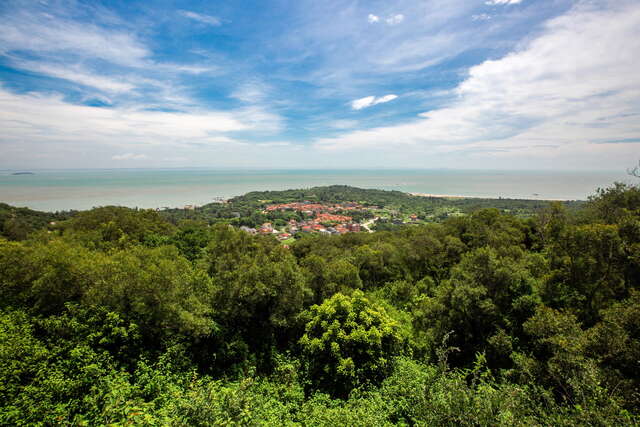
Wuhu Mountain is located near the Shanhou settlement. It stands 127 meters tall and is Kinmen’s second-highest mountain. The summit has a viewing platform and is well suited for hiking and trekking. From there, visitors can overlook Shanhou Village and gaze across to the opposite shore.

Highlights

Wuhu Mountain is located near the Shanhou settlement in Kinmen County. It rises to 127 meters above sea level and is Kinmen’s second-highest mountain. The summit has a viewing platform, making it suitable for hiking and trekking, with views over Shanhou Village and across to the opposite shore.

What to See

Wuhu Mountain Summit Viewing Platform: the main stop for climbing high and enjoying distant views, with vistas toward Shanhou Village and the opposite shore. Scenery Around Shanhou Settlement: from the mountain, visitors can overlook the settlement and surrounding landscape, making it easy to combine with nearby sightseeing.

Travel Tips

It is recommended to include Wuhu Mountain in a hiking-focused itinerary, especially for travelers who enjoy reaching higher viewpoints. Bring comfortable walking shoes and enough water to meet hiking needs. If you want to enjoy long-distance views, choose a time with good visibility. This is practical advice based on its hiking and lookout features. It can be visited together with the Shanhou settlement area to make the itinerary more convenient.

FAQ

question:Where is Wuhu Mountain? answer:Wuhu Mountain is located near the Shanhou settlement in Kinmen County. question:How high is Wuhu Mountain? answer:Wuhu Mountain rises to 127 meters above sea level and is Kinmen’s second-highest mountain. question:What is Wuhu Mountain suitable for? answer:Wuhu Mountain is suitable for hiking and trekking, and also for sightseeing from the summit viewing platform. question:What can you see from Wuhu Mountain? answer:From Wuhu Mountain, visitors can overlook Shanhou Village and gaze across to the opposite shore.
Map

Nearby Attractions

Ruiyou School 1.7 km

Ruiyou School

金沙鎮 · Historic Sites

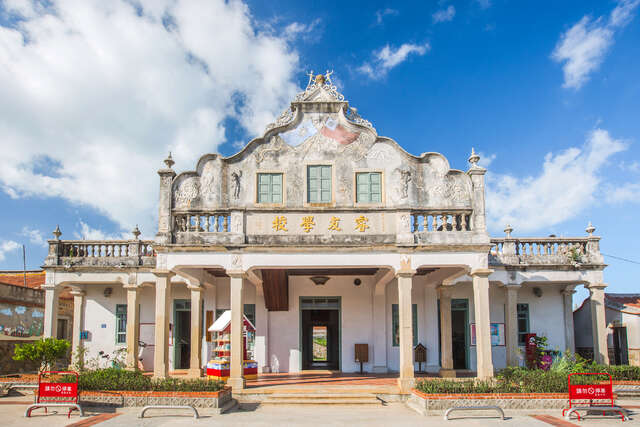
Ruiyou School was built in 1934. After Mr. Chen Ruiyou made his fortune in Singapore, he commissioned his fellow clansman Chen Dexing to build Ruiyou School in his hometown of Bishan. The campus covered 20 ares and enrolled children from nearby settlements free of charge, benefiting the local community.

Chen Zhen Enrong Archway 2.1 km

Chen Zhen Enrong Archway

金沙鎮 · Historic Sites

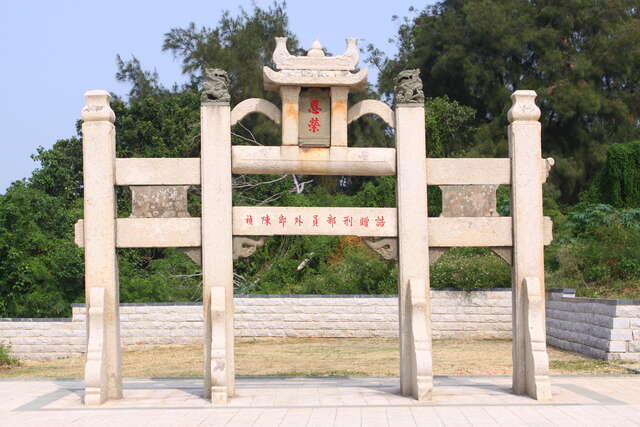
Located directly to the right-front of Huishan Temple in Yangzha, Kinmen, this archway was built to honor the father (Chen Zhen) after his son (Chen Jian) attained high official status and received an imperial posthumous honor. Chen Zhen Enrong Archway is a county-designated historic monument, a granite archway, and was announced as a Level 3 historic site in November 1988.

Huang Xianxian Six-Route Mansion 2.5 km

Huang Xianxian Six-Route Mansion

金沙鎮 · Historic Sites

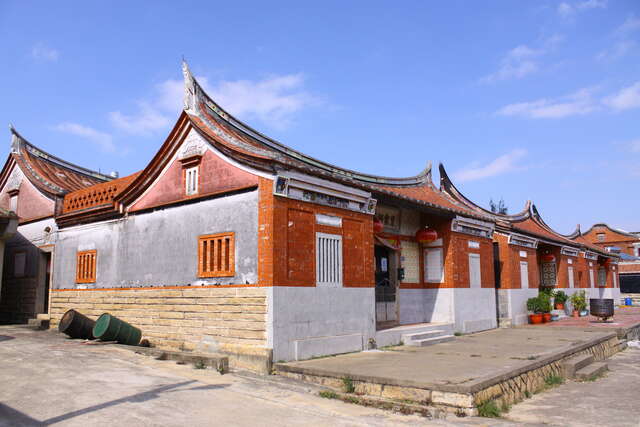
Huang Xianxian was born in the mid-Qianlong reign. His father served as an Imperial Secretary, and his descendants later achieved notable success through trade in Southeast Asia. The Huang residence is a Minnan-style building with five bays and double side-wings on both the left and right, known as the Six-Route Mansion. Its front and rear sections are linked by a continuous swallowtail ridge and a hard-gable horseback roof, while the facade features finely carved wooden lattice panels and the water-riding walls are decorated with painted and cut-paper motifs of flowers, birds, fortune, and prosperity, all of which reflect the wealth of overseas Kinmen families and the aspiration to honor their ancestors.

Cide Temple 2.7 km

Cide Temple

金沙鎮 · Historic Sites

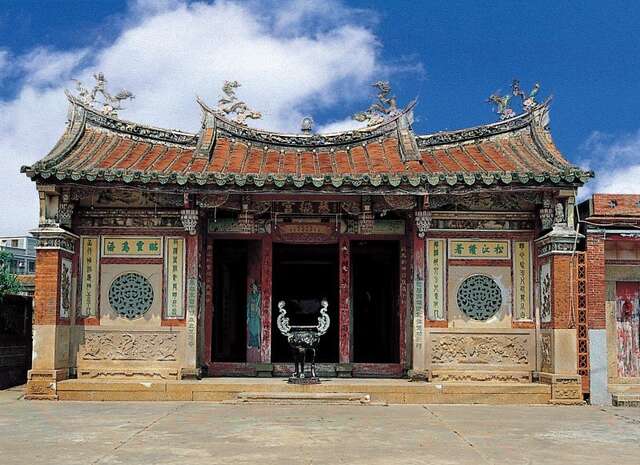
Cide Temple is a temple dedicated to Huang Wei, honored as a model of moral virtue. Its distinctive craftsmanship is showcased in three main areas: Koji pottery, cut-and-paste ceramics, and stone carving. The Koji pottery includes six panels on the dragon-and-tiger walls, mirror walls, and opposing walls, each vividly lifelike.