Dong Yun Yao Western-style House
Taiwan · Kinmen County · Jincheng Township · Museums, Culture & Arts
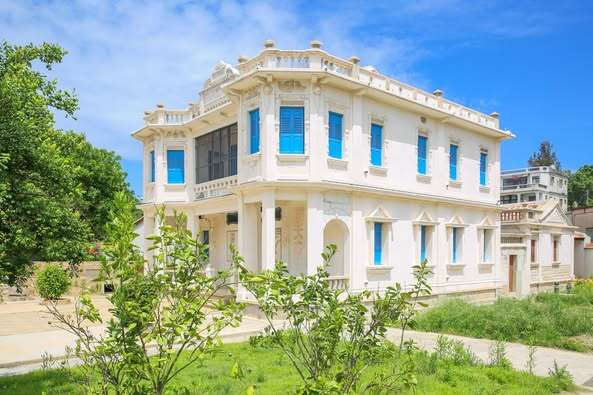
Image source: Taiwan_Opendata; license credits as shown.
Overview
The impressive 'Dong Yun Yao Western-style House' is located beneath the Shuangfeng Rock Temple in Gugang Village, Kinmen. Not only is its exterior eye-catching, but it also hides many touching stories. From a distance, it resembles a guardian of the village and is one of the few well-preserved examples of a Western-style house that combines Chinese and Western architectural elements in the area.
Highlights
Dong Yun Yao Western-style House is a grand building that merges Southeast Asian style with Minnan craftsmanship. It is also one of the few well-preserved Western-style houses in Kinmen. Built in 1933 by overseas Chinese businessman Dong Yun Yao upon his return from India, the house stands as a landmark watching over the village, embodying the inspiring stories of overseas Chinese striving for wealth and returning to their roots. The architecture combines reinforced concrete with traditional craftsmanship, showcasing both practicality and aesthetics. It is regarded as a classic representation of the architectural techniques and artistic styles of Western-style houses in early 20th century Kinmen, and was designated as a historic site by Kinmen County in 2015. After restoration, it has become an important venue for exhibitions and cultural reuse.
What to See
1. Exterior of the Main Building The main building of the Western-style house is imposing, featuring a reinforced concrete structure that combines Western facade proportions with Minnan decorative elements, creating a unique style that blends Chinese and Western influences. The facade often displays Western elements such as arched windows, balconies, and parapets, complemented by traditional gray plaster and decorative moldings. From a distance, it appears as a guardian standing in front of the Gugang settlement, making it a perfect spot for photography. 2. The Returning Building and Front Porch Space In front of the main building is the 'Returning Building' with a front porch, which belongs to the five-legged foundation style of Western-style houses. The lower part of the exterior wall is built with seven-layer stone, while the walls are made of brick and plaster, showcasing the construction techniques of early Western-style houses in Kinmen. The front porch space connects the courtyard and the main building, serving as a key area to experience the daily life flow and courtyard atmosphere of the residence. 3. Independent Courtyard Layout Dong Yun Yao Western-style House features an independent courtyard with a large overall base. The layout includes the main building, rear building, storage room, returning building, auxiliary rooms, restrooms, and entrance gate, fully presenting the living and functional configuration of the overseas Chinese residence. The courtyard offers a broad view, allowing visitors to gaze up at the Shuangfeng Rock Temple above, and the surrounding old houses and settlement scenery are also worth exploring on foot. 4. Military Occupation Traces and Air Raid Shelters The Western-style house has long served as a base for military engineers, artillery, and the Army's Marine Dragon unit. Inside, there are still traces of paint with the words 'Marine Dragon,' serving as important evidence of its special historical use during wartime. The site also preserves air raid shelters built by the military later on, allowing travelers to see the overlap of overseas Chinese architecture and wartime cultural memories within a single residence. 5. Exhibition and Reuse Space (subject to availability) After restoration, the main house is planned to serve as an exhibition and display space, while the rear building will be used by the owner. The returning section is expected to be developed into a specialty shop or cultural reuse space, injecting new life into the historic site. If there are exhibitions or events during your visit, it is recommended to allocate time to closely observe the architectural craftsmanship and local stories being interpreted.
Travel Tips
The most practical advice for visiting Dong Yun Yao Western-style House is to arrange a visit alongside Gugang settlement and Shuangfeng Rock Temple, taking a leisurely walk to feel the landscape of the settlement and the atmosphere of the overseas Chinese houses. It is suggested to combine this with a trip to Jincheng Township, planning for half a day to a full day, extending from the old street and historic sites to Gugang settlement. Kinmen has a maritime climate characterized by strong winds and abundant sunlight, making it suitable for visits year-round, but the most comfortable times are during the cool autumn and winter or the flower-rich spring. In summer, due to intense sunlight, it is advisable to avoid outdoor activities during peak noon hours. It is recommended to bring a hat, sunscreen, and lightweight rain gear, especially when riding a motorcycle or walking in open settlement areas, to protect against wind, sun, and brief rain showers. If you plan to photograph architectural details and indoor light and shadow, consider preparing a camera or smartphone with adjustable ISO settings to capture more details in shadowy and indoor spaces. Traveling to Gugang settlement is mainly done by self-driving, motorcycle, or taxi, as bus services are limited. It is advisable to check public transport routes and schedules in advance or arrange flexible routes by renting a car. During your visit, please pay attention to the historic site protection regulations, avoiding climbing, carving, or touching delicate decorations, and respecting the living spaces of local residents and temple beliefs. The opening status of certain indoor or specific areas may vary due to maintenance, exhibitions, or management regulations. Before your visit, it is best to check the latest visiting information and whether reservations for guided tours are needed from the Kinmen County Government or related tourism information.
FAQ
Q: What is the main attraction of Dong Yun Yao Western-style House? A: The main attraction of Dong Yun Yao Western-style House is its architectural style that blends Chinese and Western influences, the complete layout of the residence, and the multiple historical stories ranging from overseas Chinese homes to military bases. The building combines Southeast Asian style with Minnan craftsmanship, including the main building, rear building, returning building, independent courtyard, and entrance gate, while retaining wartime traces such as the 'Marine Dragon' inscription and air raid shelters, making it a representative site for understanding Kinmen's overseas Chinese houses and wartime culture. Q: How much time should be allocated for visiting Dong Yun Yao Western-style House? A: It is recommended to allocate about half an hour to an hour to closely observe the architectural details and take a walk around Gugang settlement. If you only plan to take photos and appreciate the facade from the outside, about 20 to 30 minutes will suffice; however, if you wish to carefully observe the construction techniques, courtyard layout, and interpretive content, and also visit the nearby Shuangfeng Rock Temple and settlement alleys, you can plan a half-day itinerary for the entire Gugang area. Q: What should be noted when visiting Dong Yun Yao Western-style House? A: When visiting Dong Yun Yao Western-style House, it is important to adhere to the historic site protection regulations, avoiding climbing, carving, or touching delicate decorations, while also respecting the living spaces of nearby residents. If there are indoor or specific areas open for visitation, follow the guided tours and pathways, and be mindful of any rules regarding food and drink, photography restrictions, or flash usage; additionally, due to the strong winds and intense sunlight in Kinmen, it is advisable to prepare for sun and wind protection if staying outdoors for long periods. Q: What other attractions can be arranged alongside Dong Yun Yao Western-style House? A: Dong Yun Yao Western-style House is well-suited to be arranged with Gugang settlement, Shuangfeng Rock Temple, and other historic sites in Jincheng Township, forming a route themed around overseas Chinese houses and settlement culture. Travelers can first visit the old street and surrounding attractions in Jincheng Township, then proceed to Gugang to explore Dong Yun Yao Western-style House and the surrounding traditional settlements, gaining insights into Kinmen's overseas Chinese history and wartime culture from different perspectives.