Masan Observation Station
Taiwan · Kinmen County · Jinsha Township · Historic Sites

Image source: Taiwan_Opendata; license credits as shown.
Overview
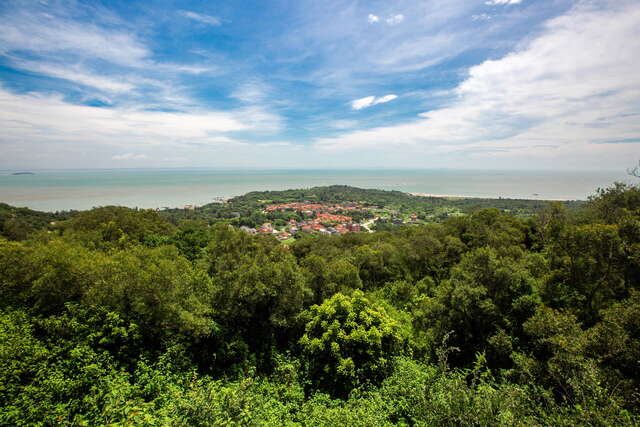
Located in Jinsha Township, Masan is only 2,100 meters away from the opposite Jiao Island, and during low tide, it is even just 1,800 meters away, making it the closest point between Kinmen and the mainland. In the past, it served as a military fortress for observing maritime activities across the strait and is known as 'The First Outpost in the World.'
Highlights
Masan Observation Station is the closest military outpost and tourist attraction to the mainland from Kinmen Island, famous for being 'The First Outpost in the World.' It was once a military fortress that closely monitored maritime and aerial activities across the strait and disseminated propaganda. Today, it is open for visitors to walk through the tunnels and observation station, using high-powered telescopes to gaze at the fishing villages and coastal landscapes across the strait, experiencing the tension and atmosphere of the Cold War front line. The entire facility is excavated from a coastal hill, creating an atmosphere that is both secluded and rich in historical memory, making it one of the representative sites for understanding Kinmen's military history and cross-strait relations.
What to See
1. Main Body of Masan Observation Station The main body of Masan Observation Station is a concealed military facility excavated from a coastal hill, which once housed large telescopes to monitor activities across the strait. Upon entering through the entrance, visitors will walk along the combat readiness tunnel, where they can see the gun emplacements and military spaces from earlier years, imagining the daily vigilance of soldiers on the front line. 2. Combat Readiness Tunnel and Communication Trench The combat readiness tunnel leading to the observation station is excavated deeper using the existing communication trench, with concrete laid to form an artificial tunnel, creating a strong battlefield atmosphere. The tunnel stretches over a hundred meters, and walking through it allows visitors to feel the narrow, sturdy, and humid underground space, experiencing the design intended for air defense and artillery protection. 3. High-Powered Telescope Viewing Area The observation station is equipped with multiple high-powered telescopes, allowing visitors to clearly observe the fishing villages and mountains across the strait when the weather is good. Since Masan is only about 2,100 meters from Jiao Island and approximately 1,800 meters during low tide, the view is extremely close, and even without telescopes, one can identify buildings and activities across the strait with the naked eye. 4. Symbolism of 'The First Outpost in the World' Masan is referred to as 'The First Outpost in the World' due to its frontline position and historical mission, and related inscriptions or symbolic designs can often be seen on-site. This title symbolizes Kinmen's role on the front line during the period of cross-strait confrontation and is an important element for tourists to take photos and feel the significance of being at 'the best of the front line.' 5. Surroundings of Masan Broadcasting Station The nearby Masan Broadcasting Station was once a facility for psychological warfare broadcasts to the opposite shore, featuring rows of giant speakers that played propaganda and songs, making it quite famous in the history of psychological warfare across the strait. Although it is now primarily for display and explanation, its proximity to the observation station means that it is generally included in the itinerary to understand the complete battlefield system from observation to broadcasting.
Travel Tips
It is recommended to arrange a visit to Masan Observation Station as part of the northeastern battlefield cultural route in Kinmen, ideally combined with a visit to the Masan Broadcasting Station and surrounding sites for the best experience. It is advisable to choose autumn or winter days or days with clear weather and good visibility, as it will be easier to see the fishing villages and mountain scenery across the strait through the telescope. The air inside the tunnel can be humid and cool, so wearing comfortable, non-slip shoes is recommended. In summer, a light jacket and personal water and mosquito repellent are advisable. The area is a military site and is still near active military zones, so visitors should adhere to on-site notices when taking photos and avoid photographing military-controlled areas or active personnel to avoid violating regulations. Due to the enclosed tunnel space of the observation station, travelers with mobility issues or sensitivity to narrow spaces are advised to consider their own conditions beforehand and proceed slowly. During peak seasons or holidays, there may be more visitors, so if you need to take photos or use the telescope to enjoy the view across the strait, it is advisable to allow ample time for your stay.
FAQ
Q: What features make Masan Observation Station worth a special trip? A: The biggest feature of Masan Observation Station is that it was once the closest military observation point to the mainland, known as 'The First Outpost in the World.' Visitors can walk into the actual combat readiness tunnels, see former military facilities, and use high-powered telescopes to closely observe the coastline and fishing villages across the strait, gaining a more concrete understanding of the history of cross-strait confrontation and the battlefield environment. Q: Do I need to make a reservation or buy tickets to visit Masan Observation Station? A: Masan Observation Station is currently an open tourist attraction, and generally, individual visitors do not need to make reservations or emphasize ticket purchasing procedures. Actual charges, ticket prices, and discount plans may change with policy adjustments, so it is recommended to check with official tourism information from Kinmen County or Kinmen National Park before departure to grasp the latest regulations. Q: Are there any special regulations to pay attention to when visiting Masan Observation Station? A: Visitors to Masan Observation Station should pay special attention to comply with military and security regulations, avoiding photographing active military facilities or stationed troops, and following on-site notices when entering and exiting various areas. The ground in the tunnel may be slightly damp and dim, so please be careful with your steps and head height, taking care of accompanying elders and children, and following the instructions of staff during the visit. Q: How much time should I reserve for staying at Masan Observation Station? A: Generally, visitors should reserve about one to two hours for visiting Masan Observation Station, enjoying the views, using the telescope, reading explanations, and taking photos. If planning to visit the Masan Broadcasting Station and other battlefield sites together, the overall itinerary time can be flexibly adjusted based on personal pace and transportation methods.