Qionglin Cai Clan Ancestral Hall
Taiwan · Kinmen County · Jinhu Township · Historic Sites
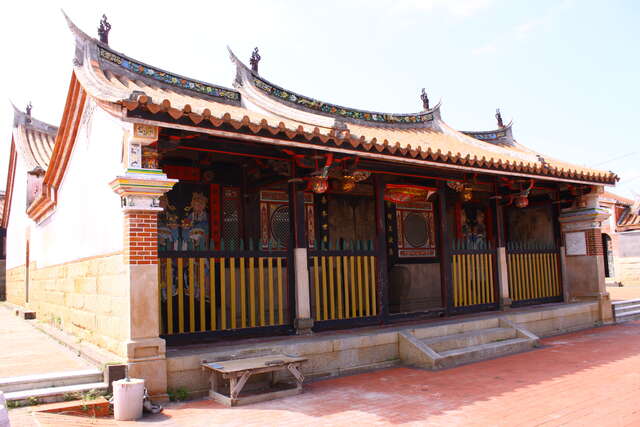
Image source: Taiwan_Opendata; license credits as shown.
Overview
Founded in the 8th year of the Ming Jiajing reign (1529), this ancestral hall is renowned for its lavish interior and exterior ornamentation, widely regarded as the finest among Kinmen clan temples. The roof ridge, gables, and watermill walls all feature exquisite cut-glazed ceramic decoration and clay sculptures, while the bracket arms beneath the main beam are carved with the Cai family maxims: loyalty, filial piety, integrity, and chastity. Numerous plaques hang in the main hall, reflecting the prominence of the family line. A Fengshishi stone lion is embedded in the rear exterior wall, an uncommon design feature.
Highlights
Qionglin Cai Clan Ancestral Hall is located in Qionglin Village, Kinmen County. It is an important ancestral temple of the Cai family and part of the broader Qionglin Cai clan temple system. The building is known for its ornate decoration. The roof ridge, gables, and watermill walls all feature refined cut-glazed ceramic work and clay sculptures, making it a representative example of Kinmen clan temples. Inside and outside the hall, plaques celebrating the family’s reputation and inscriptions of ancestral teachings reflect the Cai clan’s tradition of valuing scholarship and family precepts. A Fengshishi stone lion is embedded in the rear exterior wall, an unusual arrangement and a noteworthy feature.
What to See
Main hall: Observe the many hanging plaques, which reflect the Cai family’s success in the imperial examinations and its social standing. Roof ridge, gables, and watermill walls: These areas feature exquisite cut-glazed ceramic decoration and clay sculptures, and are the main highlights of the architecture. Bracket arms beneath the main beam: Look for the carved family maxims, “loyalty, filial piety, integrity, and chastity.” Fengshishi stone lion on the rear exterior wall: This embedded design is relatively rare and worth special attention. Overall ancestral temple layout: Experience the central axis and symmetrical arrangement typical of traditional Kinmen ancestral halls, along with the clan-centered atmosphere of Qionglin Village.
Address
No. 13, Qionglin Street, Jinhu Township, Kinmen County 891 Phone: (08)2313100
Travel Tips
Plan for a short visit; official tourism information recommends about 30 minutes. It is well suited to be combined with other Cai clan temples in Qionglin Village, including Yigutang and the stone lions, for a fuller understanding of the village’s “seven buildings, eight shrines” heritage. When visiting, pay close attention to the carved details and plaque inscriptions, as they are key to understanding the hall’s history and family culture. Kinmen usually has strong sunlight and wind, so light clothing, drinking water, and sun protection are recommended; comfortable shoes are especially useful if you plan to walk through the village.
FAQ
What is Qionglin Cai Clan Ancestral Hall? It is an important ancestral temple of the Cai family in Qionglin, Kinmen, and part of the Qionglin Cai clan temple system. What is the most worthwhile feature to see? The most worthwhile features are the ornate architectural decorations, including the cut-glazed ceramic work and clay sculptures on the roof ridge, gables, and watermill walls, as well as the bracket arms carved with the words “loyalty, filial piety, integrity, and chastity.” How long does a visit take? Official tourism information suggests a stay of about half an hour. What else can be visited nearby? You can combine it with other Cai clan temples in Qionglin Village, Yigutang, and the stone lions to better understand the village’s clan culture.