Qionglin Yi Men San Jie Fang
Taiwan · Kinmen County · Jinhu Township · Historic Sites
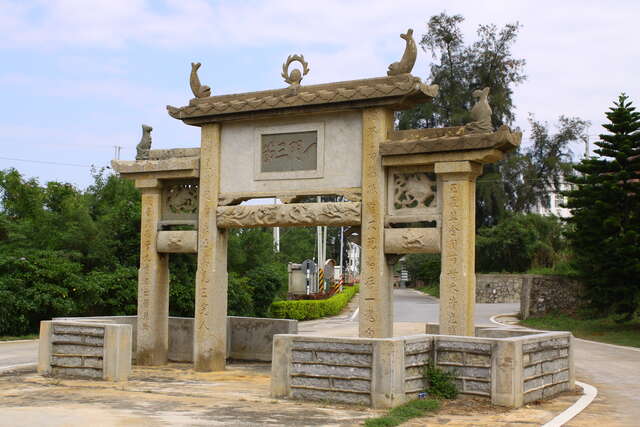
Image source: Taiwan_Opendata; license credits as shown.
Overview
Qionglin Yi Men San Jie Fang is a Qing dynasty chastity archway located on the old official road in the western outskirts of Qionglin Village, Jinhu Township. It is the most poignant of the three surviving Qing dynasty archways in Kinmen. Built in 1831, this stone archway appears to symbolize honor and glory, but behind it lies the bitter story of three widows in one family. It is now a county-designated historic site.
Highlights
Qionglin Yi Men San Jie Fang is a Qing dynasty chastity archway built in the 11th year of the Daoguang reign, constructed from granite and qingdou stone. It is one of the three remaining Qing dynasty archways in Kinmen and has been designated a county historic site. The archway commemorates the Cai family’s three generations of widows who remained chaste and managed the household with thrift and diligence at a young age. It is often described as the most tragic archway story in Kinmen, where visitors can sense the family ethics and women’s fate shaped by traditional moral teachings. Located on the old official road west of the Qionglin settlement in Jinhu Township, it was once an important route for travel and exchange. Today, together with the old streets and traditional houses of Qionglin, it forms a historically rich walking route. The structure is a four-pillar, three-bay, three-tier archway decorated with auspicious motifs such as dragons, phoenixes, and qilin, making it a representative site for understanding Kinmen stone carving craftsmanship and the traditional archway system.
What to See
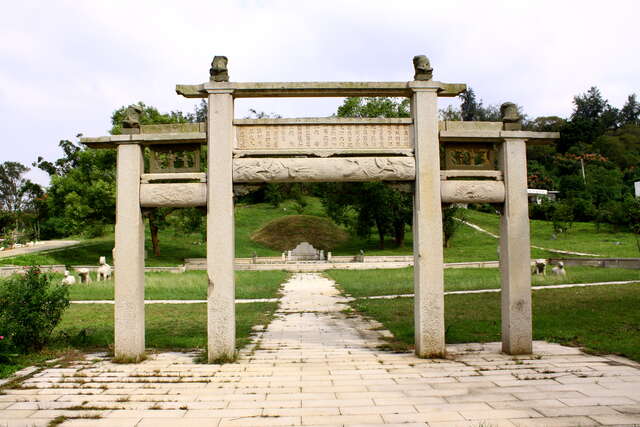
1. The archway itself and the plaque reading “One Family, Three Virtuous Women”: Qionglin Yi Men San Jie Fang is a stone archway with four pillars, three bays, and three tiers. It is built entirely of Quanzhou white stone and qingdou stone, with an elegant and solemn appearance. The center of the plaque on both the front and back is engraved with the words “One Family, Three Virtuous Women,” symbolizing the imperial commendation for the chastity and integrity of three generations of women from the same family. 2. Dragon, phoenix, and qilin stone-carving details: The ends of the main bay’s plaque are fitted with dragon-head clamps. The front features a relief of two dragons vying for a pearl, while the back shows two phoenixes facing the sun. The decorative panel on the side bay is carved with a qilin motif looking back. These delicate traditional stone carvings convey auspicious and loyal-virtue symbolism, and are well suited for close observation and photography. 3. The archway eaves and chiwen ornamentation: The eaves are carved from a single stone slab, with shallow carvings suggesting roof tiles and dripping edges. At the eave tips are chiwen ornaments later reinforced with cement, and the center features imitation flaming pearl and flame patterns. These elements reflect the roof imagery commonly seen on Qing dynasty archways, along with symbols of fire prevention and warding off evil. 4. The old official road and surrounding settlement atmosphere: The archway stands at what was once the center point of Kinmen’s old official road. It is now near the Shuangqiong Road area, close to the southwestern side of the Qionglin settlement. The surrounding area still retains the traditional settlement layout and old-house alleys, making it ideal to visit together with a walking tour of Qionglin and to experience the historical setting of a former transportation route. 5. The emotional space created by the chastity story: Although the site is primarily a physical monument, understanding the story of Chen Shi, wife of Cai Zhonghuan, and the two daughters-in-law Chen Shi and Huang Shi, who were widowed young and raised the family on their own, makes it easier to feel the emotional tension of a monument that appears glorious but is deeply sorrowful. It is a site that combines humanistic meaning with historical reflection.
Travel Tips
When visiting Qionglin Yi Men San Jie Fang, it is recommended to pair the trip with the Qionglin settlement so that old houses, alleyways, and the archway can be linked on foot into a historically atmospheric walking route. Kinmen has a subtropical island climate; spring and autumn are more comfortable with relatively gentler winds, making them ideal seasons for leisurely outdoor viewing and photography. In winter, the northeast monsoon can be strong, so bring a coat and a windproof hat. The archway area is mostly outdoors, and summer sunlight can be intense, so it is advisable to bring a sun hat, sunscreen, and drinking water, while also watching your step on the stone paving and for passing vehicles. As this is a county-designated historic site, please do not climb, carve, or touch fragile stone-carved details to avoid irreversible damage, and keep your voice down to respect local residents and ritual spaces. If you plan portrait photography or large-scale shoots such as wedding photos, check the relevant rules in advance and confirm whether an application is required to avoid affecting other visitors or local traffic. Because the surrounding area consists largely of rural roads and small settlement lanes, it is best to confirm your navigation in advance by searching for “Qionglin Settlement” or “Yi Men San Jie Fang,” then follow the road signs on foot or drive slowly into the area.
FAQ
Q: What is the historical background of Qionglin Yi Men San Jie Fang? A: Qionglin Yi Men San Jie Fang is a chastity archway built in the 11th year of the Daoguang reign of the Qing dynasty (1831) to honor the deeds of three young widows from the Cai family who remained chaste and managed the household. The archway commemorates Chen Shi, wife of Cai Zhonghuan, as well as his second daughter-in-law Chen Shi and third daughter-in-law Huang Shi. After their husbands died, they raised their descendants on their own and ran the household with thrift and diligence. The family eventually lived together across five generations, and the Qing court ordered the archway to be built as a public commendation, making it an important symbol of Kinmen’s culture of chastity and filial devotion. Q: What are the architectural features of Qionglin Yi Men San Jie Fang? A: Qionglin Yi Men San Jie Fang is a four-pillar, three-bay, three-tier stone archway built from granite and qingdou stone, and decorated with auspicious motifs such as dragons, phoenixes, and qilin. The ends of the plaque in the main bay are shaped as dragon-head clamps; the front shows two dragons vying for a pearl, the back shows two phoenixes facing the sun, and the decorative panel in the side bay features a qilin pattern. The eaves are carved from a single stone slab with tile and dripping-edge motifs. It combines solemn grandeur with refined craftsmanship and is a representative example of a southern Fujian-style chastity archway. Q: Where is Qionglin Yi Men San Jie Fang in Kinmen, and how should I plan a visit? A: Qionglin Yi Men San Jie Fang is located in the western outskirts of Qionglin Village, Jinhu Township, Kinmen County, near the old official road and the Shuangqiong Road area on the southwest side of the Qionglin settlement. Travelers usually use the Qionglin settlement as the core of the itinerary, first visiting traditional houses, ancestral halls, and alleyways inside the settlement, then walking or taking a short ride to the archway. Along the way, you can experience the old official road environment and rural scenery, making it suitable for a half-day to one-day cultural walking itinerary. Q: Do I need a ticket or is there an opening-hours restriction to visit Qionglin Yi Men San Jie Fang? A: Qionglin Yi Men San Jie Fang is an outdoor historic structure located beside a road, so it is generally open for free visits and photography and does not have a ticketing facility. Because it is a county-designated historic site and the surrounding area is a living settlement space, it is recommended to visit during daylight hours, avoid noise and environmental damage, and follow on-site notices and staff instructions if there are traffic controls or maintenance works.