
Explore Kinmen County
Curated travel attractions — browse by region or category.
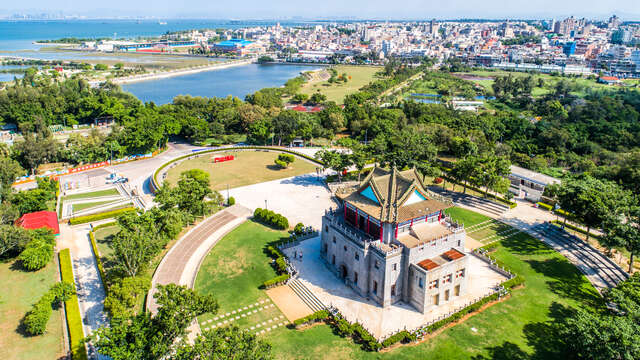
Juguang Tower
金城鎮 · Historic Sites
Facing the beautiful scenery of Jincheng and backed by the Fonglian Mountain Range, first-time visitors to Kinmen should definitely climb Juguang Tower to take in the island’s views. As a symbol of Kinmen’s spirit, Juguang Tower combines a traditional Chinese watchtower design with a modern building base, creating a distinctive architectural beauty.
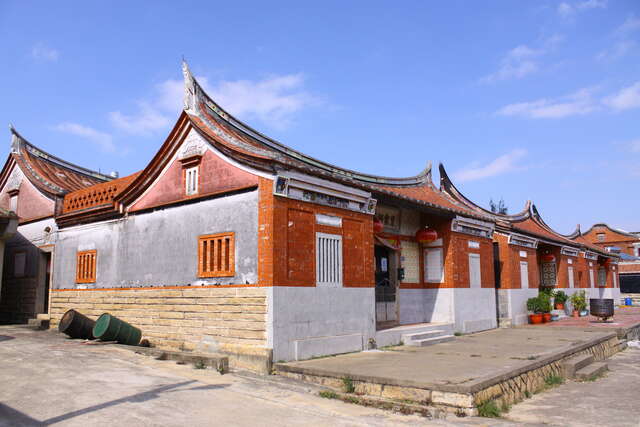
Huang Xianxian Six-Route Mansion
金沙鎮 · Historic Sites
Huang Xianxian was born in the mid-Qianlong reign. His father served as an Imperial Secretary, and his descendants later achieved notable success through trade in Southeast Asia. The Huang residence is a Minnan-style building with five bays and double side-wings on both the left and right, known as the Six-Route Mansion. Its front and rear sections are linked by a continuous swallowtail ridge and a hard-gable horseback roof, while the facade features finely carved wooden lattice panels and the water-riding walls are decorated with painted and cut-paper motifs of flowers, birds, fortune, and prosperity, all of which reflect the wealth of overseas Kinmen families and the aspiration to honor their ancestors.
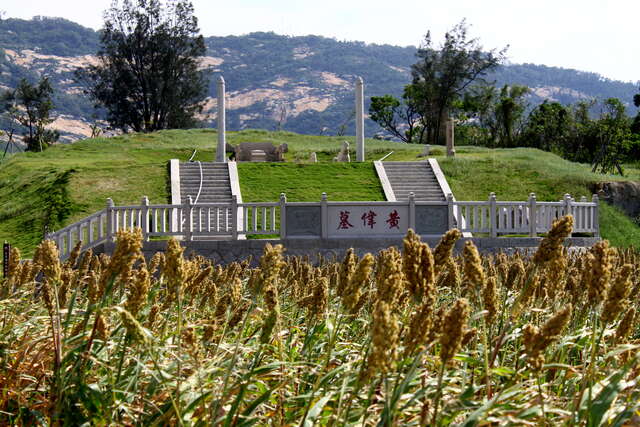
Huang Wei Tomb
金沙鎮 · Historic Sites
Huang Wei, courtesy name Mengwei, pseudonym Yisou, also known as Yisuo, was from Wenshuitou (now Houshuitou). He was born in the first year of the Ming Hongzhi era (1488), once served as a clerk in Quanzhou Prefecture, and passed the imperial examination in the ninth year of the Zhengde era (1514). He was first appointed as a Deputy Director in the Nanjing Ministry of Punishments and became known for handling cases with purity, caution, clarity, and leniency. He was later promoted to magistrate of Nanhai County, where he reduced corvée labor, promoted ritual education, banned immoral practices, and abolished unorthodox shrines. Owing to recommendations from higher officials, he was transferred to serve as magistrate of Songjiang Prefecture and achieved notable administrative results. Later, because he submitted candid memorials without concealment and did not follow the prevailing authorities, he returned to his hometown to support his parents and teach.
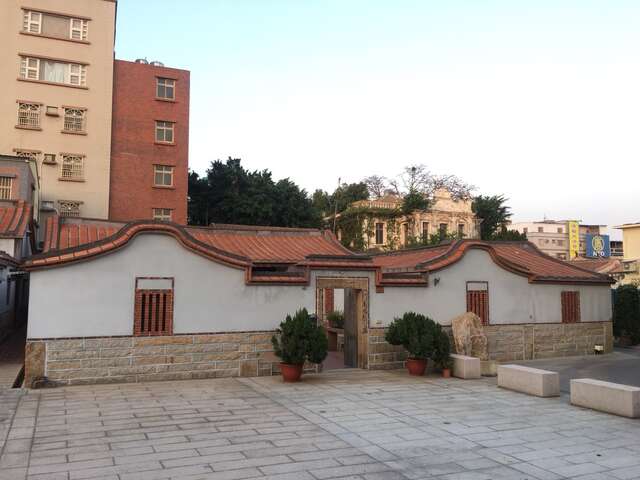
Qiu Lianggong Historic House
金城鎮 · Historic Sites
This building is the ancestral home of Qiu Lianggong, located in the middle section of Wujiang Street in Jincheng Township. Inside, it still preserves a square bronze mirror and two carved stone tablets with dragon motifs and imperial edicts. The tablets are 61 cm high and 85 cm wide, and the two characters for “imperial edict” on each tablet are said to measure about 12 cm square. According to local tradition, when Lianggong was granted a noble title, the emperor heard that his family residence was very modest and therefore ordered the construction of a noble mansion, presenting these two edict stones to be placed in front of the mansion gate. The building is a one-hall-four-wing layout with a left projecting extension and wall enclosure.
Zhuzi Shrine
金城鎮 · Historic Sites
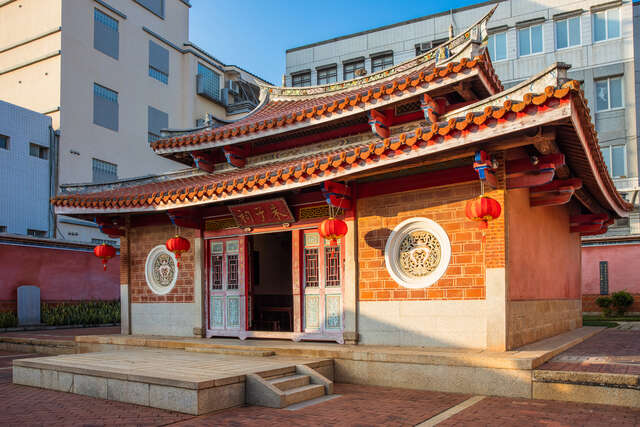
The Kinmen Zhuzi Shrine was established in the 26th year of the Kangxi reign of the Qing dynasty (1687) and originally set up within Wujiang Academy. In the 35th year of the Qianlong reign (1770), Assistant Magistrate Cheng Yu, finding the academy too cramped, proposed building a hall and surrounding wings, but the plan was not completed because he left office. The property was later purchased by the local notable Huang Rushi and converted back into an academy, with altars dedicated to Zhuzi, Kui Xing, the Wenchang Emperor, the God of Earth and Wealth, and Kinmen worthies such as Xu Sheng, Lü Dakui, Lin Xiyuan, Wang Lixing, Qiu Kui, and Xu Xie. In the 46th year of the Qianlong reign (1781), the original academy site was requisitioned for the county assistant magistrate’s office, and a new academy and Zhuzi Shrine were rebuilt on the former site of the local charity school to the west.
Chen Shiyin Mansion
金城鎮 · Historic Sites
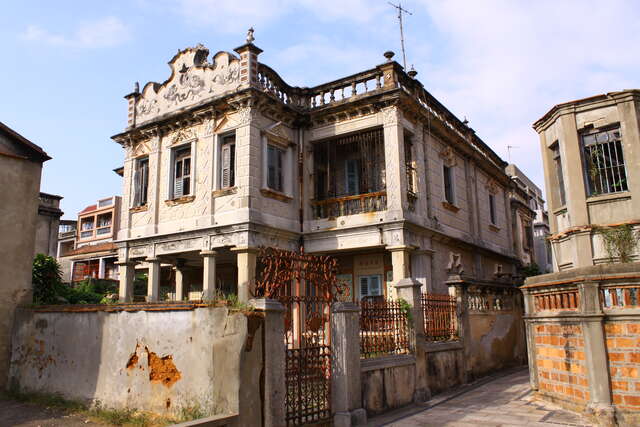
Chen Shiyin Mansion was built in 1932 with an investment of 30,000 silver dollars by Chen Shiyin of Gaokeng, Kinmen, who made his fortune through business in Singapore and Indonesia after going abroad in 1903 during the late Qing dynasty. It was designated a county-level historic site in 2006.