
Best Historic Sites in Jinsha Township
Taiwan · Kinmen County · Jinsha Township
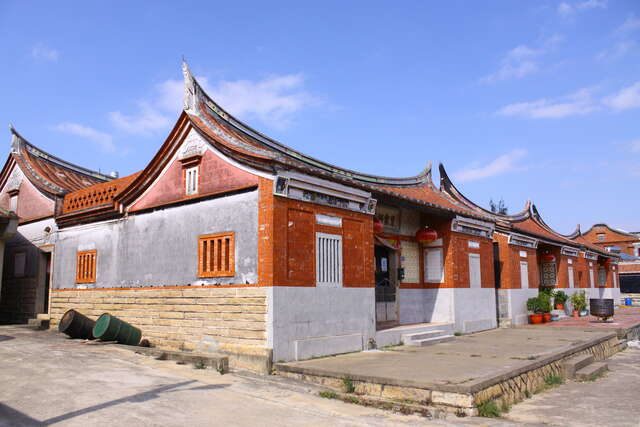
Huang Xianxian Six-Route Mansion
Jinsha Township · Historic Sites
Huang Xianxian was born in the mid-Qianlong reign. His father served as an Imperial Secretary, and his descendants later achieved notable success through trade in Southeast Asia. The Huang residence is a Minnan-style building with five bays and double side-wings on both the left and right, known as the Six-Route Mansion. Its front and rear sections are linked by a continuous swallowtail ridge and a hard-gable horseback roof, while the facade features finely carved wooden lattice panels and the water-riding walls are decorated with painted and cut-paper motifs of flowers, birds, fortune, and prosperity, all of which reflect the wealth of overseas Kinmen families and the aspiration to honor their ancestors.
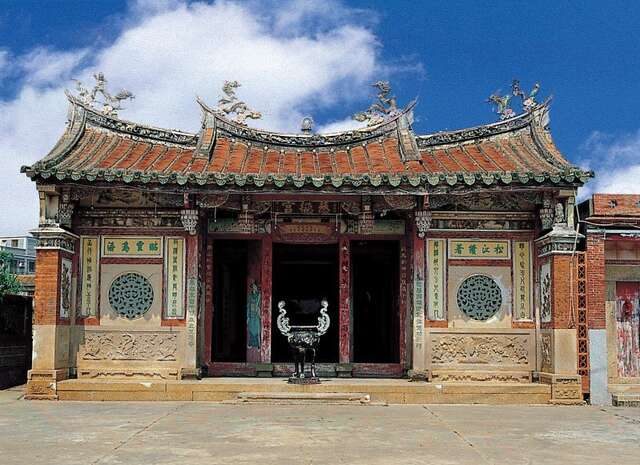
Cide Temple
Jinsha Township · Historic Sites
Cide Temple is a temple dedicated to Huang Wei, honored as a model of moral virtue. Its distinctive craftsmanship is showcased in three main areas: Koji pottery, cut-and-paste ceramics, and stone carving. The Koji pottery includes six panels on the dragon-and-tiger walls, mirror walls, and opposing walls, each vividly lifelike.
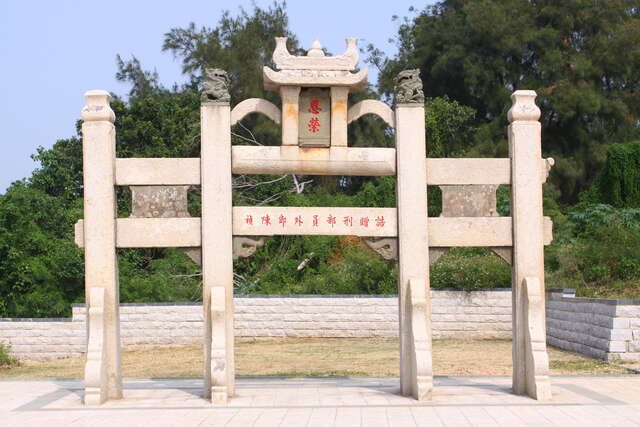
Chen Zhen Enrong Archway
Jinsha Township · Historic Sites
Located directly to the right-front of Huishan Temple in Yangzha, Kinmen, this archway was built to honor the father (Chen Zhen) after his son (Chen Jian) attained high official status and received an imperial posthumous honor. Chen Zhen Enrong Archway is a county-designated historic monument, a granite archway, and was announced as a Level 3 historic site in November 1988.
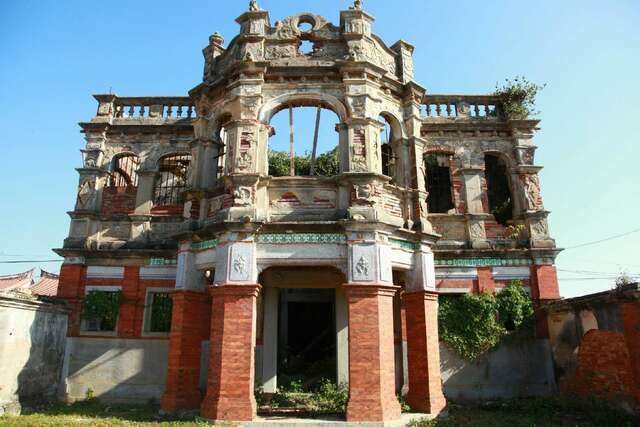
Chen De-Xing Western-style House
Jinsha Township · Historic Sites
The Chen De-Xing Western-style House is located in the sparsely populated Bishan settlement. The house is particularly prominent at the entrance of the settlement.
Zhang Wendi Western-style House
Jinsha Township · Historic Sites
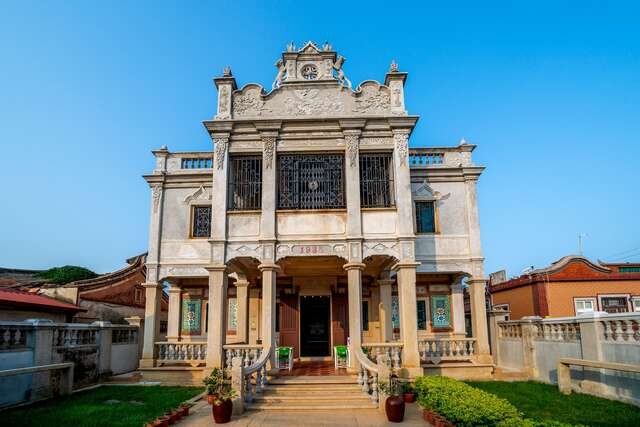
Founded by Zhang Wendi, born in the 23rd year of the Guangxu era (1897) and passed away in 1987. His father, Zhang Guixiang, went to Southeast Asia in the 26th year of the Guangxu era (1900) to develop business and brought Zhang Wendi and his brothers to Malaysia in 1916. Together, they established the business 'Ruixiang' and became wealthy through successful trade. In 1933, Zhang Wendi returned to his hometown to build a house for his parents, personally overseeing the construction, which took two years to complete. The house was meticulously designed in terms of overall structure, materials, and detailed decorations to ensure his parents could enjoy their later years comfortably.
Huang Zhuobin Western-style House
Jinsha Township · Historic Sites
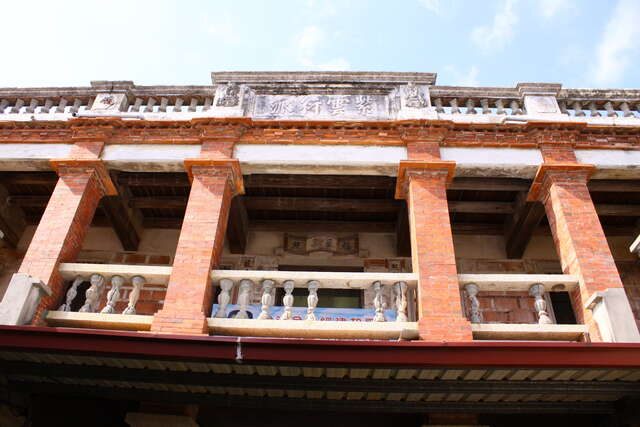
Built in the 1920s, this house was constructed with funds sent back home by Huang Zhuobin from Singapore. After its completion, it was used for residential purposes and was also occupied by the Kuomintang troops before the 823 Artillery Battle. After 1999, it was lent to the Ouyang family. The building features a two-story Western-style structure with a five-foot foundation, and its walls are made of five-foot foundation materials, with granite at the lower edges of the sides and back, and three pieces of red bricks at the upper edges. The structure includes a brick wall at the lower edge and plaster at the upper edge, employing a hard mountain beam support system.