
Kinmen County · Historic Sites
Curated travel attractions — browse by region or category.
Region
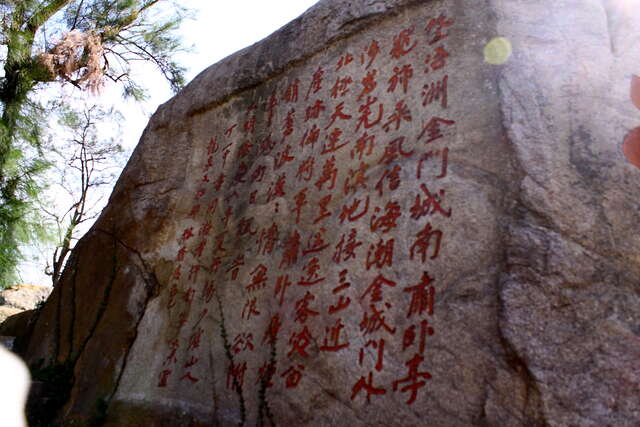
Xujiang Xiawo Inscription Group
金城鎮 · Historic Sites
The Xujiang Xiawo Inscription Group is a cluster of stone carvings formed by poems and inscriptions left by scholars and military officials of the Ming and Qing dynasties on large boulders, located on the southern slope of Nanpan Mountain, south of the ancient city of Kinmen and south of Wentaibao Pagoda. Its earliest inscription can be traced to 1547, when Yu Dayou, then the Kinmen Qianhu, carved the four characters "Xujiang Xiawo" here. "Xujiang" was his courtesy name, and this inscription gave the site its name.
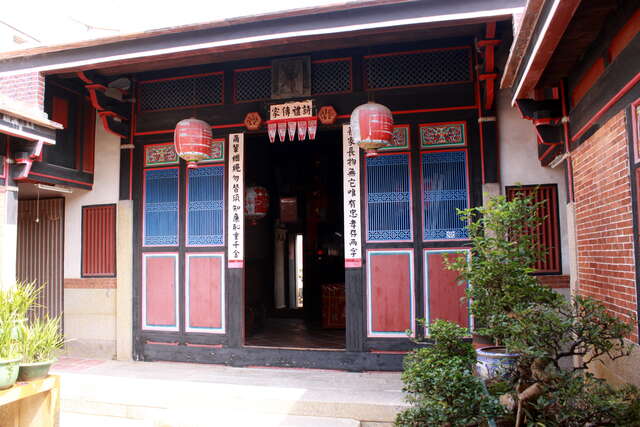
General's Residence
金城鎮 · Historic Sites
The General's Residence is the former home of Lu Chengjin, who was posthumously granted the title of Martial Manifest General in the late Qing dynasty. Lu Chengjin, courtesy name Weili and art name Fenting, was born in the second year of the Daoguang reign and died in the twentieth year of the Guangxu reign.
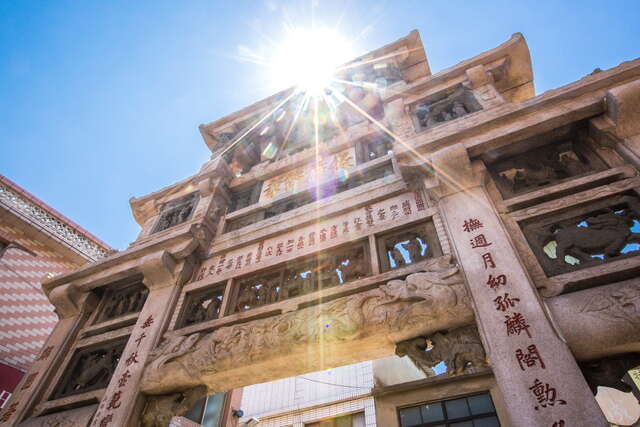
Chiu Liang-kung Mother Chastity Arch
金城鎮 · Historic Sites
Qiu Liang-gong’s mother, Ms. Hsu, was the wife of Qing Dynasty General Zhenwei Qiu Zhiren. Not long after Qiu Liang-gong was one month old, his father Qiu Zhiren passed away, and Ms. Hsu, who was still quite young at the time, worked hard to raise him from infancy to adulthood.
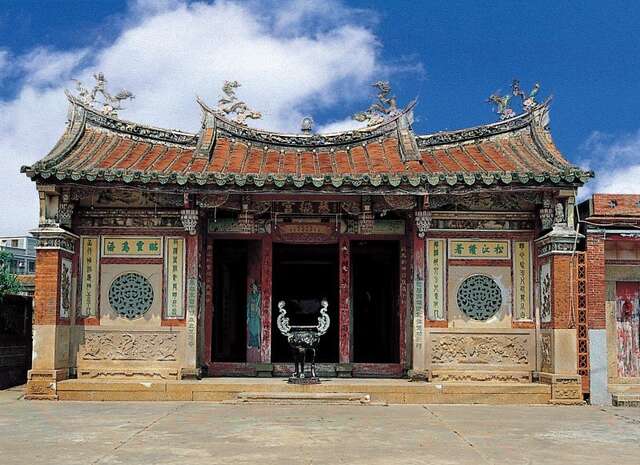
Cide Temple
金沙鎮 · Historic Sites
Cide Temple is a temple dedicated to Huang Wei, honored as a model of moral virtue. Its distinctive craftsmanship is showcased in three main areas: Koji pottery, cut-and-paste ceramics, and stone carving. The Koji pottery includes six panels on the dragon-and-tiger walls, mirror walls, and opposing walls, each vividly lifelike.
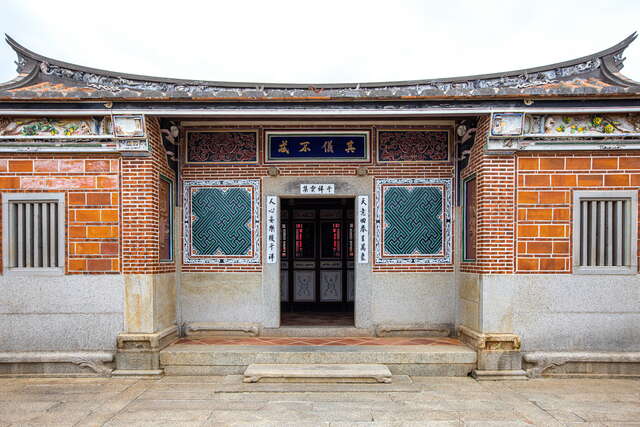
Wu Xiucai Residence
烈嶼鄉 · Historic Sites
Located in the Shangku settlement of Shangqi Village, Wu Xiucai Residence is the largest traditional courtyard house on Lieyu Island. It was built in the 20th year of the Daoguang reign of the Qing dynasty by Wu Jingshan, who became wealthy through shipping and salt production in Shangku. The residence is a large three-bay courtyard with two successive halls and symmetrical left and right guardian wings. After Wu Jingshan’s fifth-generation descendant, Wu Yushan, passed the imperial licentiate examination in the late Guangxu reign, a study room and school were set up in the forecourt to provide free education for local children. This earned the admiration of neighbors, who came to call the Wu family mansion the “Xiucai Residence,” a name that has continued ever since.
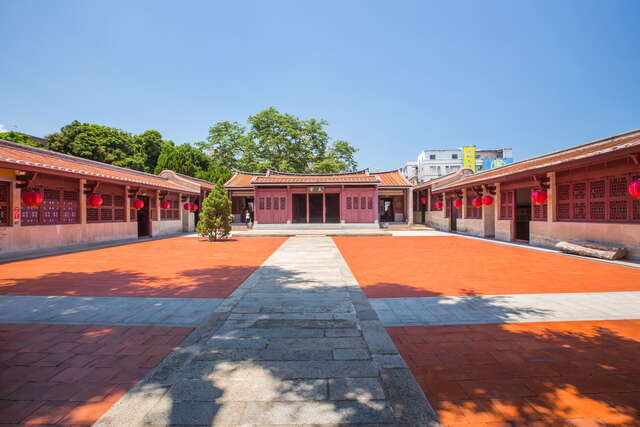
Qing Jincheng Military Headquarters
金城鎮 · Historic Sites
The site of the Qing Jincheng Military Headquarters was originally "Congqingxuan," said to have been the study where Xu Xie, a jinshi degree holder from the Ming dynasty Wanli era (1601), read and studied. During the Kangxi reign, General Chen Long considered that the old Kinmen City had suffered repeated wars in the late Ming period, while Houpu was becoming increasingly populated, so he relocated the military headquarters here. After several rounds of reconstruction, it grew into its current scale. Until Kinmen County was established in 1915, the headquarters remained the highest administrative center, later serving as the Kinmen County Office, Kinmen County Government, Administrative Office, Kinmen Defense Command, and more. Today it is a classic Kinmen tourist attraction and one of the county-designated historic sites.
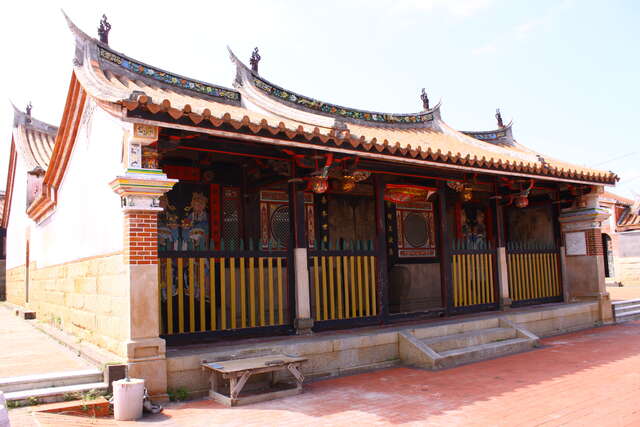
Qionglin Cai Clan Ancestral Hall
Jinhu Township · Historic Sites
Founded in the 8th year of the Ming Jiajing reign (1529), this ancestral hall is renowned for its lavish interior and exterior ornamentation, widely regarded as the finest among Kinmen clan temples. The roof ridge, gables, and watermill walls all feature exquisite cut-glazed ceramic decoration and clay sculptures, while the bracket arms beneath the main beam are carved with the Cai family maxims: loyalty, filial piety, integrity, and chastity. Numerous plaques hang in the main hall, reflecting the prominence of the family line. A Fengshishi stone lion is embedded in the rear exterior wall, an uncommon design feature.
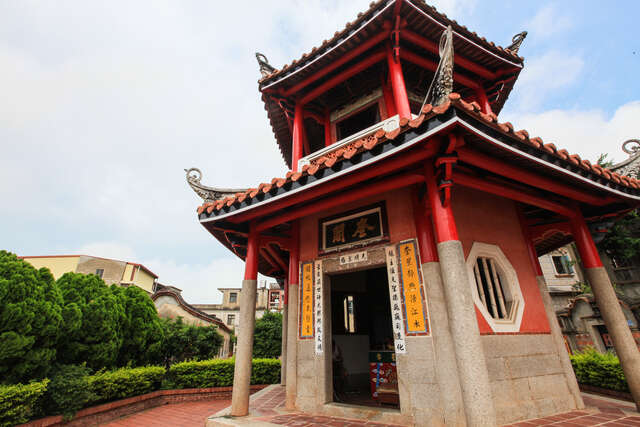
Kuige (Kuixing Tower)
金城鎮 · Historic Sites
Kuige, known locally in Kinmen as the "Kuixing Tower," is also called Kuigou or the Bagua Tower. It is a place of worship dedicated to Kuixing, one of the Five Wenchang deities in Chinese tradition. Because Kinmen was formerly not a county and therefore could not build a Confucius Temple, local people created this site so students would have a place to pray for good fortune before taking the imperial examinations. It was proposed by Lin Feizhang, a local notable from Houpu who had earned the degree of gongsheng, and he donated 1,000 taels of silver to fund its construction. The tower was built in 1836 during the 16th year of the Daoguang reign of the Qing dynasty at Tushan Head in Houpu, near what is now the Chen Shiyin Western-style house. It has a refined, rustic appearance and more than 180 years of history. Although it was renovated twice in 1955 and 1963, its original appearance was preserved, and it is listed as a county-designated historic site.
Juguang Tower
金城鎮 · Historic Sites
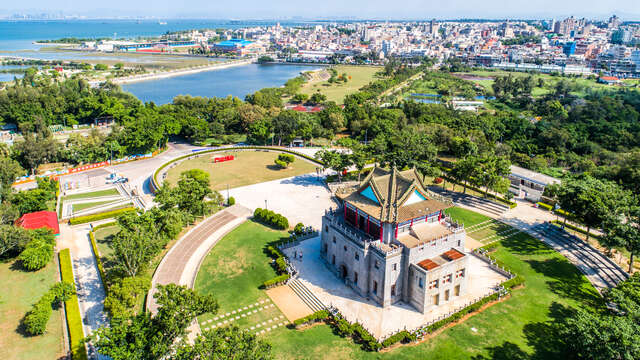
Facing the beautiful scenery of Jincheng and backed by the Fonglian Mountain Range, first-time visitors to Kinmen should definitely climb Juguang Tower to take in the island’s views. As a symbol of Kinmen’s spirit, Juguang Tower combines a traditional Chinese watchtower design with a modern building base, creating a distinctive architectural beauty.
Huang Xianxian Six-Route Mansion
金沙鎮 · Historic Sites
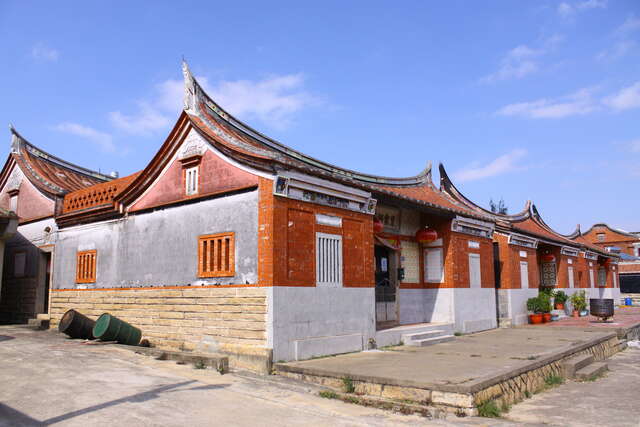
Huang Xianxian was born in the mid-Qianlong reign. His father served as an Imperial Secretary, and his descendants later achieved notable success through trade in Southeast Asia. The Huang residence is a Minnan-style building with five bays and double side-wings on both the left and right, known as the Six-Route Mansion. Its front and rear sections are linked by a continuous swallowtail ridge and a hard-gable horseback roof, while the facade features finely carved wooden lattice panels and the water-riding walls are decorated with painted and cut-paper motifs of flowers, birds, fortune, and prosperity, all of which reflect the wealth of overseas Kinmen families and the aspiration to honor their ancestors.
Huang Wei Tomb
金沙鎮 · Historic Sites
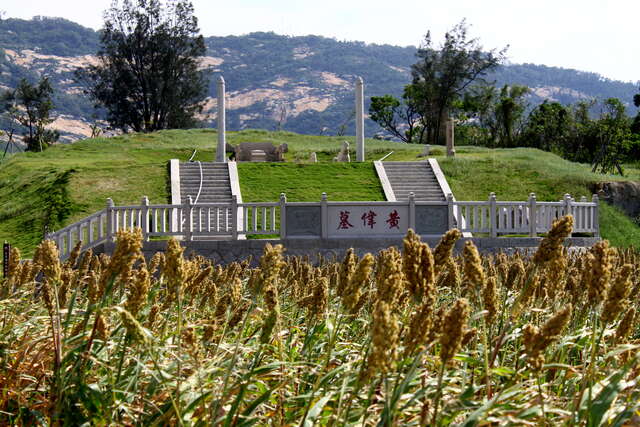
Huang Wei, courtesy name Mengwei, pseudonym Yisou, also known as Yisuo, was from Wenshuitou (now Houshuitou). He was born in the first year of the Ming Hongzhi era (1488), once served as a clerk in Quanzhou Prefecture, and passed the imperial examination in the ninth year of the Zhengde era (1514). He was first appointed as a Deputy Director in the Nanjing Ministry of Punishments and became known for handling cases with purity, caution, clarity, and leniency. He was later promoted to magistrate of Nanhai County, where he reduced corvée labor, promoted ritual education, banned immoral practices, and abolished unorthodox shrines. Owing to recommendations from higher officials, he was transferred to serve as magistrate of Songjiang Prefecture and achieved notable administrative results. Later, because he submitted candid memorials without concealment and did not follow the prevailing authorities, he returned to his hometown to support his parents and teach.
Qiu Lianggong Historic House
金城鎮 · Historic Sites
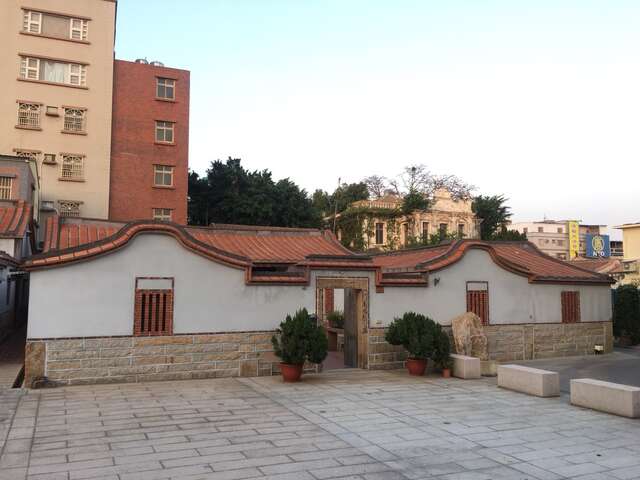
This building is the ancestral home of Qiu Lianggong, located in the middle section of Wujiang Street in Jincheng Township. Inside, it still preserves a square bronze mirror and two carved stone tablets with dragon motifs and imperial edicts. The tablets are 61 cm high and 85 cm wide, and the two characters for “imperial edict” on each tablet are said to measure about 12 cm square. According to local tradition, when Lianggong was granted a noble title, the emperor heard that his family residence was very modest and therefore ordered the construction of a noble mansion, presenting these two edict stones to be placed in front of the mansion gate. The building is a one-hall-four-wing layout with a left projecting extension and wall enclosure.