
Explore Kinmen County
Curated travel attractions — browse by region or category.
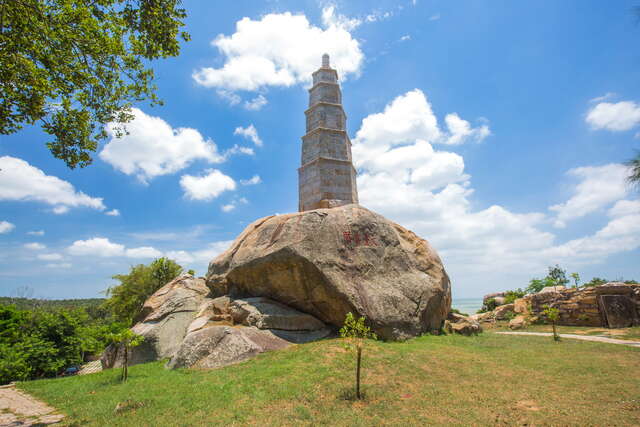
Wentai Pagoda
金城鎮 · Historic Sites
Wentai Pagoda was built in the Ming dynasty in 1387 (Hongwu 20) and is one of the three stone pagodas ordered by the Hongwu Emperor and built on Kinmen by Zhou Dexing, the Marquis of Jiangxia. It is also the only Ming-dynasty stone pagoda in Kinmen that has not been destroyed by war or damaged by shellfire.
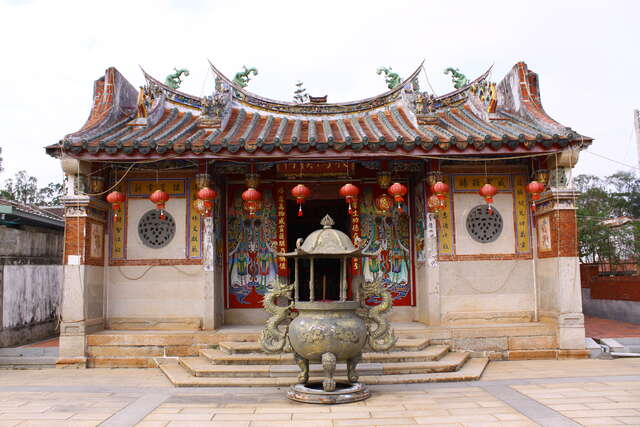
Fenglianshan Muma Hou Shrine
金城鎮 · Historic Sites
A traditional three-section temple dedicated to Chen Yuan, the revered "Lord Who Opened Kinmen," this site was rebuilt during the Daoguang reign of the Qing dynasty and is now listed as a county-designated historic monument. According to legend, Chen Yuan often manifested to drive off Japanese raiders and protect the local people. The court therefore ordered the construction of a large seven-section temple, bestowed the plaque name "Fuji," and posthumously honored him as the "Sacred Marquis of Blessing and Protection"—the origin of Muma Hou Shrine. The temple still preserves the ancient "Fuji" plaque and Qing-era stele, while the dragon-and-tiger walls and the ridgeline decorations of figurines, ceramic work, and clay sculpture are also worth close attention.
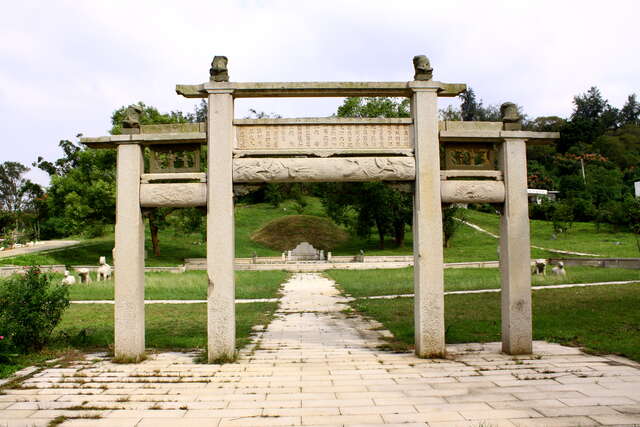
Qiu Liang-gong Tomb Garden
Jinhu Township · Historic Sites
Qiu Liang-gong Tomb Garden is the burial mound of Qiu Liang-gong, a Qing-dynasty baron of the third rank, located in Xiaojing Village, Jinhu Township, Kinmen County today. It was designated by the Ministry of the Interior as a third-class historic site in the Taiwan-Fujian region.
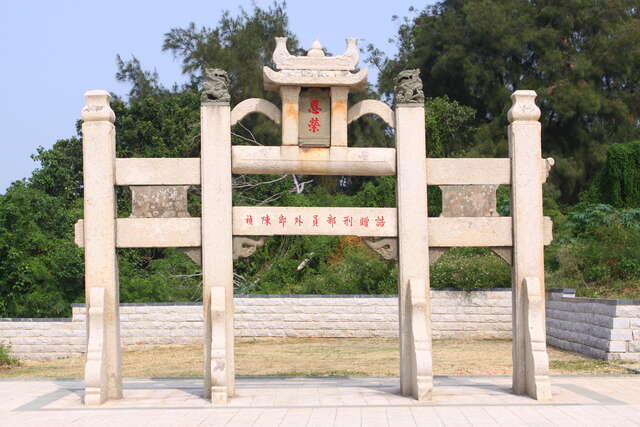
Chen Zhen Enrong Archway
金沙鎮 · Historic Sites
Located directly to the right-front of Huishan Temple in Yangzha, Kinmen, this archway was built to honor the father (Chen Zhen) after his son (Chen Jian) attained high official status and received an imperial posthumous honor. Chen Zhen Enrong Archway is a county-designated historic monument, a granite archway, and was announced as a Level 3 historic site in November 1988.
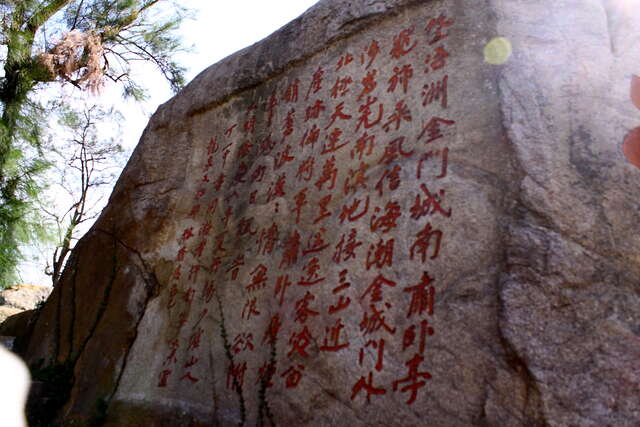
Xujiang Xiawo Inscription Group
金城鎮 · Historic Sites
The Xujiang Xiawo Inscription Group is a cluster of stone carvings formed by poems and inscriptions left by scholars and military officials of the Ming and Qing dynasties on large boulders, located on the southern slope of Nanpan Mountain, south of the ancient city of Kinmen and south of Wentaibao Pagoda. Its earliest inscription can be traced to 1547, when Yu Dayou, then the Kinmen Qianhu, carved the four characters "Xujiang Xiawo" here. "Xujiang" was his courtesy name, and this inscription gave the site its name.
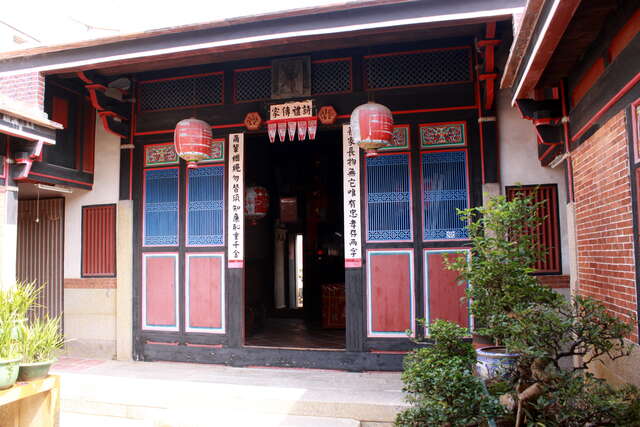
General's Residence
金城鎮 · Historic Sites
The General's Residence is the former home of Lu Chengjin, who was posthumously granted the title of Martial Manifest General in the late Qing dynasty. Lu Chengjin, courtesy name Weili and art name Fenting, was born in the second year of the Daoguang reign and died in the twentieth year of the Guangxu reign.
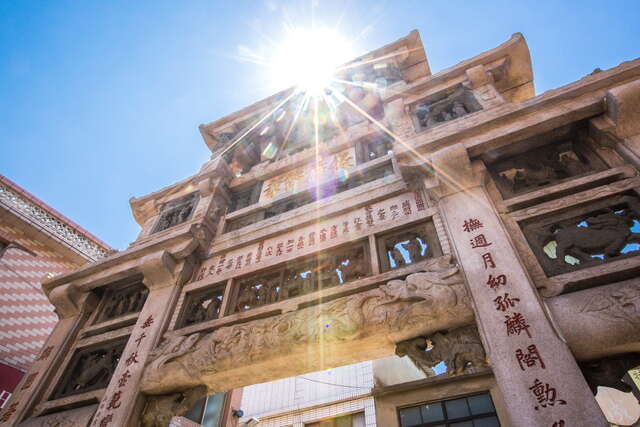
Chiu Liang-kung Mother Chastity Arch
金城鎮 · Historic Sites
Qiu Liang-gong’s mother, Ms. Hsu, was the wife of Qing Dynasty General Zhenwei Qiu Zhiren. Not long after Qiu Liang-gong was one month old, his father Qiu Zhiren passed away, and Ms. Hsu, who was still quite young at the time, worked hard to raise him from infancy to adulthood.
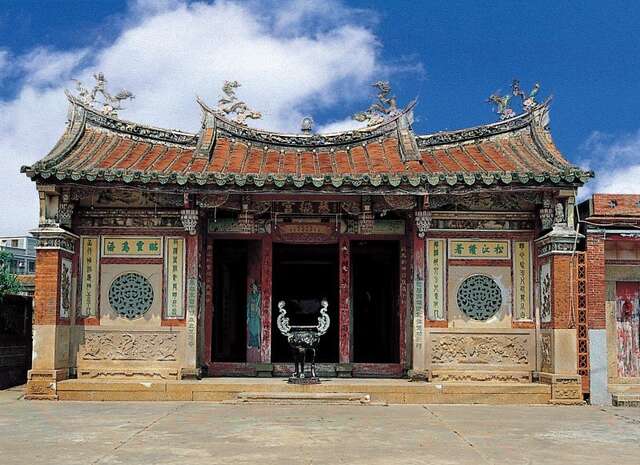
Cide Temple
金沙鎮 · Historic Sites
Cide Temple is a temple dedicated to Huang Wei, honored as a model of moral virtue. Its distinctive craftsmanship is showcased in three main areas: Koji pottery, cut-and-paste ceramics, and stone carving. The Koji pottery includes six panels on the dragon-and-tiger walls, mirror walls, and opposing walls, each vividly lifelike.
Wu Xiucai Residence
烈嶼鄉 · Historic Sites
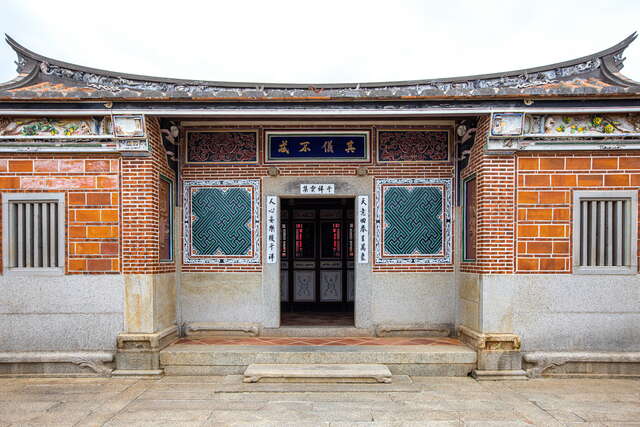
Located in the Shangku settlement of Shangqi Village, Wu Xiucai Residence is the largest traditional courtyard house on Lieyu Island. It was built in the 20th year of the Daoguang reign of the Qing dynasty by Wu Jingshan, who became wealthy through shipping and salt production in Shangku. The residence is a large three-bay courtyard with two successive halls and symmetrical left and right guardian wings. After Wu Jingshan’s fifth-generation descendant, Wu Yushan, passed the imperial licentiate examination in the late Guangxu reign, a study room and school were set up in the forecourt to provide free education for local children. This earned the admiration of neighbors, who came to call the Wu family mansion the “Xiucai Residence,” a name that has continued ever since.
Juguang Tower
金城鎮 · Historic Sites
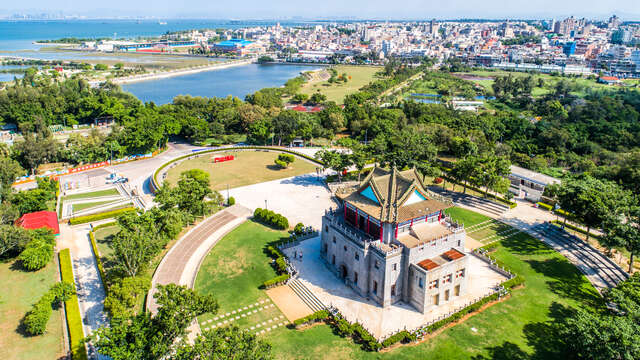
Facing the beautiful scenery of Jincheng and backed by the Fonglian Mountain Range, first-time visitors to Kinmen should definitely climb Juguang Tower to take in the island’s views. As a symbol of Kinmen’s spirit, Juguang Tower combines a traditional Chinese watchtower design with a modern building base, creating a distinctive architectural beauty.
Huang Xianxian Six-Route Mansion
金沙鎮 · Historic Sites
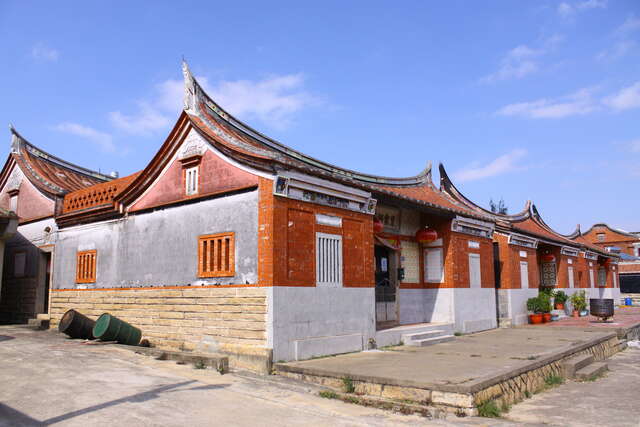
Huang Xianxian was born in the mid-Qianlong reign. His father served as an Imperial Secretary, and his descendants later achieved notable success through trade in Southeast Asia. The Huang residence is a Minnan-style building with five bays and double side-wings on both the left and right, known as the Six-Route Mansion. Its front and rear sections are linked by a continuous swallowtail ridge and a hard-gable horseback roof, while the facade features finely carved wooden lattice panels and the water-riding walls are decorated with painted and cut-paper motifs of flowers, birds, fortune, and prosperity, all of which reflect the wealth of overseas Kinmen families and the aspiration to honor their ancestors.
Qionglin Cai Clan Ancestral Hall
Jinhu Township · Historic Sites
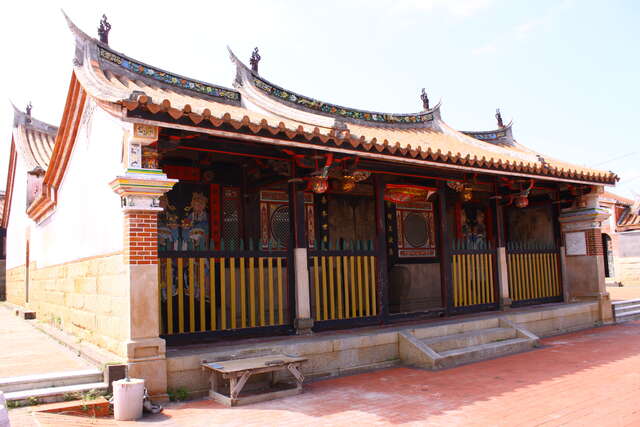
Founded in the 8th year of the Ming Jiajing reign (1529), this ancestral hall is renowned for its lavish interior and exterior ornamentation, widely regarded as the finest among Kinmen clan temples. The roof ridge, gables, and watermill walls all feature exquisite cut-glazed ceramic decoration and clay sculptures, while the bracket arms beneath the main beam are carved with the Cai family maxims: loyalty, filial piety, integrity, and chastity. Numerous plaques hang in the main hall, reflecting the prominence of the family line. A Fengshishi stone lion is embedded in the rear exterior wall, an uncommon design feature.