
Kinmen County · Historic Sites
Curated travel attractions — browse by region or category.
Region
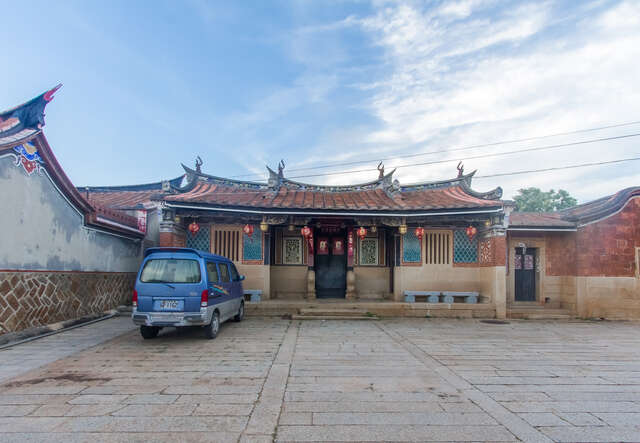
Yang Hua Former Residence
金寧鄉 · Historic Sites
Yang Hua was a distinguished military officer of the Qianlong and Jiaqing eras, who once took part in the campaign against Lin Shuangwen and in anti-piracy operations. His ancestral residence is a traditional Minnan-style building with a three-section courtyard layout and a left-side protected wing. The main hall is decorated with a Sanchuan ridge, while the front and rear halls feature a continuous swallow-tail ridge. The detailed ornamentation is especially refined, with notable wood carvings and brick carvings on the door panels. Although the painted colors on the beams, columns, and bracket sets have faded, the carving remains vigorous and expressive.
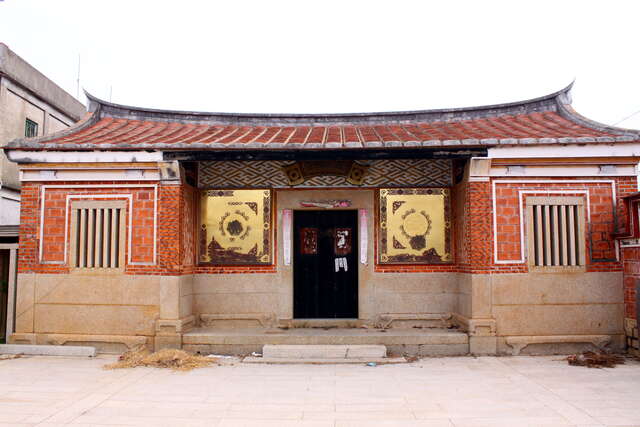
古龍頭振威第
金寧鄉 · Historic Sites
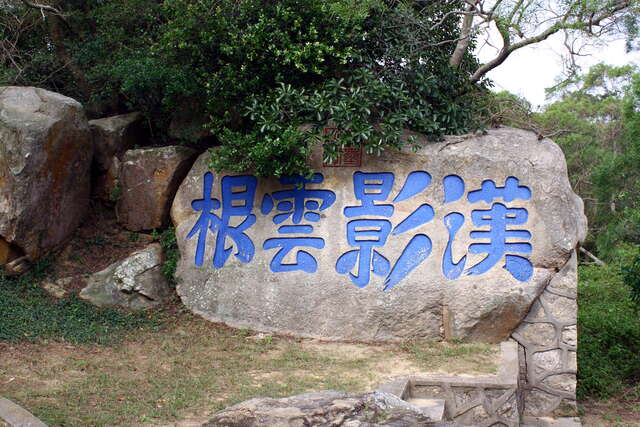
Han Ying Yun Gen Inscription
金城鎮 · Historic Sites
Located on Xiantai Hill on the south side of Gugang Lake in Jincheng Township, Kinmen, this is one of the surviving stone inscriptions handwritten by the Ming Lu King. Lu King, acting as regent and seeking to restore the Ming dynasty, stayed on Kinmen Island for more than 10 years. This inscription, carved between 1652 and 1654 during the Yongli reign, reflects his resolute spirit and has been designated a county-level historic site. What is seen today consists of two carvings with reversed inscriptions; according to legend, the original stele once stood on a slope, later collapsed, and the text ended up upside down. Later generations then found a similar cliff face and made a rubbings-based recarving, creating the current reversed-inscription appearance.
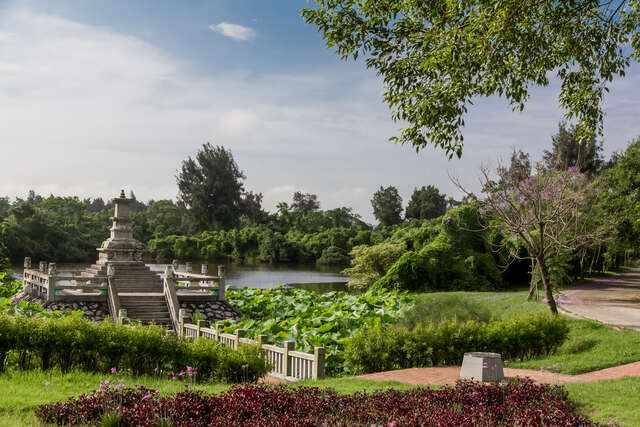
Gulongtou Shuiwei Tower
金寧鄉 · Historic Sites
On the shore of Shuangli Lake stand a Shuiwei Tower and a Fengshiye, forming a distinctive cultural landscape. The Beishan Shuiwei Tower was built in the 32nd year of the Qianlong reign of the Qing dynasty (1767) and is listed as a county-level historic site. It was intended to suppress tidal waters and help preserve prosperity, reflecting its feng shui significance.
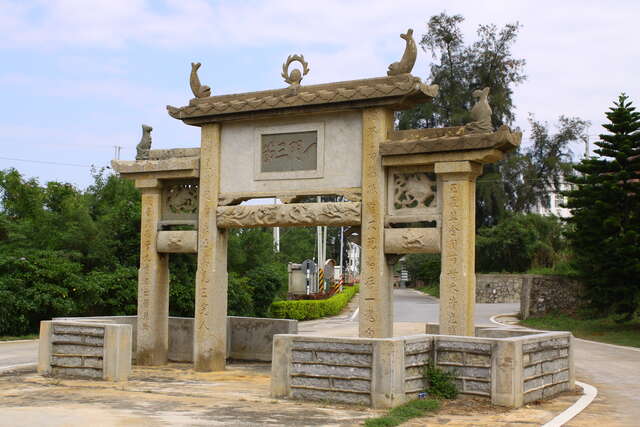
Qionglin Yi Men San Jie Fang
Jinhu Township · Historic Sites
Qionglin Yi Men San Jie Fang is a Qing dynasty chastity archway located on the old official road in the western outskirts of Qionglin Village, Jinhu Township. It is the most poignant of the three surviving Qing dynasty archways in Kinmen. Built in 1831, this stone archway appears to symbolize honor and glory, but behind it lies the bitter story of three widows in one family. It is now a county-designated historic site.
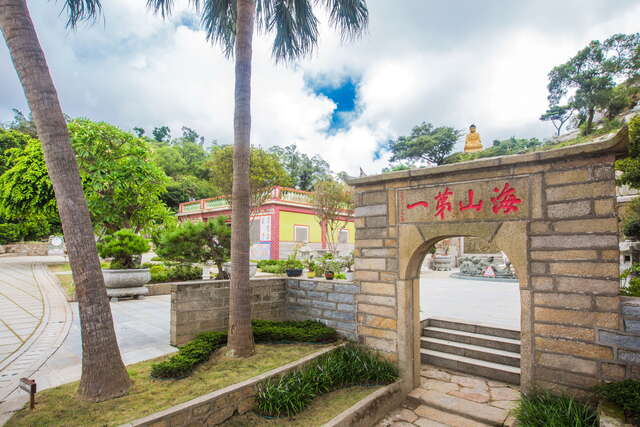
Shimen Pass
Jinhu Township · Historic Sites
On the way to Haiyin Temple, visitors must pass through an arched stone gateway. Because it functions like a mountain pass, it is called Shimen Pass and is one of the Twelve Wonders of Mount Taiwu. Built from solid, neatly cut granite, Shimen Pass is topped with a reversed-eave roof and slightly upturned corners at all four ends, giving it a graceful, light appearance. The horizontal plaque bears the four characters “First of Sea and Mountain,” written by the Ming loyalist Lu Ruoteng, and the site is now listed as a county-designated heritage monument.
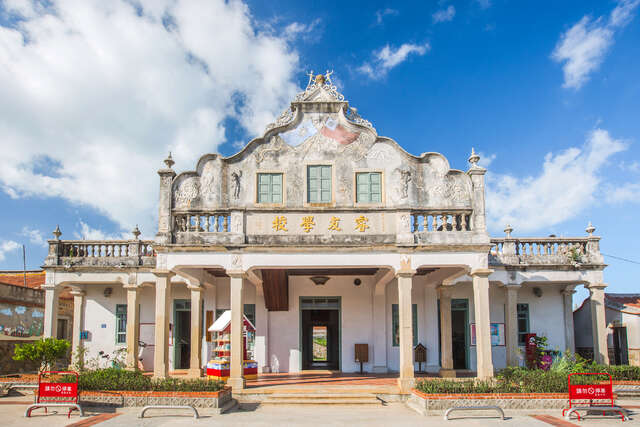
Ruiyou School
金沙鎮 · Historic Sites
Ruiyou School was built in 1934. After Mr. Chen Ruiyou made his fortune in Singapore, he commissioned his fellow clansman Chen Dexing to build Ruiyou School in his hometown of Bishan. The campus covered 20 ares and enrolled children from nearby settlements free of charge, benefiting the local community.
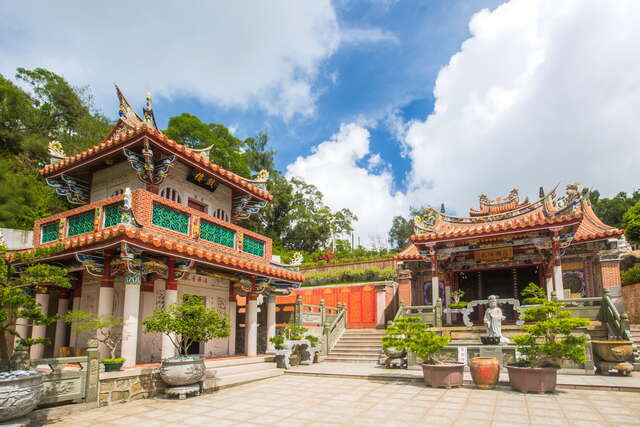
Haiyin Temple
Jinhu Township · Historic Sites
Haiyin Temple, built during the Song dynasty, has more than 800 years of history. Because it is located in a hollow near the summit of Mount Taiwu, it was historically called Taiwu Rock Temple. Seen from afar, Mount Taiwu resembles a hermit lying on his back, and local people describe it as a place where an immortal reclines on the ground, giving the mountain a sense of spiritual energy. Haiyin Temple, built on this auspicious site, is especially popular for incense offerings. Every lunar New Year’s Day on the ninth day of the first month, Kinmen residents of all ages come up the mountain to worship at Haiyin Temple, making it one of Kinmen’s important religious festival activities.
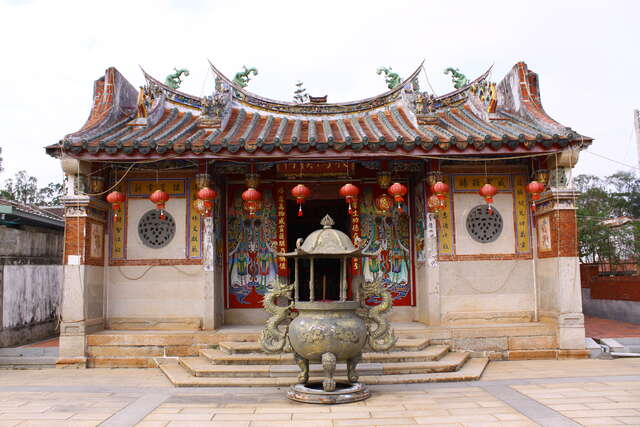
Fenglianshan Muma Hou Shrine
金城鎮 · Historic Sites
A traditional three-section temple dedicated to Chen Yuan, the revered "Lord Who Opened Kinmen," this site was rebuilt during the Daoguang reign of the Qing dynasty and is now listed as a county-designated historic monument. According to legend, Chen Yuan often manifested to drive off Japanese raiders and protect the local people. The court therefore ordered the construction of a large seven-section temple, bestowed the plaque name "Fuji," and posthumously honored him as the "Sacred Marquis of Blessing and Protection"—the origin of Muma Hou Shrine. The temple still preserves the ancient "Fuji" plaque and Qing-era stele, while the dragon-and-tiger walls and the ridgeline decorations of figurines, ceramic work, and clay sculpture are also worth close attention.
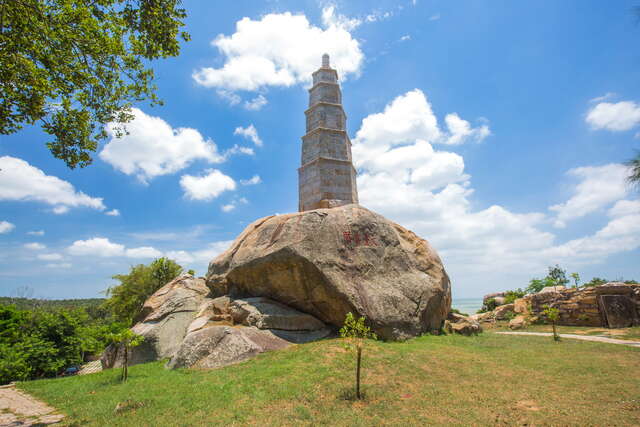
Wentai Pagoda
金城鎮 · Historic Sites
Wentai Pagoda was built in the Ming dynasty in 1387 (Hongwu 20) and is one of the three stone pagodas ordered by the Hongwu Emperor and built on Kinmen by Zhou Dexing, the Marquis of Jiangxia. It is also the only Ming-dynasty stone pagoda in Kinmen that has not been destroyed by war or damaged by shellfire.
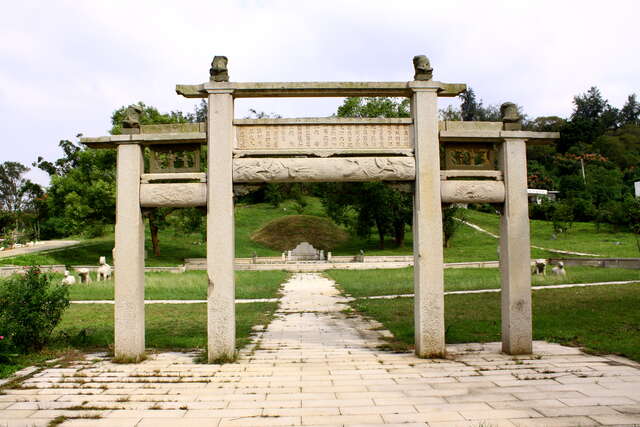
Qiu Liang-gong Tomb Garden
Jinhu Township · Historic Sites
Qiu Liang-gong Tomb Garden is the burial mound of Qiu Liang-gong, a Qing-dynasty baron of the third rank, located in Xiaojing Village, Jinhu Township, Kinmen County today. It was designated by the Ministry of the Interior as a third-class historic site in the Taiwan-Fujian region.
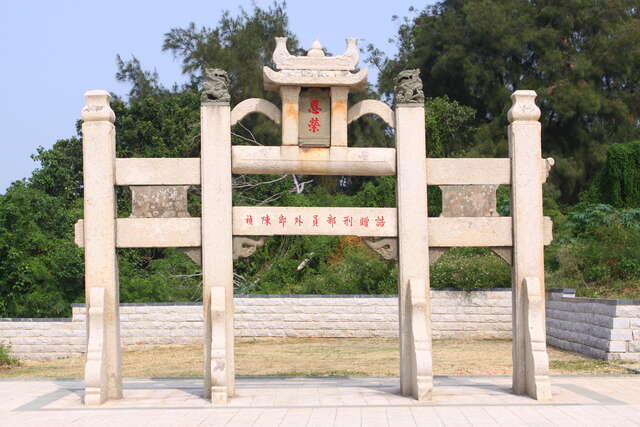
Chen Zhen Enrong Archway
金沙鎮 · Historic Sites
Located directly to the right-front of Huishan Temple in Yangzha, Kinmen, this archway was built to honor the father (Chen Zhen) after his son (Chen Jian) attained high official status and received an imperial posthumous honor. Chen Zhen Enrong Archway is a county-designated historic monument, a granite archway, and was announced as a Level 3 historic site in November 1988.